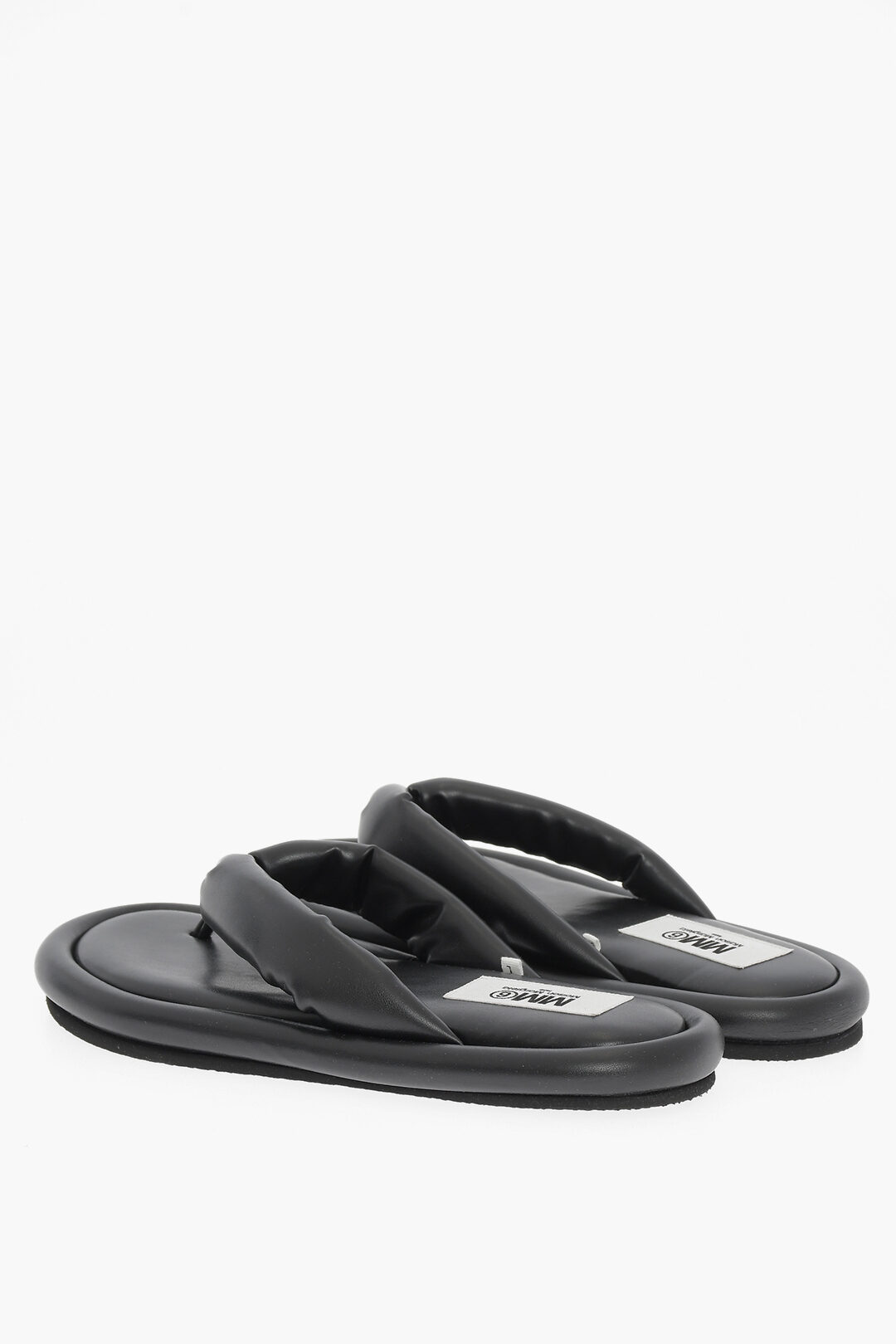
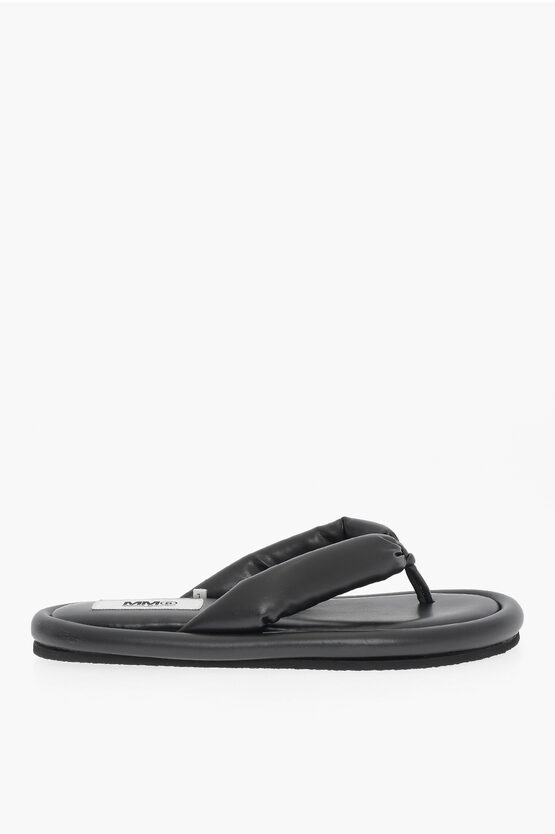
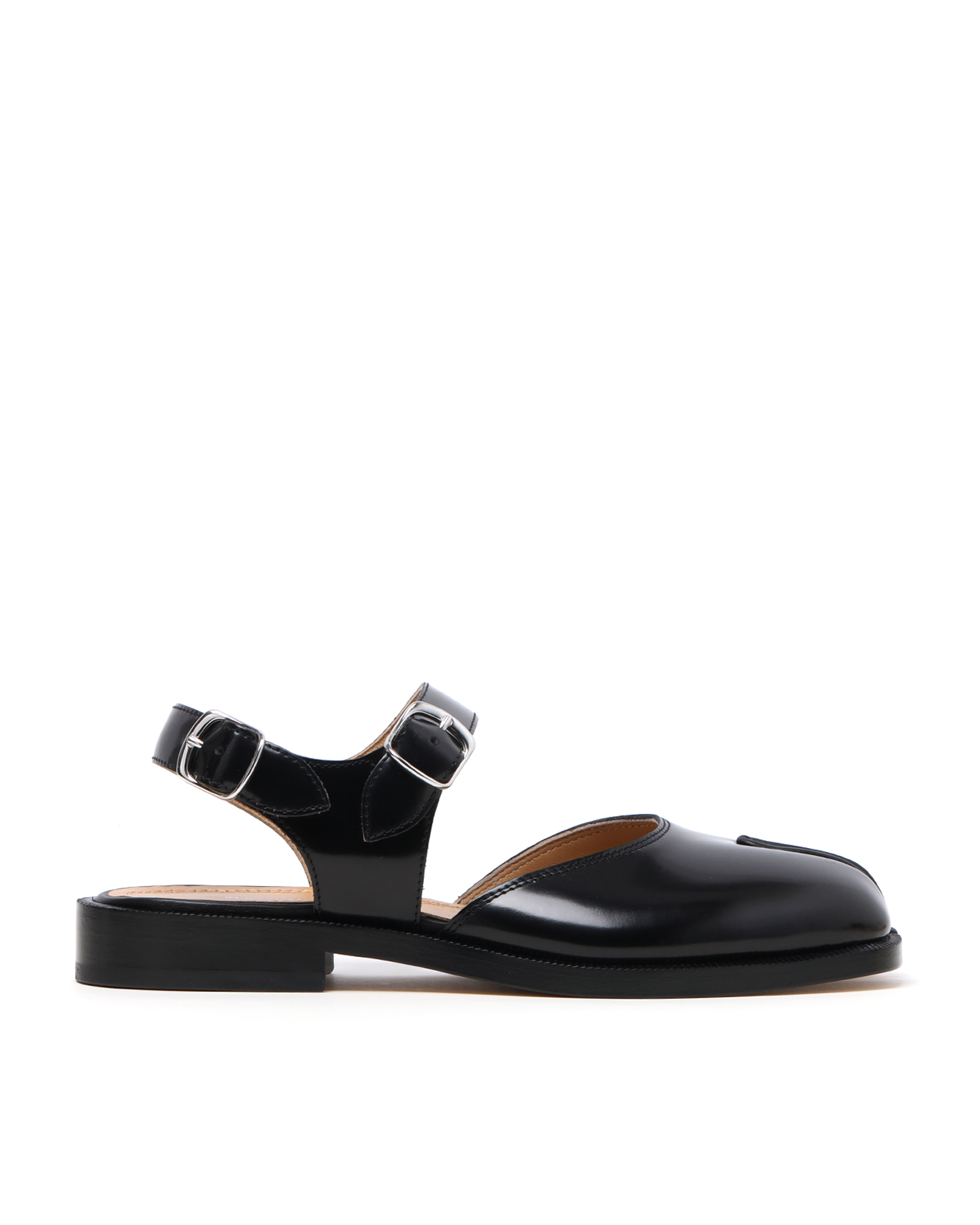
The flip-flop has long been fashion's most democratic object — a slab of rubber, a V-shaped strap, and nothing more. It is the shoe of beaches, bodegas, and backstage corridors, so aggressively ordinary that it has historically resisted any attempt at elevation. Which is precisely why MM6 Maison Margiela x Havaianas chose it as the canvas for the season's most quietly radical act of subversion. The collaboration takes the Brazilian house's ubiquitous rubber sandal and adds a sixth toe — an extra sculpted digit grafted onto the footbed, transforming a garment of pure utility into an object of anatomical uncanny.
The design is deceptively simple in its provocation. Where a standard flip-flop accommodates five toes, this one accommodates six, its sole molded with an additional ridge that cradles a phantom appendage. The effect is immediate and disorienting: the eye counts, the brain stumbles, and the wearer is forced to reconcile a familiar silhouette with a body that does not exist. It is a gesture in the tradition of Maison Margiela's founding obsession with the deformed, the displaced, and the almost-right — the same instinct that gave the house its split-toe Tabi boot, now translated into foam and rubber. The MM6 line, the label's more playful and quotidian diffusion, has always been the proper home for this kind of intervention: it takes the things you already own and makes them strange again.
A Familiar Silhouette, Quietly Mutated
Materials matter here. Havaianas' signature rubber compound — durable, water-resistant, and unmistakably casual — is left largely intact, which is what makes the conceptual jolt land. This is not a luxury object pretending to be a flip-flop; it is a genuine flip-flop that has been quietly mutated. The strap retains its classic Y-form, the palette stays within the brand's familiar registers, and the branding is minimal, almost hidden. Nothing announces the joke. You have to look down to notice that the footbed has room for one more.
Opposites Attract — and Collide
Culturally, the timing is sharp. The house's Spring 2027 collections, shown under the direction of Glenn Martens, have been widely framed around the theme of opposites attracting — high and low, sacred and profane, the garden tea party torn apart and reassembled. Coverage from WWD, Vogue, and Hypebeast has fixated on that tension, and the sixth-toe flip-flop is its most literal expression: a luxury maison reaching into the discount bin and pulling out something genuinely unsettling. The New York Times recently observed that, in fashion, you can't always believe your eyes. This shoe is proof. It is a small, wearable optical illusion, and it arrives at a moment when the industry's most interesting ideas are happening at the seams between the everyday and the bizarre.
Who It's For — and What It Refuses
Who is it for? Not the collector seeking a trophy. It is for the person who understands that MM6 Maison Margiela has always been about the poetry of the ordinary — the subversive pleasure of wearing something that looks like nothing until it looks like everything. It is for the beachgoer with a sense of humor, the design student, the stylist building a look around a single strange detail. It is, in the end, a flip-flop: you can wear it to the pool. You can also wear it as a thesis.
A Glitch, Not a Trend
What makes the sixth toe matter now is that it refuses the two dominant modes of contemporary collaboration — the logo dump and the luxury upgrade. Instead, it does something rarer: it takes a global staple and asks a question about the body itself. Six toes is not a trend. It is a glitch, a mutation, a small heresy committed in rubber. And in a season defined by opposites colliding, that may be the most honest thing a shoe can do.