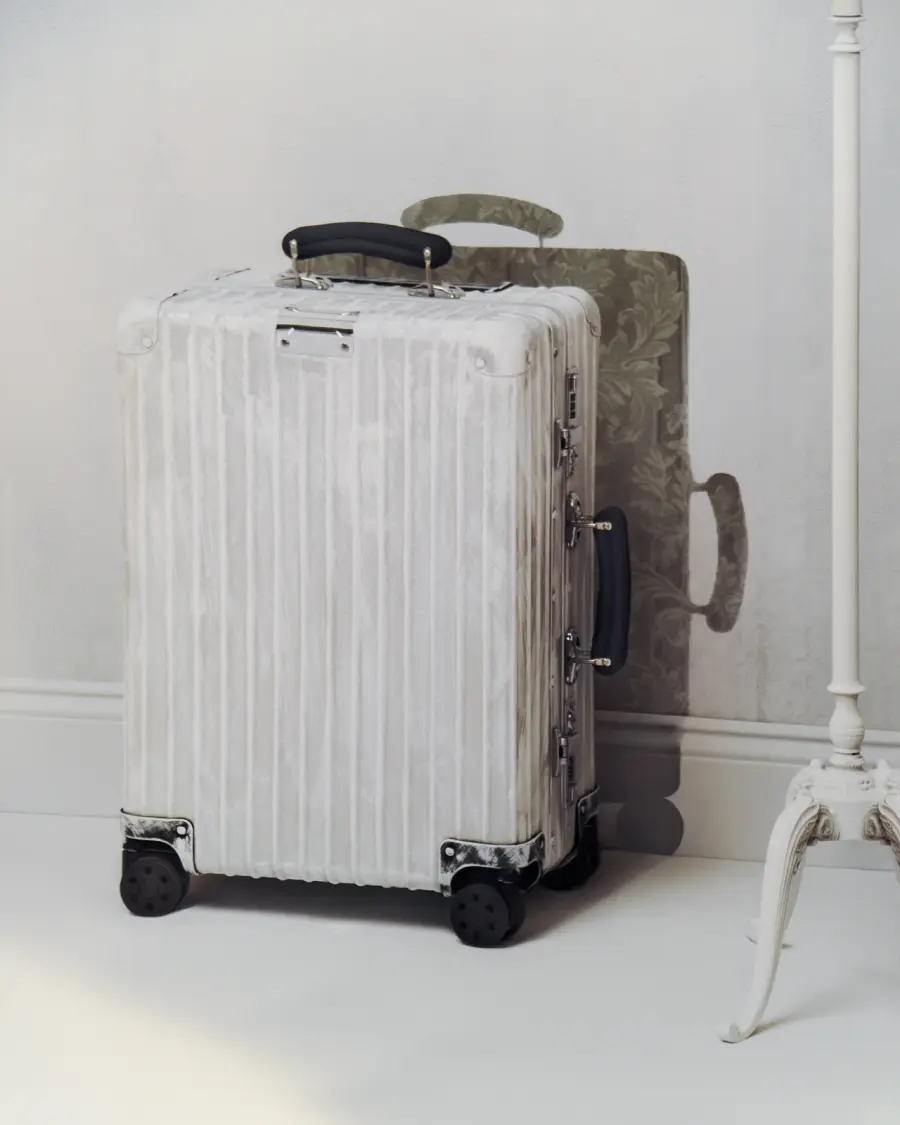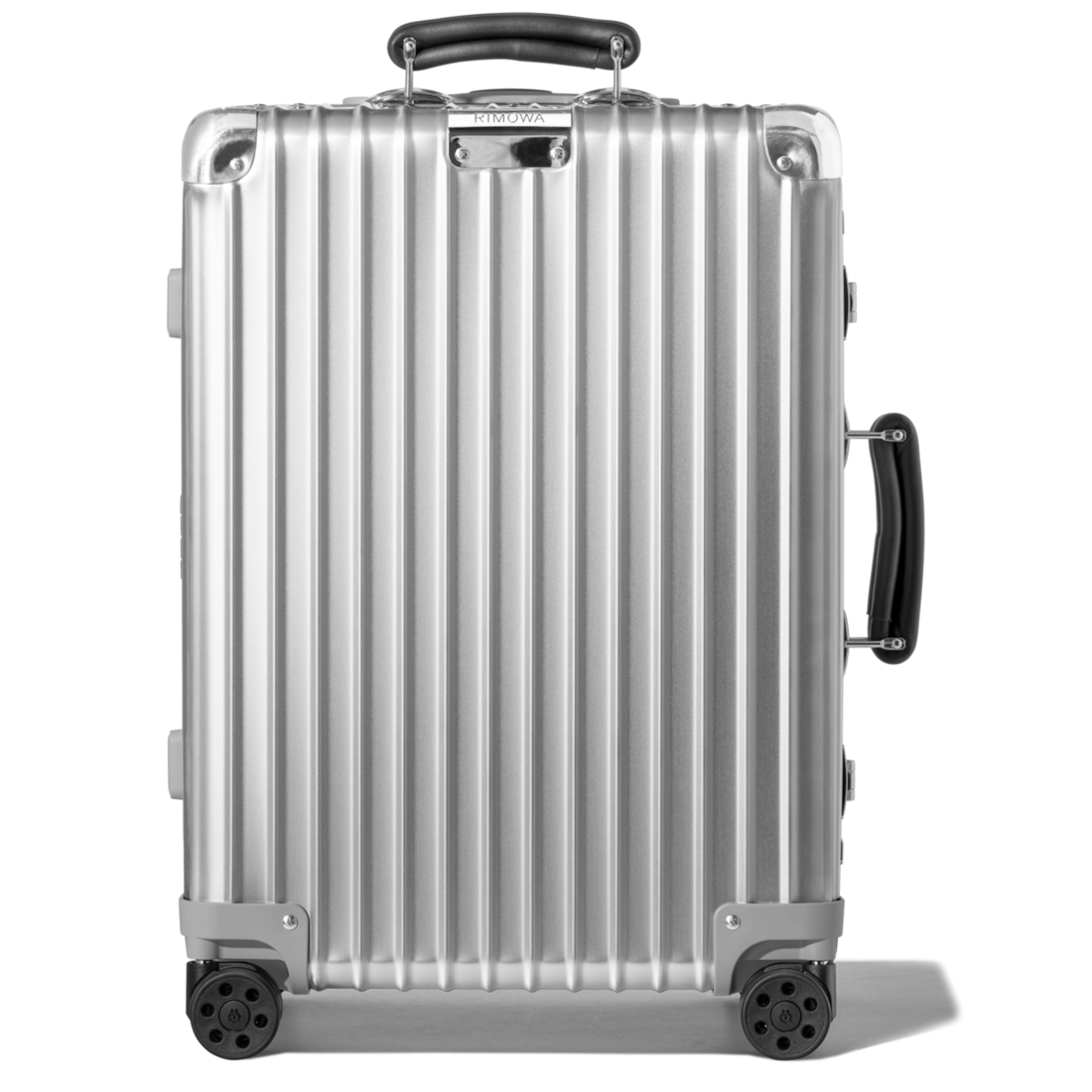
Luxury luggage has spent the better part of a century chasing permanence. Pristine aluminum, sealed finishes, the anxious preservation of resale value—these are the values that have shaped the modern travel object. The RIMOWA x Maison Margiela Bianchetto Classic Cabin proposes something quietly radical instead: a suitcase designed to be worn, scuffed, and in the process, made entirely your own.
This limited-edition collaboration between the German aluminum-luggage institution and the Parisian house that has spent four decades interrogating the very idea of luxury arrives as a piece of functional equipment that doubles as a philosophical statement. Its peel-away white coating is not a flaw to be protected against but a surface to be lived upon—each scratch and scuff exposing what lies beneath, recording where you have been.
The Mechanics of Wear
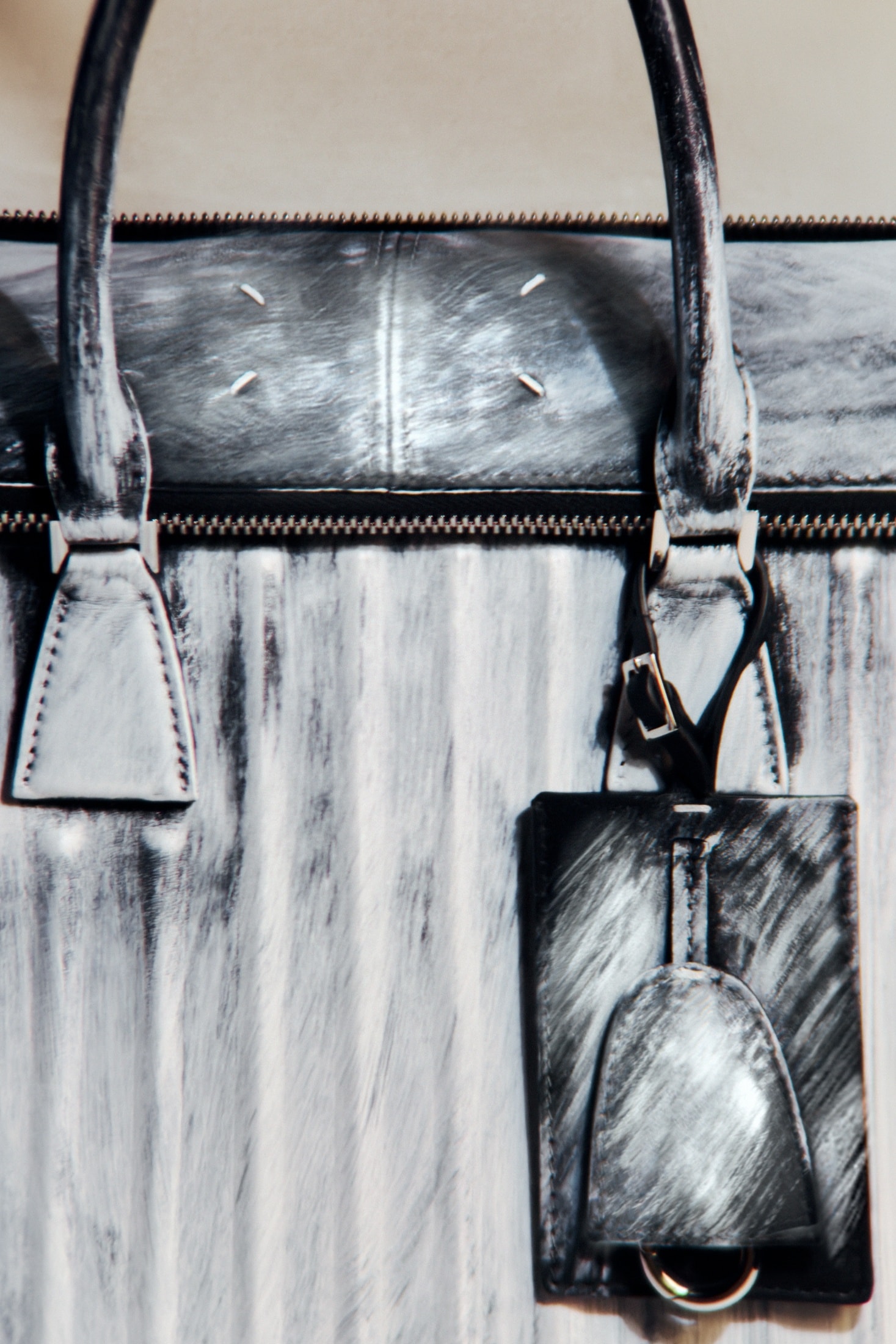
The concept is deceptively simple. Beneath the Bianchetto finish—a chalky, matte white treatment borrowed from the house's signature *bianchetto* technique, in which surfaces are painted over and allowed to reveal themselves through use—sits RIMOWA's unmistakable grooved aluminum shell, the same anodized architecture that has defined the Classic Cabin for generations. As the coating flakes and lifts along the ridges, the silver metal emerges in irregular constellations. No two cases will weather identically; the patina is a function of airports, overhead bins, cobblestones, and the particular carelessness of your own travel.
Margiela's fingerprints are equally deliberate elsewhere. The house's iconic numerical label replaces conventional branding, and the interior is finished in the house's signature white—a clinical gesture that renders the whole object a kind of blank canvas awaiting evidence. It is a design that withholds, then reveals. The longer you look, the more the object seems to be keeping score.
A Different Register of Collaboration
That the collaboration exists at all is notable. RIMOWA has become an enthusiastic collaborator in recent years—with Dior, with Supreme, with Tiffany & Co.—but Margiela is a different register entirely. Since its founding in 1988, the house has built its reputation on anonymity, on the *trompe-l'œil*, on garments that expose their own construction. The Bianchetto concept is a natural extension of that ethos: a garment—or in this case, a piece of luggage—that wears its history openly rather than concealing it.
The collection, unveiled to considerable press attention across WWD, Hypebeast, Wallpaper*, and Highsnobiety, extends beyond the cabin case to a 5AC XL bag and a coordinated travel set, but the Classic Cabin is the purest expression of the idea. At a reported $6,500, it is priced as an object of desire, but it asks for something rarer than money: time, use, and a willingness to let go of the fantasy of the untouched.
Who It's For
Certainly not the collector who keeps boxes. This is for the traveler who understands that a suitcase is a tool and that tools acquire character—who finds the scuffed and the worn more interesting than the shrink-wrapped. It is for the Margiela acolyte who recognizes the *déjà-vu* logic of a finish that erases itself, and for the RIMOWA loyalist ready to graduate from the anonymous silver cabin to something that carries a record of passage.
In a market saturated with limited editions distinguished only by colorway, the Bianchetto Classic Cabin matters because it proposes a different relationship between object and owner—one in which the luxury is not in preservation but in participation.
You do not simply own this suitcase. You co-author it, one trip at a time. And in a culture that treats wear as damage, that is a genuinely subversive proposition—one that returns the luxury object to the realm of lived experience, where it was always meant to be.