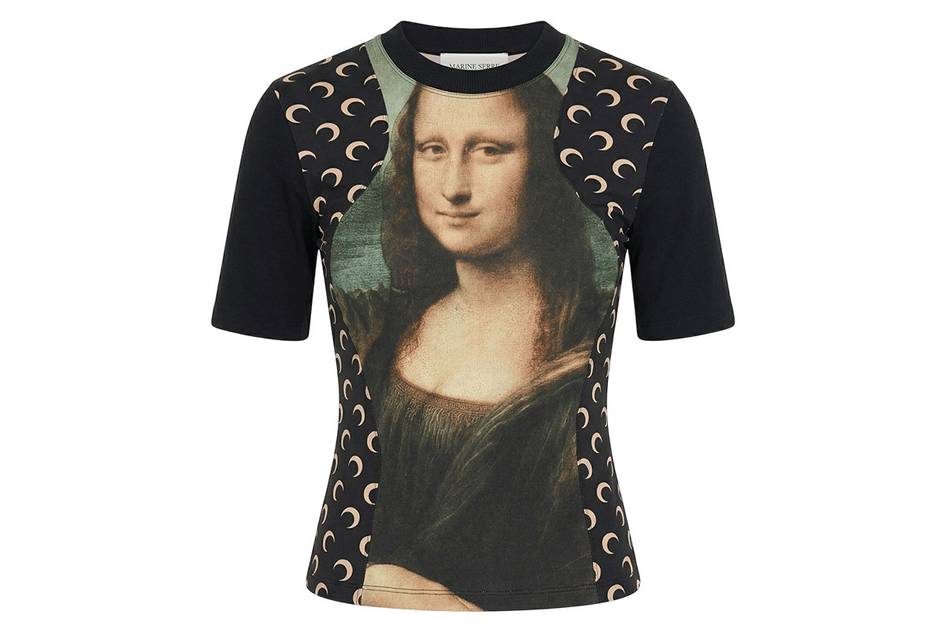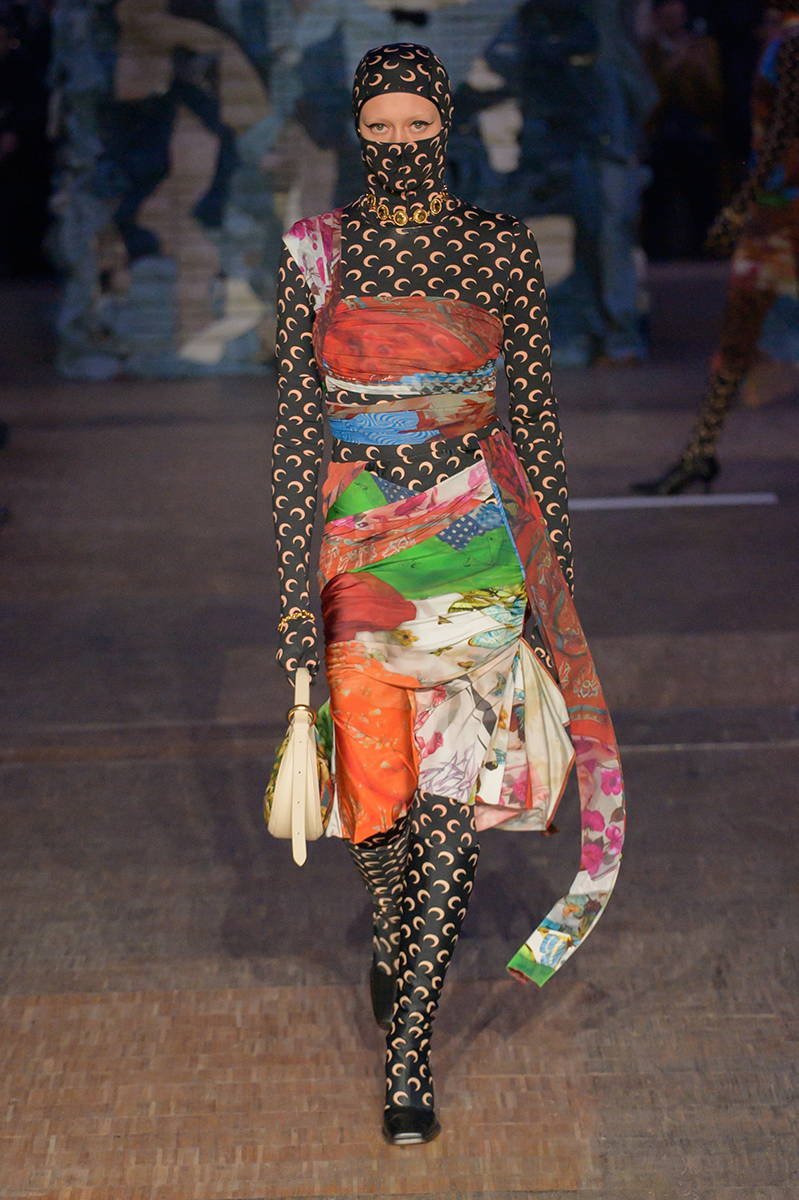
The Louvre has become fashion’s favorite playground, but Marine Serre just turned the gallery into a laboratory. Her new ready-to-wear capsule takes Leonardo da Vinci’s *Mona Lisa* and—quite literally—tears her apart to rebuild her anew. This is no print-on-a-tee homage. The Upcycled Mona Lisa capsule is a radical act of artistic metabolism, transforming the most famous painting on earth into a wearable meditation on permanence, decay, and renewal. Serre has long been fashion’s resident futurist, her crescent moon a symbol of cyclical rebirth. Now she’s turned her gaze backward, using deadstock fabrics and archival materials to reconstruct the Renaissance’s most enigmatic smile across shirts, corsets, and flowing skirts. The result feels less like merchandise and more like a philosophical proposition: what do we choose to preserve, and why?
The Art of Fragmentation
The design details are where this project transcends the typical museum-shop collab. Instead of reproducing the painting in pristine glory, Serre’s team sourced surplus textiles—vintage silks, discarded cottons, unsold stock from previous seasons—and applied a process of deliberate fragmentation. The *Mona Lisa* appears in shattered, tessellated forms: her face split across multiple panels, her hands rendered in ghostly fragments, her landscape backdrop dissolving into abstract washes of color. Some pieces layer the portrait under sheer organza, creating a palimpsest effect that suggests layers of history. Others leave raw, unfinished edges that evoke the canvas’s own materiality.
This is upcycling as conceptual practice, not just an environmental gesture. By using deadstock fabrics, Serre aligns the painting’s theme of mortality with fashion’s own waste problem, suggesting that both art and garment are subject to the same cycles of creation and destruction. The capsule, created in partnership with the Louvre, is thus a curatorial act as much as a commercial one—a way of asking visitors to reconsider what they think they know about the world’s most reproduced image.
Defiance in Precarious Times
The timing is almost painfully poignant. As news broke that Marine Serre has filed for bankruptcy in France and entered receivership, this capsule arrives as a defiant statement of creative vitality amid financial precarity. The brand, which exploded onto the scene with its 2018 "Radical Optimism" collection, has always operated on the edge of sustainability and avant-garde experimentation, often at the expense of commercial accessibility. Now, with debts threatening to eclipse the house, this Louvre collaboration reads as both a swan song and a lifeline—a reminder that Serre’s vision is too culturally significant to disappear.
The irony isn’t lost on observers: a collection about the fragility of iconic images arrives exactly as the brand itself faces potential dissolution. Yet this is precisely Serre’s genius. She has never separated fashion from its social and economic contexts, and this capsule forces a conversation about who gets to survive in an industry that increasingly favors the safe over the visionary.
Wearing the Gallery
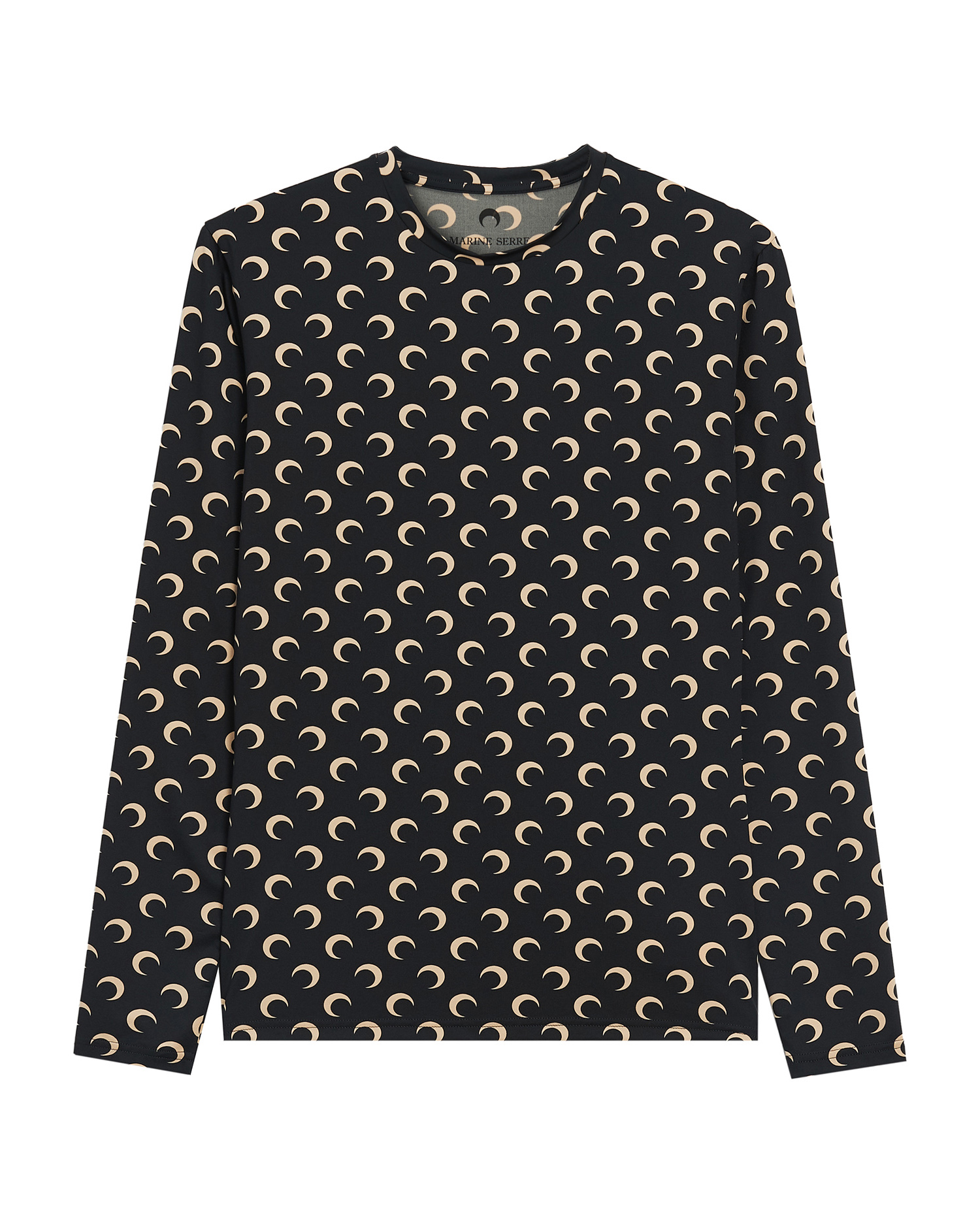
For the wearer, the Upcycled Mona Lisa capsule offers more than a conversation piece. It is clothing for the culturally literate, the museum-goer who wants to carry the gallery into the street. The pieces are designed to be mixed with Serre’s signature crescent-moon basics, allowing for a wardrobe that oscillates between high art and streetwear grit. This is fashion for those who understand that ownership of an image is never straightforward—that the *Mona Lisa* belongs to everyone and no one, that her smile has been interpreted, parodied, and now, deconstructed by a French designer navigating her own precarious moment.
In a season dominated by safe collaborations and commercial pandering, Serre’s capsule stands as a reminder that fashion can still be a site of genuine cultural discourse. Even as the brand’s future hangs in the balance, this collection proves that its founder’s vision remains uncompromised. Sometimes, the most radical act is to take the most famous face in history and show us what lies beneath its surface. Serre has always believed in cycles—of moons, of seasons, of life itself. Perhaps this is just another turning.