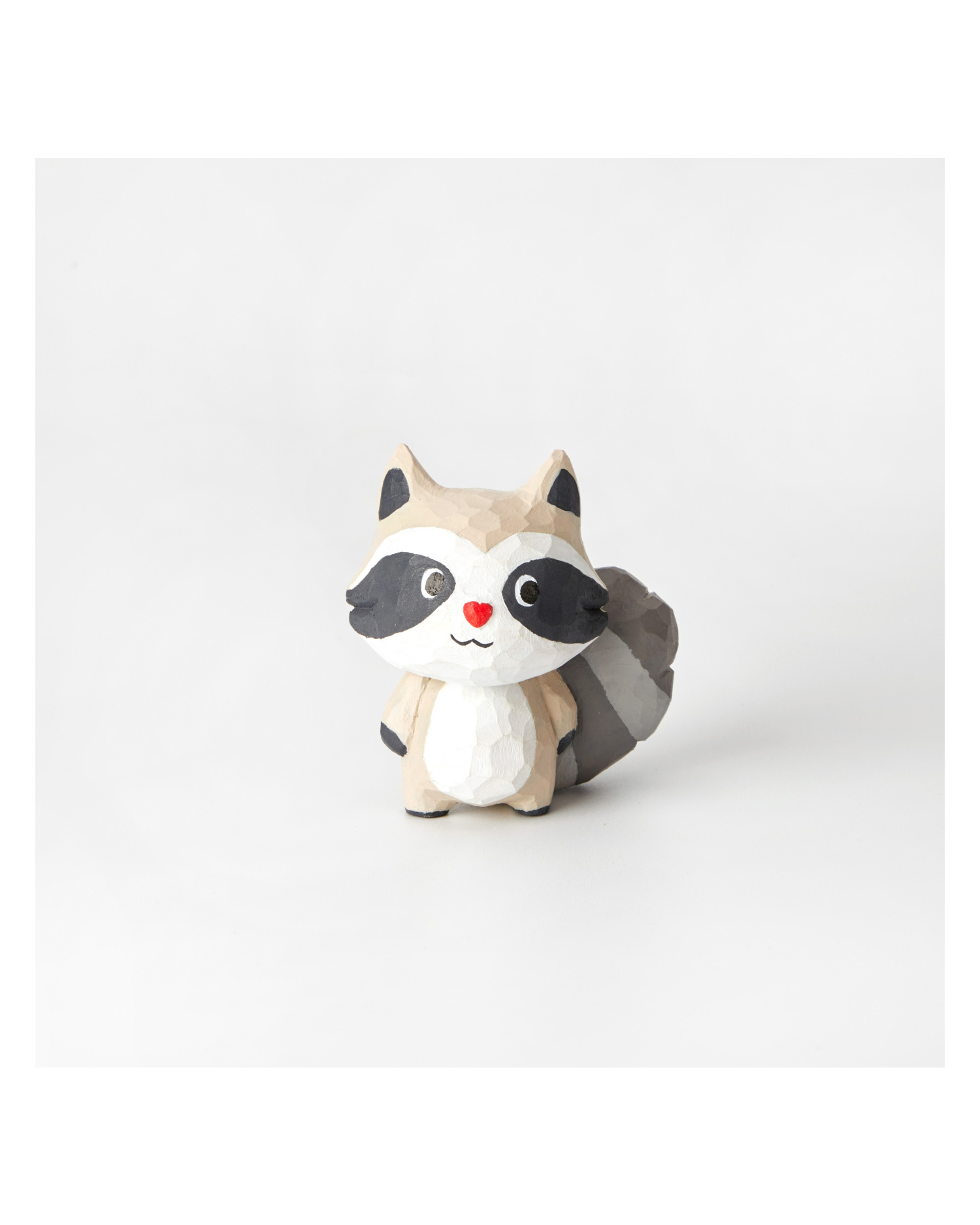
In an industry where molded plastic still rules the box, Mokuomo has made a quietly radical choice: every copy of its cutesy animal-spies board game ships with hand-carved wooden meeples, each one shaped and finished by hand rather than stamped out by the thousands. It is the kind of detail most publishers cut first when a production budget tightens, and it is precisely the detail that has turned a lighthearted deduction game into an object of collector fixation. The meeples have become the story — the reason players who already own the game are buying a second box, and the reason newcomers are pausing over a shelf they might otherwise have walked past.
Small Carvings, Big Personality
The design language is where Mokuomo earns its attention. These are not the abstract, faceless pawns that populate most Eurogame boxes. Each meeple is a small carved animal, rendered with the soft, rounded proportions that read as charming at arm's length and rewarding up close. The silhouettes are deliberately simple — a curve of ear, a suggestion of a snout, a compact body sized to sit comfortably between thumb and forefinger — but the carving gives each piece an individuality that injection molding cannot replicate.
Grain patterns shift from piece to piece. The cut of a blade leaves minute variations in the curve of a back or the tilt of a head. No two meeples in a box are truly identical, and that slight irregularity is the point: it is the visible signature of a human hand at work. Where plastic offers uniformity, wood offers character — and character, it turns out, is what collectors are chasing.
The Case for Wood
The material choice matters as much as the form. Wood brings warmth and heft that plastic never achieves — a tactile weight in the palm, a subtle grain that catches light, a faint natural scent that survives the unboxing. For a game built around hidden identities and quiet observation, that physicality is thematically apt: the pieces feel like something you might actually find in a drawer of spy paraphernalia, small wooden tokens passed between conspirators.
The finish appears to favor a natural, lightly treated surface over heavy lacquer, preserving the texture of the wood rather than sealing it under a glossy shell. It is a decision that prioritizes touch over shine, and it signals a brand more interested in craft than in spectacle. You feel the difference before you fully register it — a small, satisfying weight that makes the act of play feel more deliberate.
A Quiet Rebellion Against Plastic
There is a broader cultural current running beneath this. The tabletop hobby has spent the last decade drifting toward deluxe editions, neoprene mats, and resin miniatures — an arms race of production value that often reads as volume rather than care. Mokuomo stakes out a different position. Its hand-carved meeples align with the slow-craft sensibility now reshaping everything from kitchen tools to footwear: the premium placed on objects made in smaller quantities, by hands that can be imagined, with materials that age rather than degrade.
In a market saturated with plastic, a wooden meeple is a small act of resistance — and collectors have noticed. The meeples are being traded, photographed, and sought after as standalone curiosities, which is an unusual fate for a game component. Most pieces live and die inside their box. These have a life beyond it.
Who It's For
Certainly the dedicated hobbyist who has grown weary of identical pawns and wants a box that feels authored. But also the design-minded player — the person who chooses a game partly for how it looks on the table and how it feels in the hand. And, increasingly, the collector who buys for the object as much as the play: Mokuomo's meeples are the kind of small, affordable artifact that invites a shelf of their own, lined up and admired the way one might display carved chess pieces or hand-turned tops.
It is a rare thing for a game component to cross over into the language of objects — to be appraised on grain and finish, to be photographed like a still life. But that is exactly what is happening here, and it feels less like a marketing stunt than a natural consequence of caring about the wrong details in the right way.
Why it matters now is simple. As manufacturing grows more uniform and more distant, the value of a piece you can feel was made by someone — carved, sanded, finished, and packed by hand — only sharpens. Mokuomo has built its game around that conviction, and in doing so has made the humble meeple something worth obsessing over. The animals are watching, quietly, from their wooden perches. It is worth watching them back.