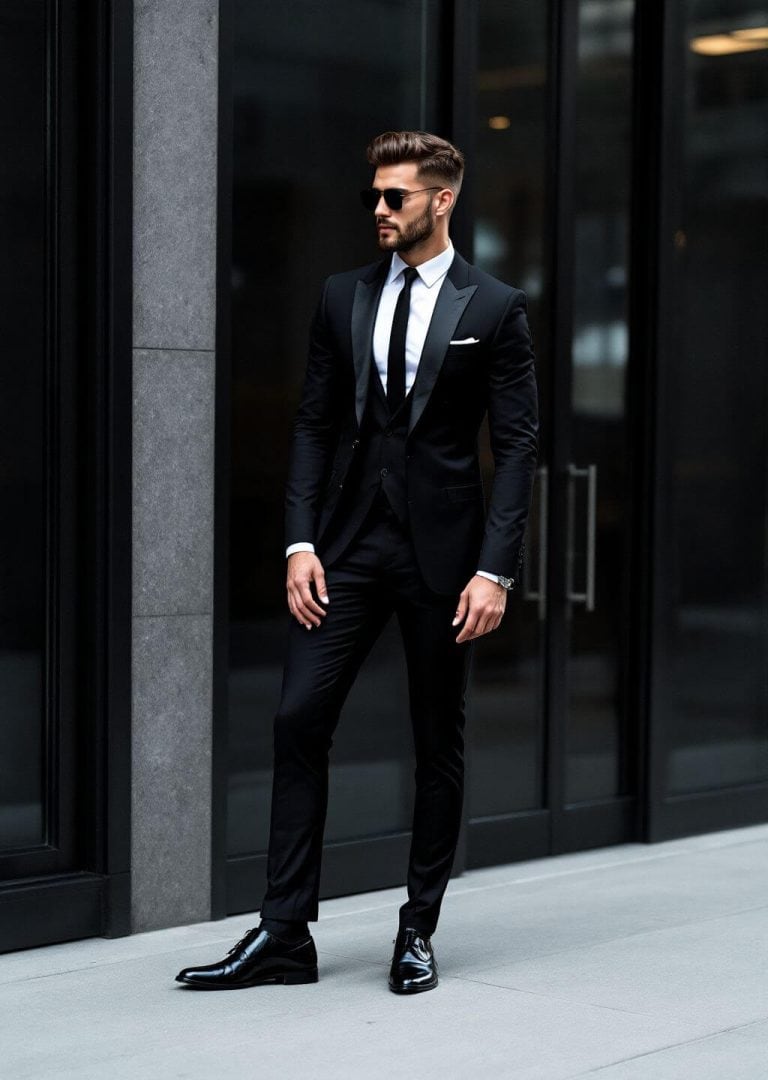
Most streetwear collaborations announce themselves. This one whispers — and that's exactly why it works.
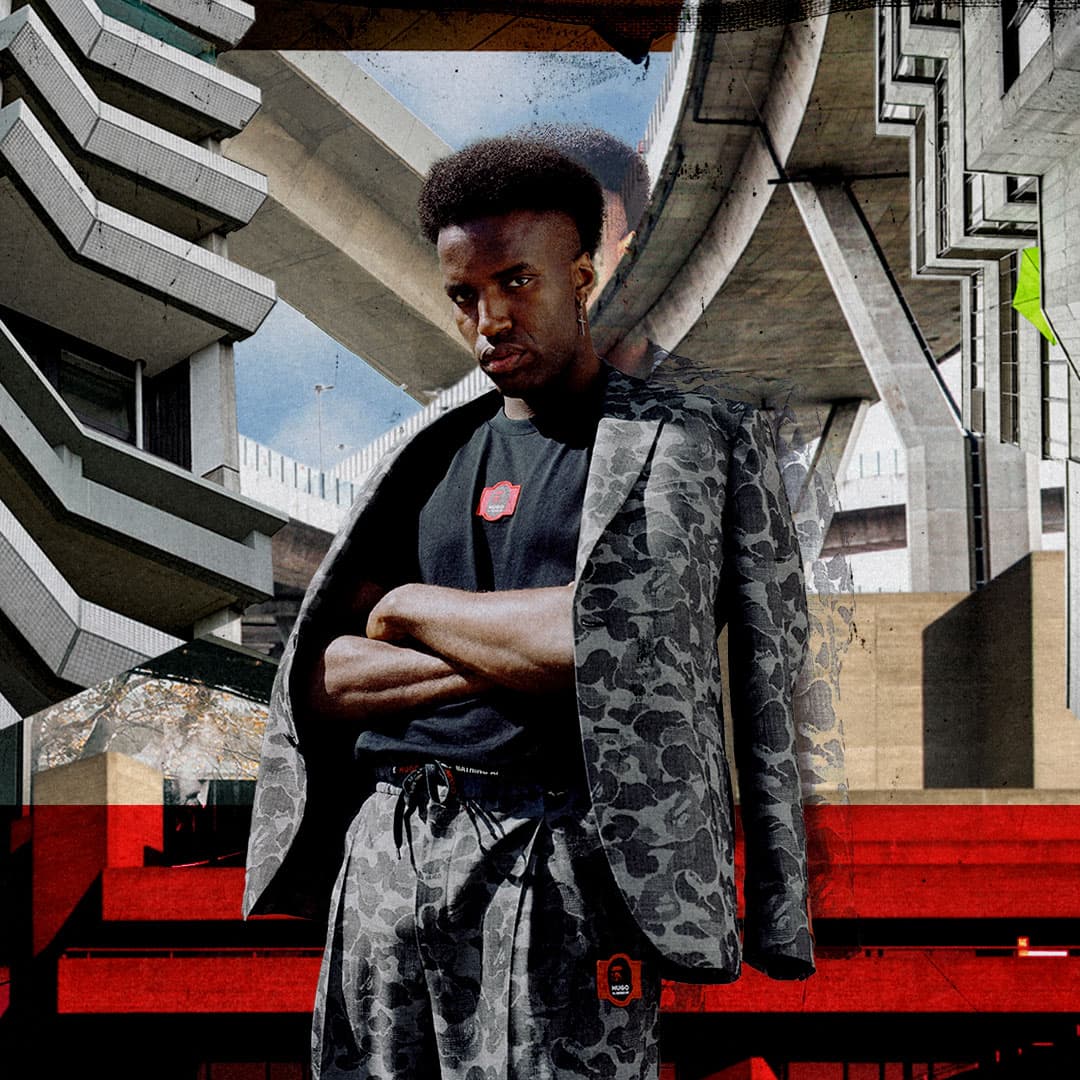
The HUGO x Mr. Bathing Ape tailored suit is not a tracksuit wearing a blazer's shoulders, and it is not a boardroom suit with a logo stitched onto the chest. It is something far rarer: a genuine meeting of two design languages, cut with the kind of restraint that only comes from mutual respect. One house brings German precision. The other brings decades of arguing that the suit and the skate deck were never opposites. The result is a single-breasted garment that reads as tailoring from across the room and as culture up close.
The Cut Is the Argument
Start with the silhouette, because that's where the conversation happens.
The jacket is built on HUGO's signature slim-but-not-tight block — a defined waist, a slightly extended shoulder, and a lapel that sits somewhere between a notch and a peak in its confidence. What Mr. Bathing Ape contributes is proportion. The trousers are cut with a touch more room through the thigh than a traditional HUGO trouser, tapering cleanly to the break. The effect is a suit that moves like a garment rather than a costume: formal at a boardroom distance, skate-ready at close range.
That dual reading is the entire point. Nigo has spent decades making the case that tailoring and street culture belong in the same wardrobe, and this is his most convincing evidence yet.
Materials That Do the Quiet Work
The cloth is where the collaboration stops performing and starts delivering.
The shell is a wool-blend suiting fabric with a dry, matte hand — the kind that resists the shine cheap formalwear develops after a single season. The lining is where the partnership finally announces itself: a tonal camo or signature graphic print, visible only when the jacket opens, worn or removed. The buttons are matte-finished and deliberately understated. The interior label carries both names.
This is a garment that rewards the person who looks twice — and ignores the person who doesn't look at all.
The Cultural Timing Isn't Accidental
Mr. Bathing Ape has been the thinking person's BAPE since its founding, taking the parent brand's iconography and filtering it through Savile Row proportions, Japanese fabric obsession, and a distinctly adult sensibility. The reception has been steady rather than loud: seasonal collections that Hypebeast has consistently described as "clean," "elevated," and "dapper," a wingtip silhouette in 2014, and now a HUGO partnership that WWD and Highsnobiety both treated as a significant moment rather than a novelty drop.
Meanwhile, BAPE's launch of its first concept store, BAPE THINK, in Tokyo signals a brand thinking harder about curation and context than it has in years. This suit sits at the center of that reconsideration — less a product launch than a position statement.
Who It's Actually For
Not the collector who wants a logo legible from across a room.
It's for the person who already owns the sneakers, already knows the archive, and now needs something for the dinner, the gallery opening, the wedding where the dress code says "smart" and everyone else plays it safe. It's for the thirty-something who came up on BAPE and grew into tailoring without ever wanting to leave the culture behind.
And it's for anyone who believes a suit should move like clothing, not like cosplay.
Why It Matters Now
Streetwear's long march into formalwear has generated a great deal of noise and very little actual tailoring. Most collaborations in this space are graphic exercises — a hoodie with a crest, a blazer with a patch. The HUGO x Mr. Bathing Ape suit is a construction exercise instead. It takes the harder path: proper cloth, proper pattern, proper finish, with the cultural signal carried in the details rather than smeared across the surface.
That's what makes it worth the money. It's also what makes it worth writing about.
Nigo's tailoring legacy has always been hiding in plain sight — folded into linings, tucked into proportions, waiting for the right partner to give it a proper cut. With HUGO, it finally steps into the light. And true to form, it does so without raising its voice.