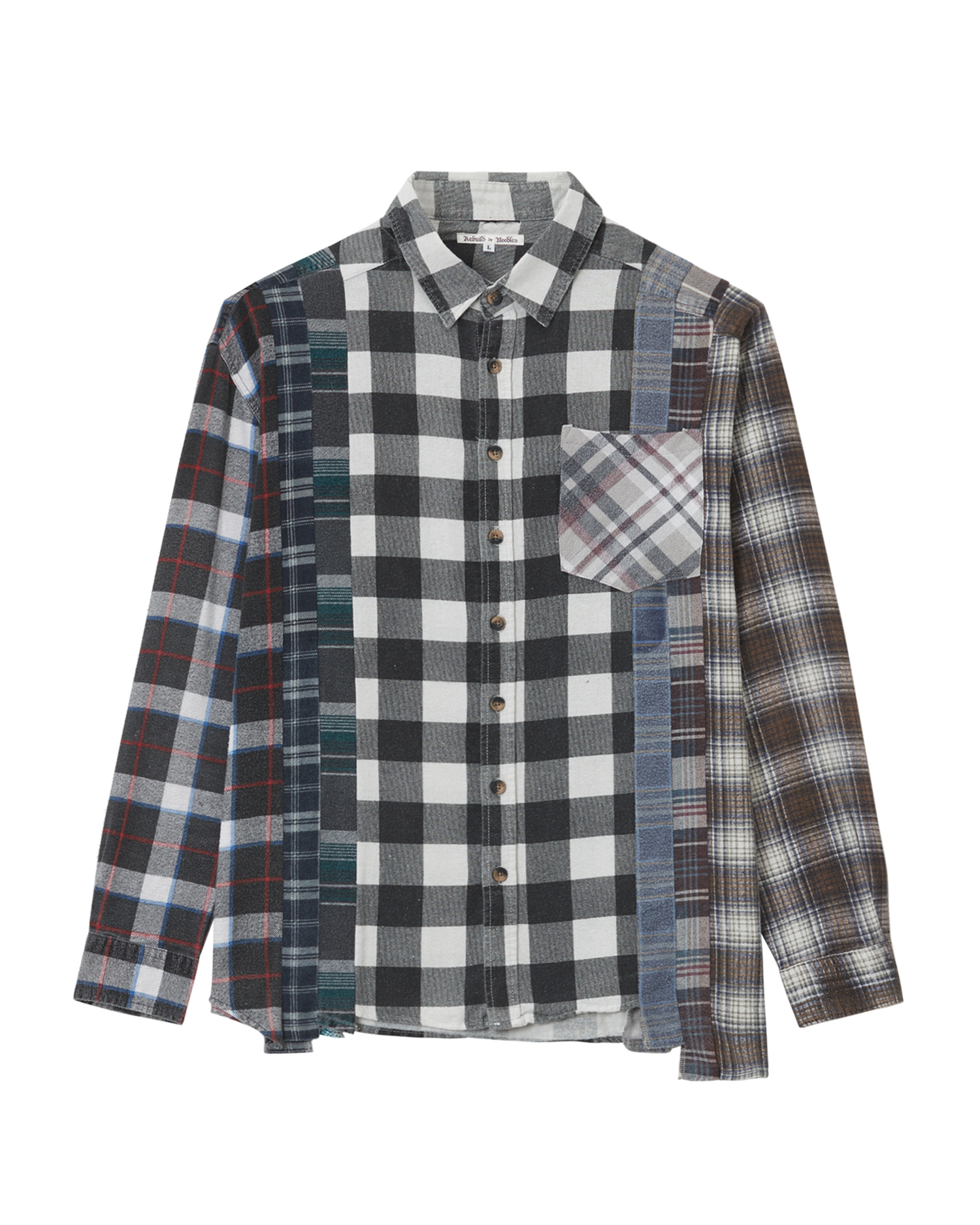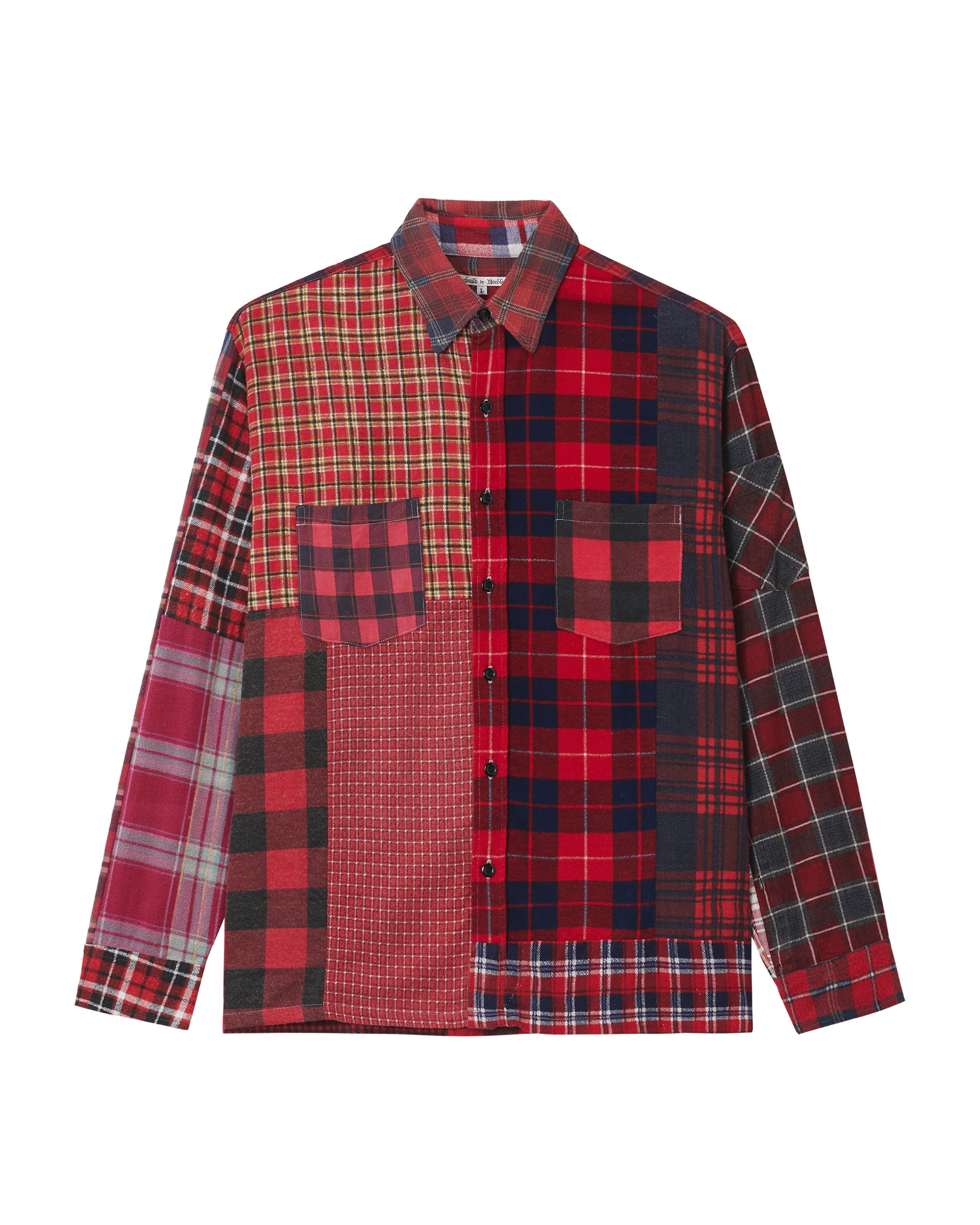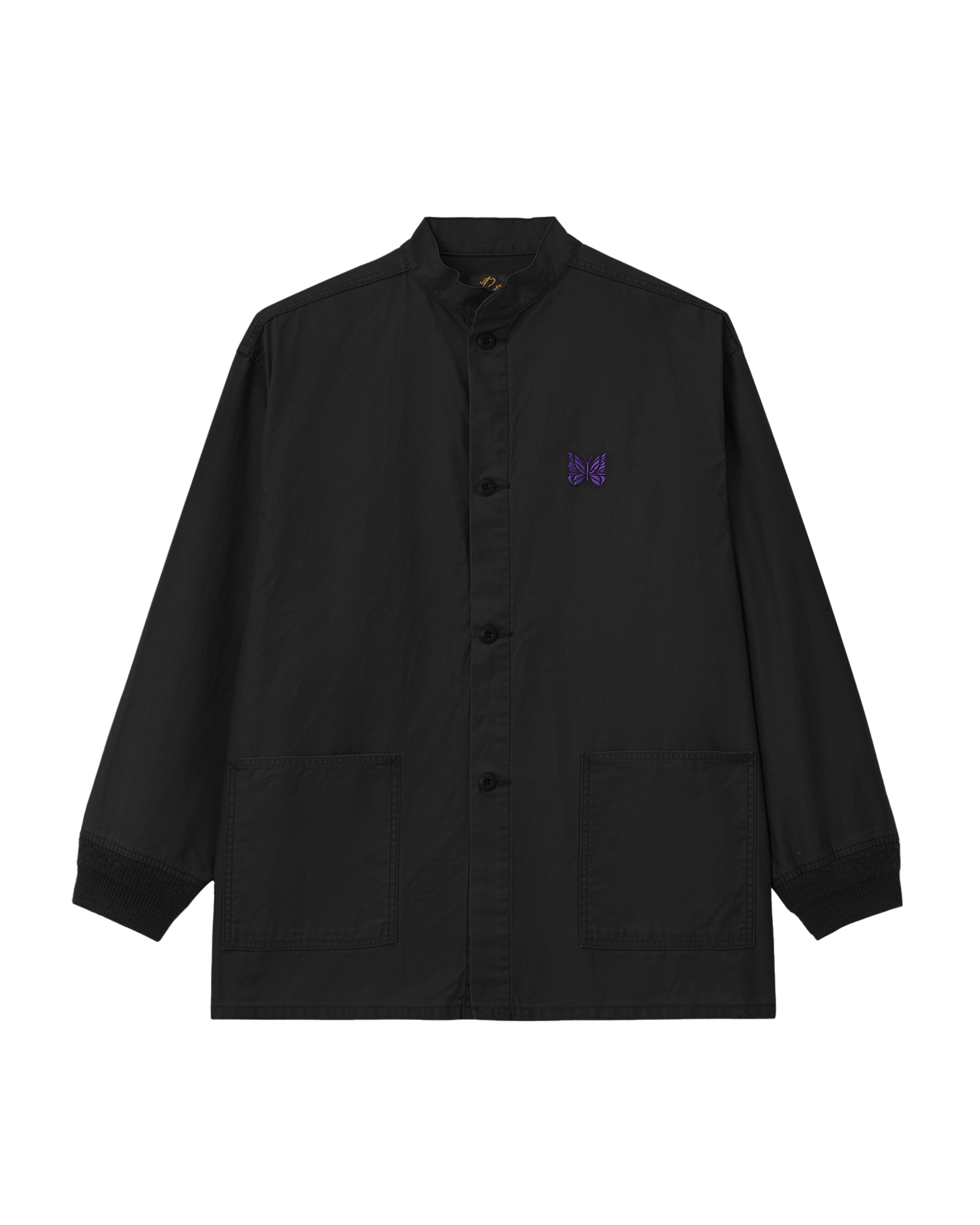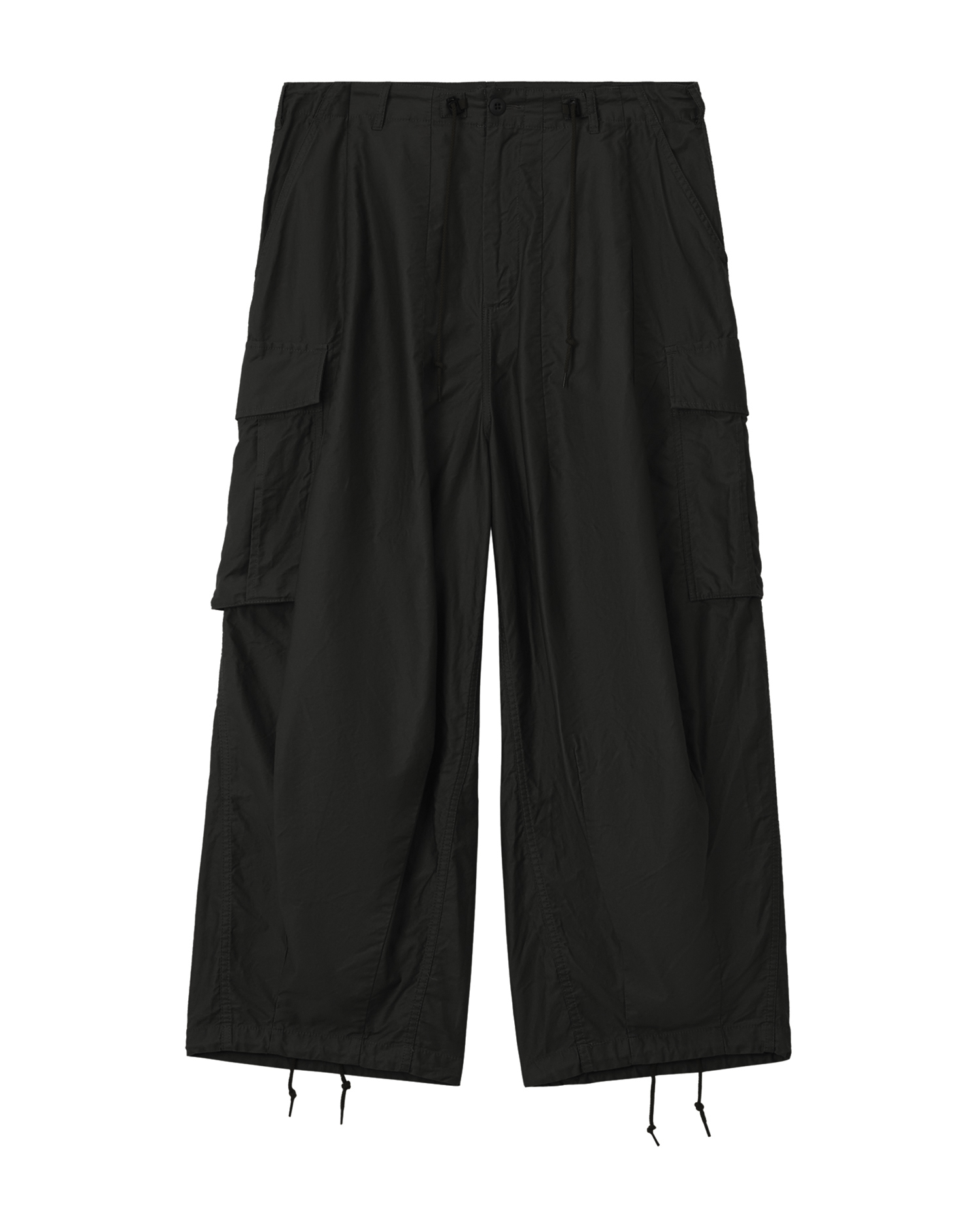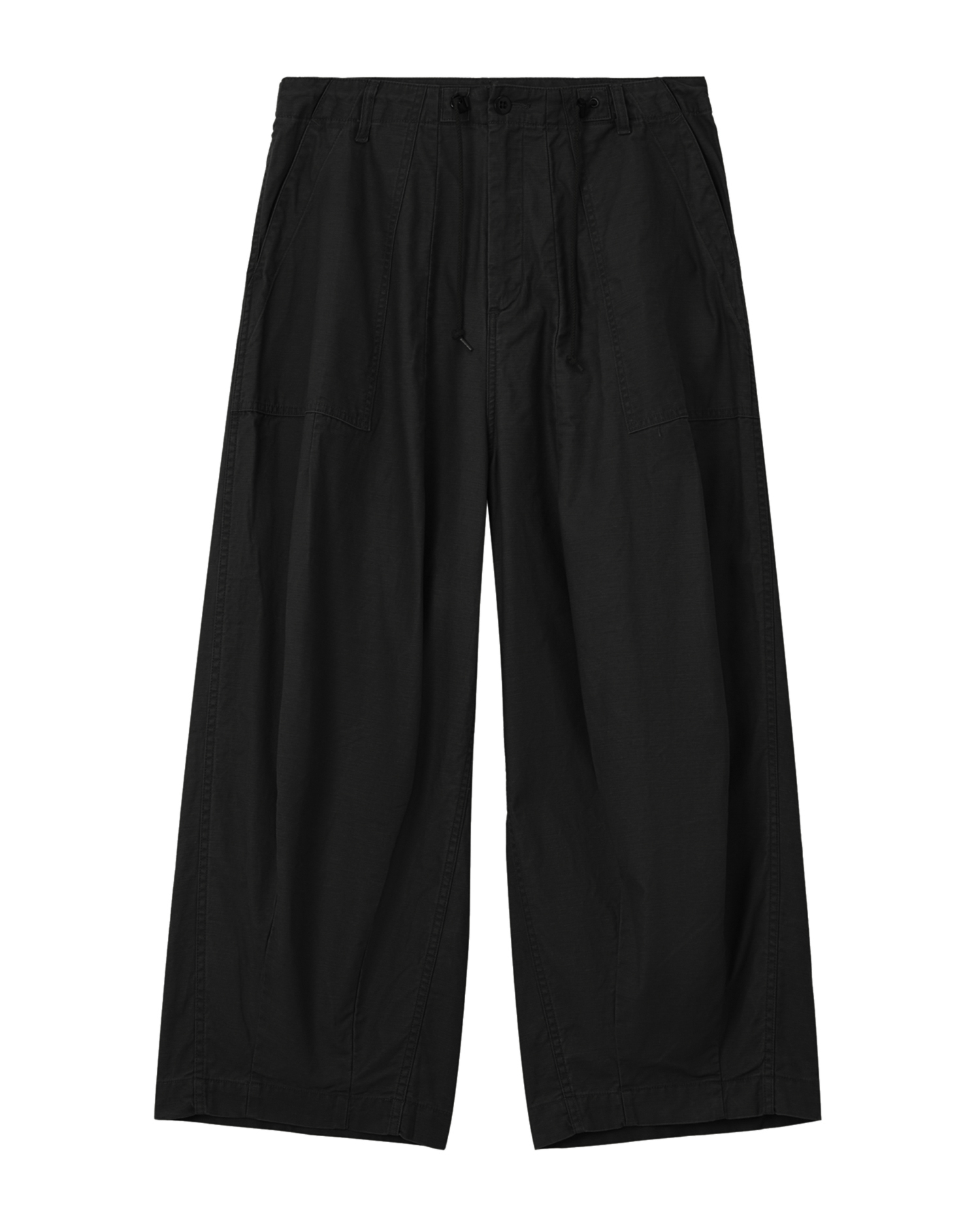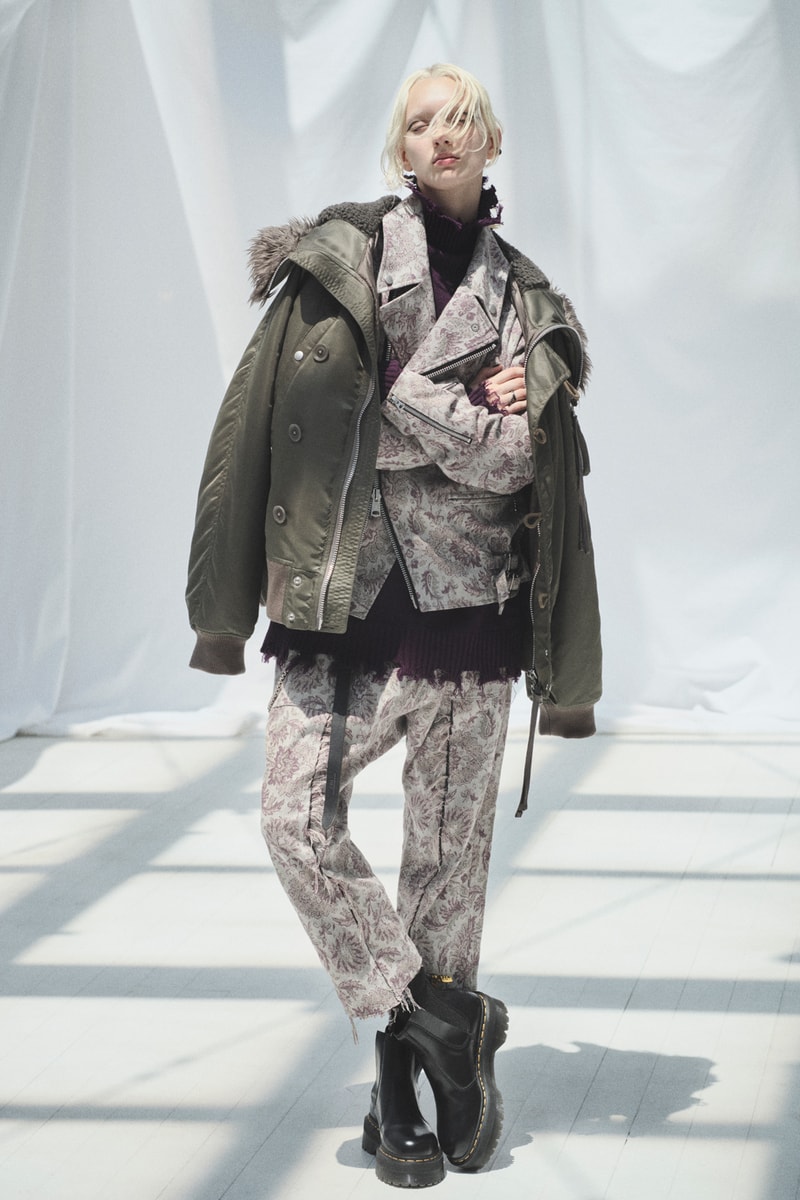
The most compelling fashion releases rarely announce themselves with volume; they arrive with the quiet confidence of two design languages speaking in perfect unison. Such is the case with the WILDSIDE Yohji Yamamoto x NEEDLES Tie-Dye BDU Cargos, a collaboration that threads a rose-and-butterfly motif through the utilitarian architecture of a military staple and the psychedelic looseness of hand-dyed cotton.
It is, by any measure, the standout drop of the season — a garment that understands exactly where Japanese craftsmanship, subcultural reference, and contemporary desire intersect. Not a logo swap, not a cash-grab capsule, but a genuine meeting of sensibilities.
The Silhouette: A BDU Reimagined
Begin with the shape. The BDU cargo — the Battle Dress Uniform trouser adopted by the U.S. military in the early 1980s — is a silhouette that NEEDLES has long treated as a canvas rather than a costume. Where lesser labels chase authenticity, NEEDLES founder Keizo Shimizu has spent four decades remixing Americana through a distinctly Japanese lens, and the BDU is among his most enduring fixations.
Here, the familiar cargo pocketing, adjustable waist tabs, and relaxed straight leg remain intact, but the surface has been entirely reimagined. The tie-dye treatment is not the crude spiral of festival memory; it is a restrained, tonal wash that reads almost like patina — evidence of dye meeting fabric rather than a graphic applied on top of it. The result is a trouser that feels lived-in before you've even worn it.
The Motif: Rose and Butterfly
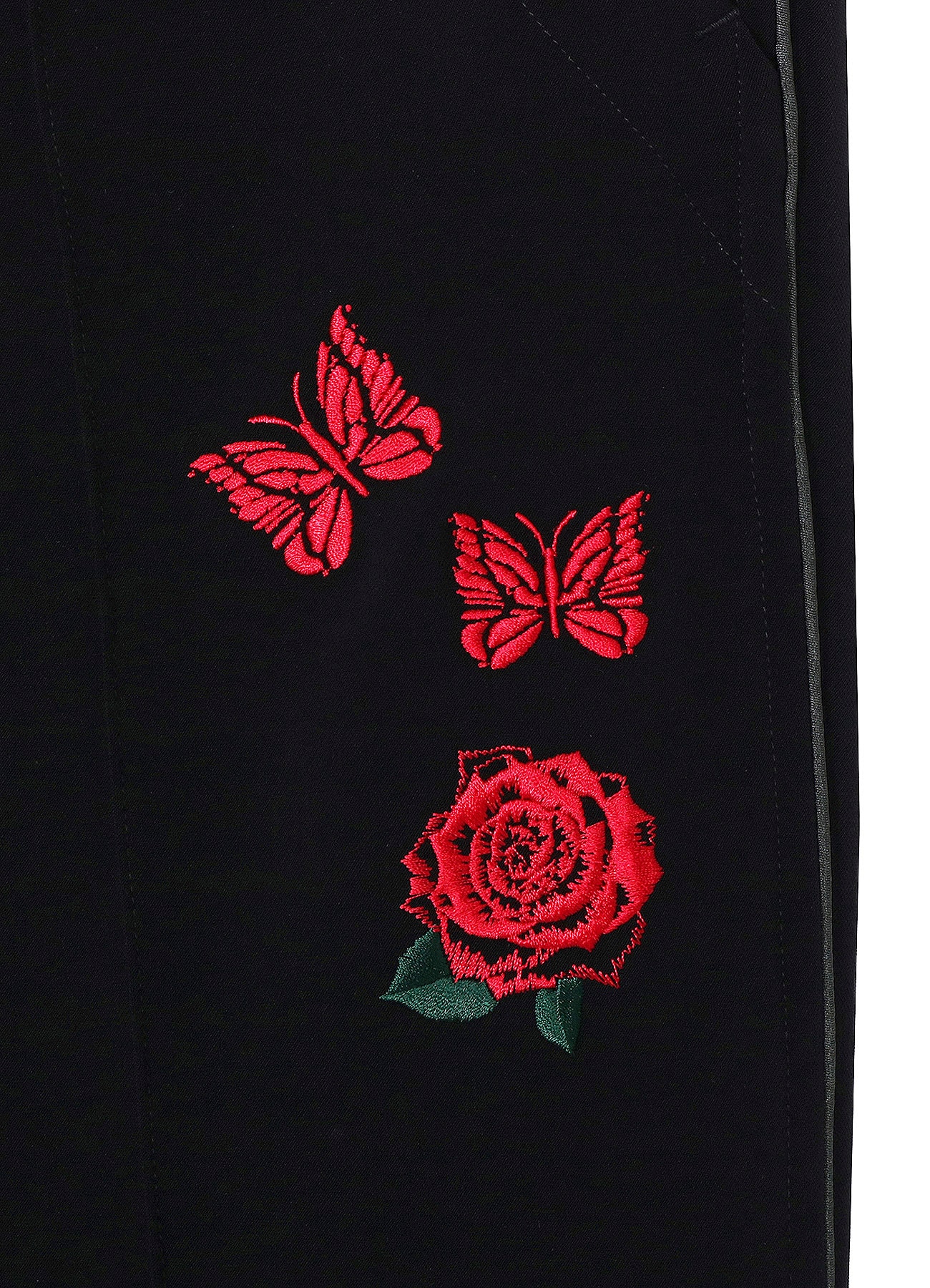
Then there is the motif itself. The rose and butterfly — rendered in a palette that shifts between deep crimson and soft ochre — carries the emotional weight of the piece.
Yohji Yamamoto's universe has always been preoccupied with beauty that borders on melancholy: flowers in decay, black as a form of romance, garments that feel like poetry worn on the body. WILDSIDE, his experimental retail and creative platform, extends that sensibility into streetwear territory without diluting it.
The butterfly, a creature of transformation and impermanence, sits naturally alongside NEEDLES' own emblem — the papillon that has adorned the brand's tracksuits and shirting for years. That shared symbolism is what makes this collaboration feel inevitable rather than opportunistic. Two houses, one language.
Material and Process: The Dye as Author
Materially, the trousers are cut from a cotton twill substantial enough to hold the cargo silhouette while remaining soft enough to drape rather than stiffen. The weight matters: too heavy and the dye sits on the surface; too light and the pockets lose their architectural presence.
The dye process, applied to finished or near-finished garments, ensures that no two pairs are identical — a deliberate rejection of the uniformity that military clothing was originally designed to enforce. It is a small act of subversion, and a meaningful one: the BDU becomes a record of its own making, each pair bearing the idiosyncrasies of the dye bath.
Who It's For: Contradiction as a Wardrobe Principle
Who is this for? Not the collector who archives and never wears. The WILDSIDE Yohji Yamamoto x NEEDLES Tie-Dye BDU Cargos are for the person who understands that the most interesting wardrobes are built from pieces that carry contradiction — utility and ornament, discipline and drift, military and meadow.
They pair as naturally with a battered knit and leather boots as they do with a clean white tee and running shoes, and they reward the wearer who lets them crease, fade, and age. These are trousers that get better the less precious you treat them.
Why does it matter now? Because the market is saturated with collaborations that amount to little more than logo swaps, and because the tie-dye revival of recent years has largely been emptied of meaning. This release restores both.
It reminds us that a dye technique can be a form of authorship, that a cargo pant can be a canvas, and that two Japanese institutions — one built on avant-garde melancholy, the other on affectionate Americana — can meet without either surrendering its identity. The rose blooms, the butterfly moves, and the BDU, for the first time in years, feels genuinely alive.