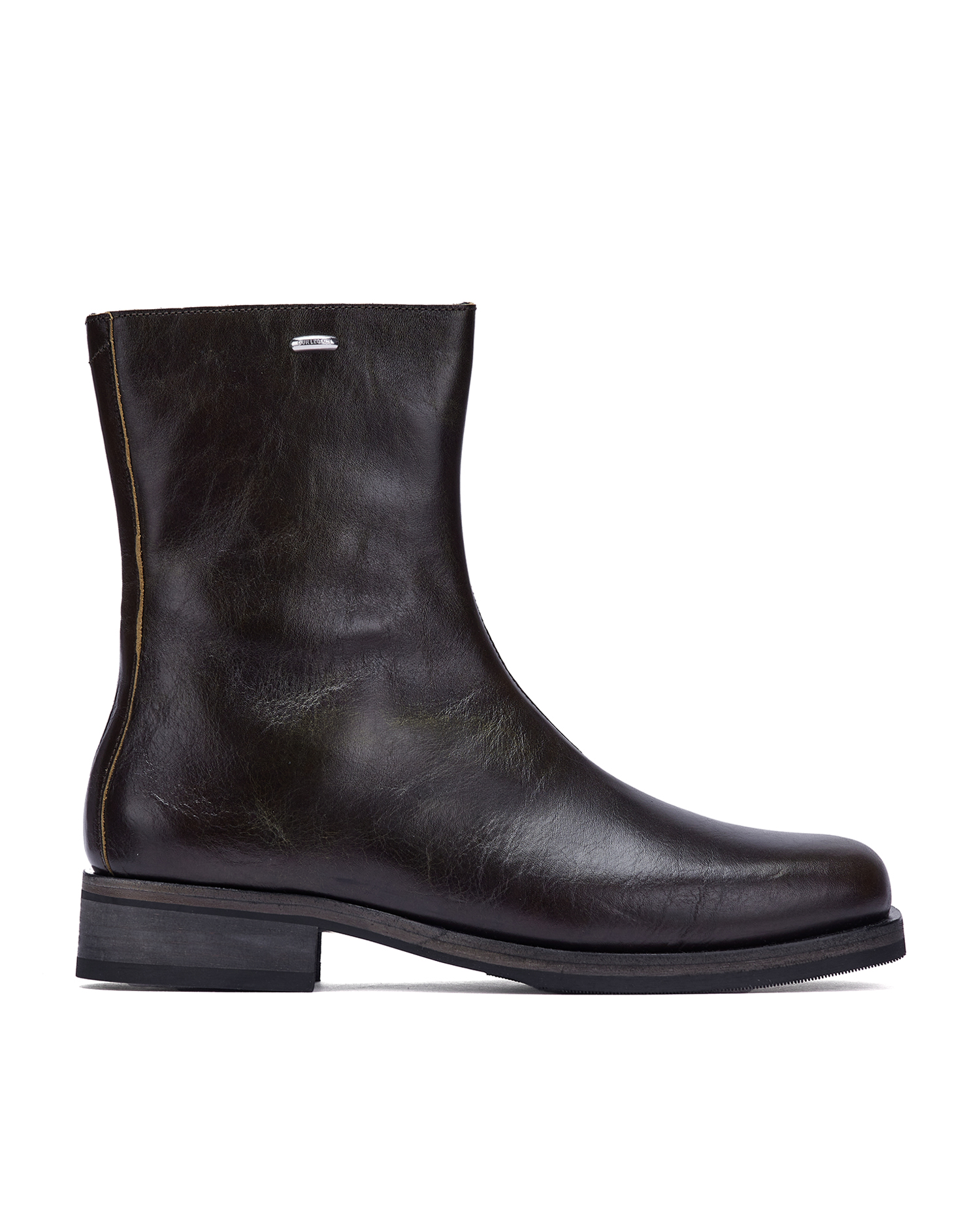
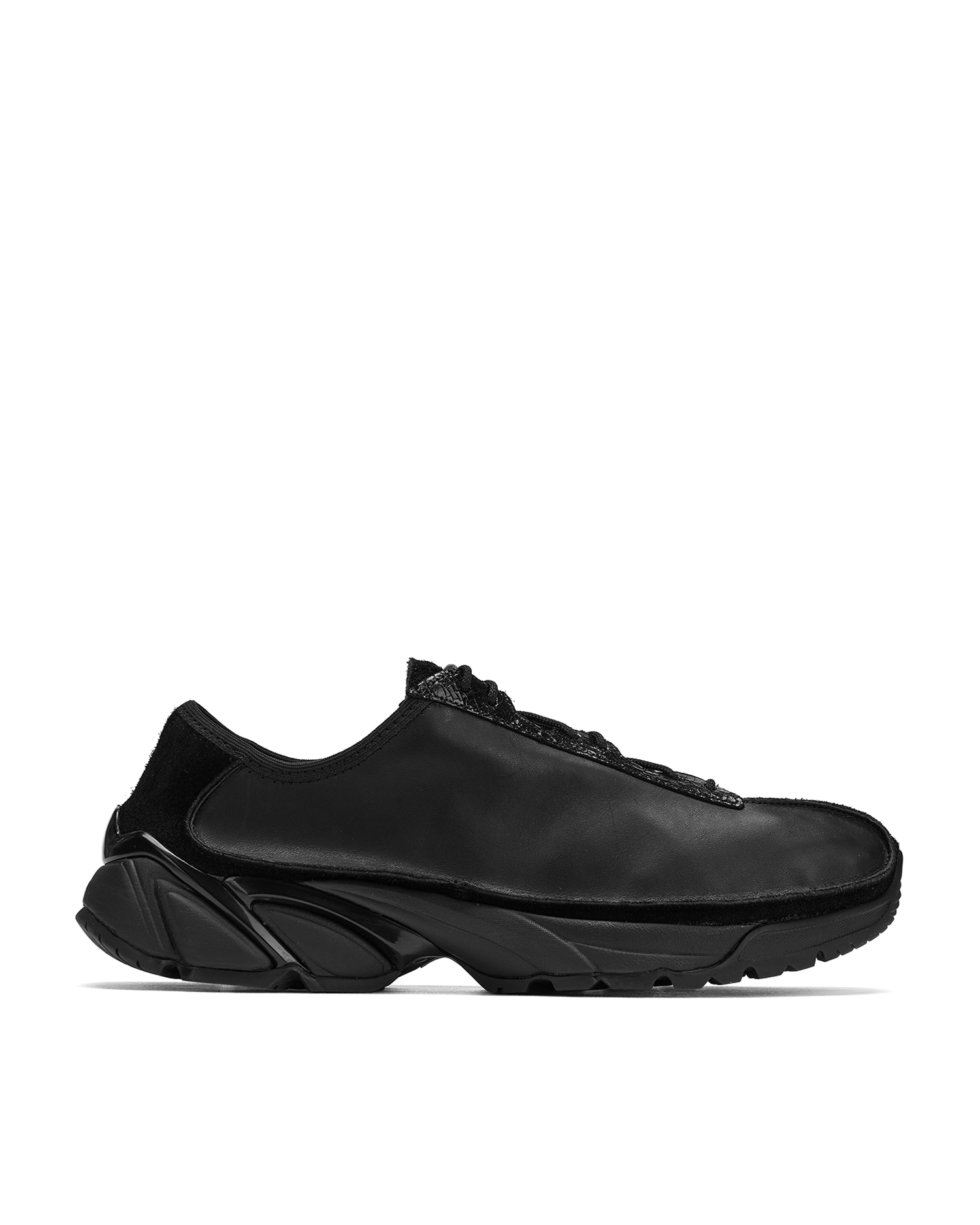
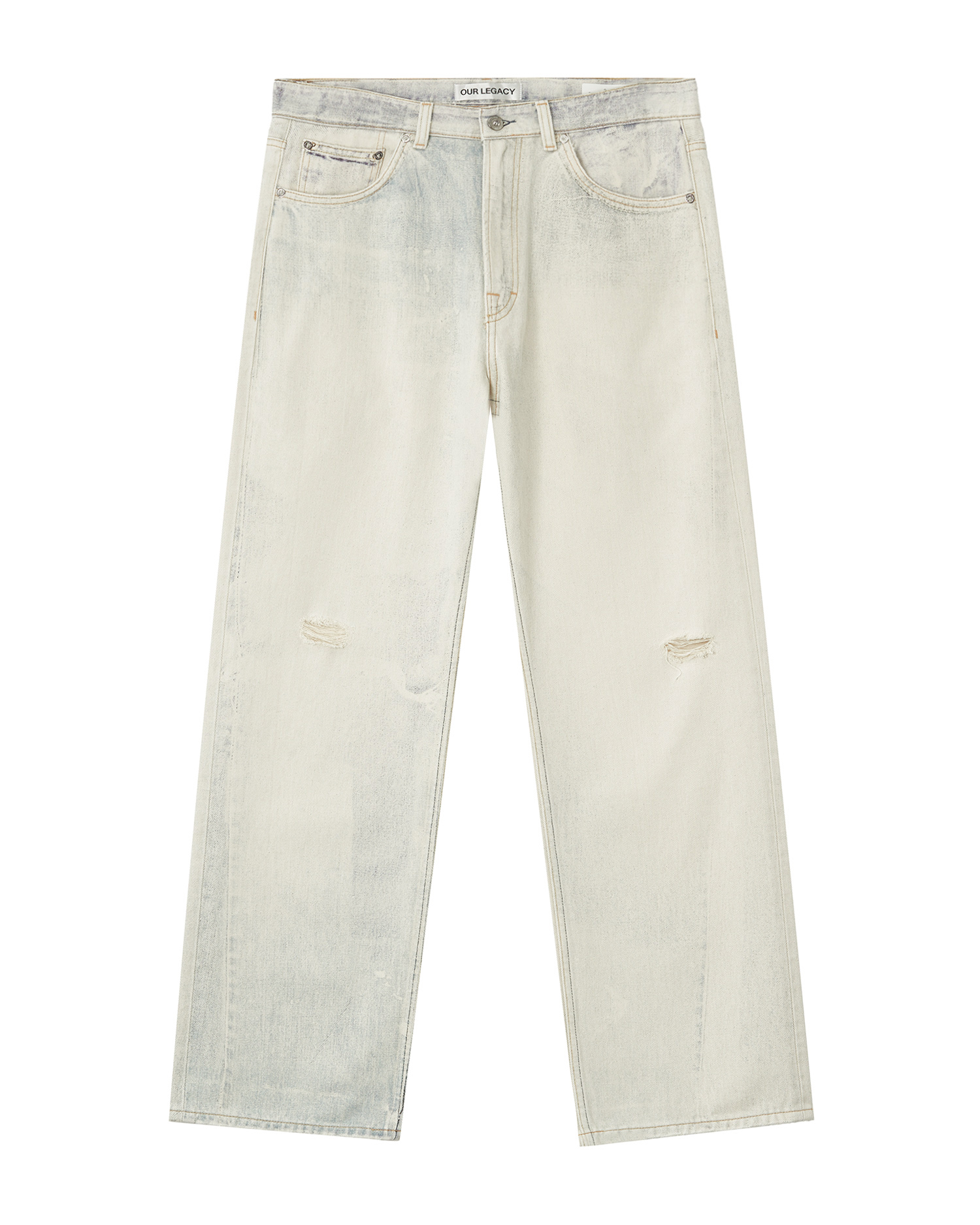
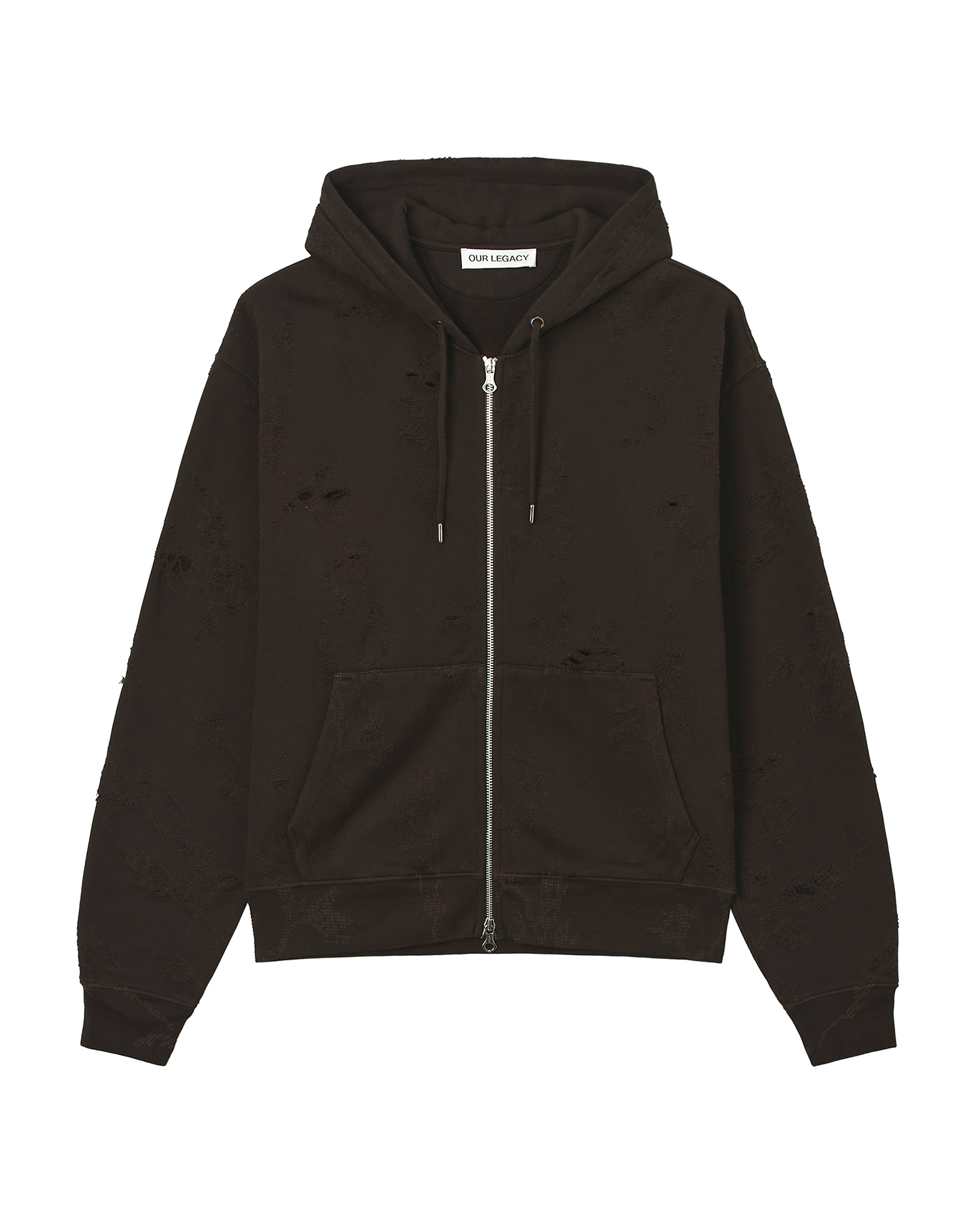
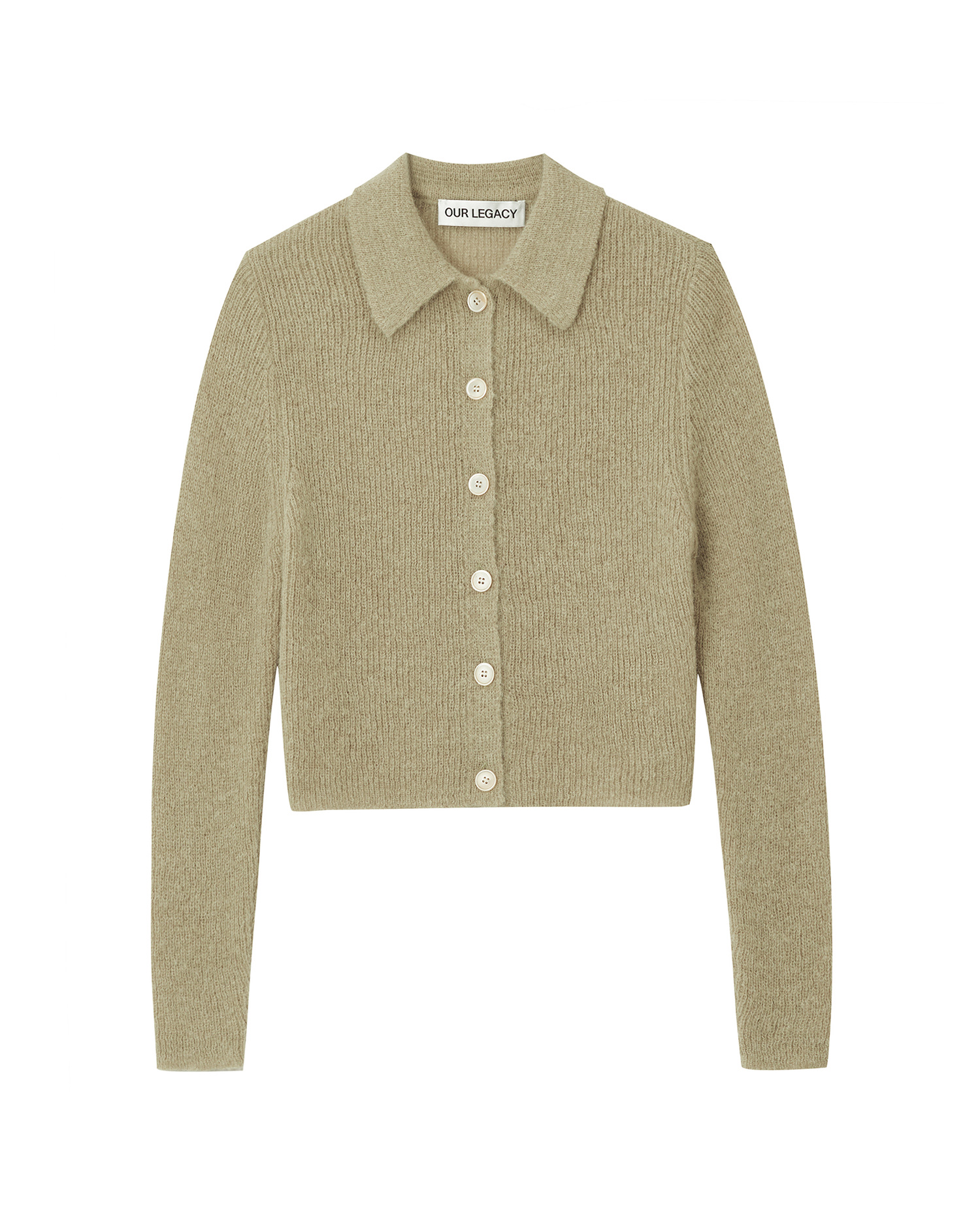
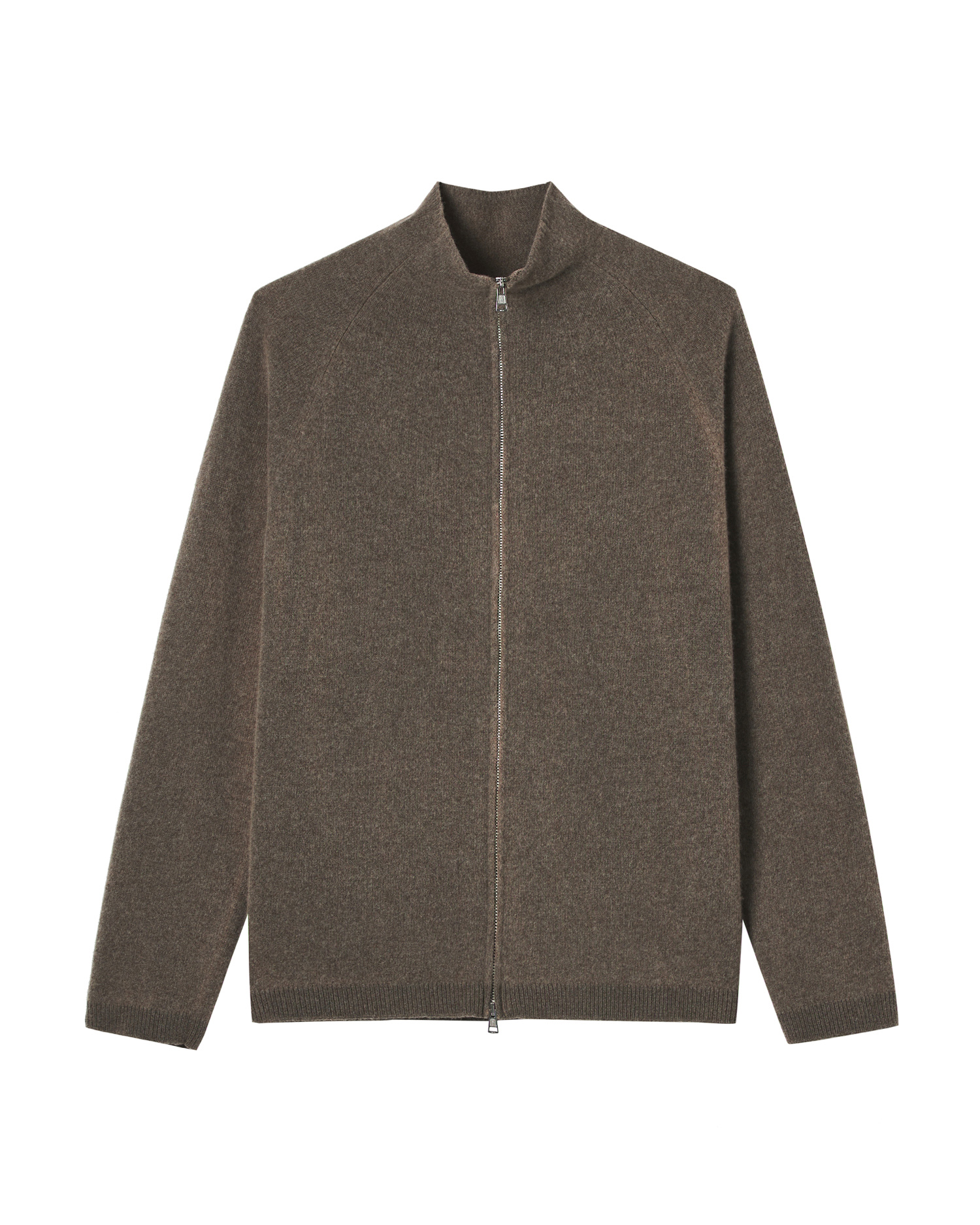
There's a particular kind of beauty that only shows up when something comes apart at the seams. Our Legacy understands this better than almost anyone working in menswear right now, and their Spring 2027 collection makes the case with a quiet, insistent confidence. This is tailoring caught mid-collapse — and somehow, that's the whole point.
The tension running through the collection is the same tension that has always animated the best British style: the gap between the uniform and the body wearing it. For Spring 2027, the Stockholm-based label took the visual grammar of British subcultures — mod sharpness, punk abrasion, the studied dishevelment of post-punk — and ran it through their signature deconstructive lens. What emerged feels less like costume than like memory: half-remembered, deliberately unresolved, and all the more potent for it.
Tailoring in a State of Productive Decay
What walked the runway was suiting that seemed to be falling apart in the most considered way possible. Jackets arrived with their internal architecture exposed. Lapels were softened, sometimes removed entirely. Shoulders were stripped of padding until the garment seemed to collapse into the wearer rather than impose a silhouette upon him. Trousers came wide and pooling, or cropped awkwardly above the ankle in a way that recalled the DIY hemming of a generation that couldn't afford a tailor.
Our Legacy has always understood that the most interesting clothes sit at the point where intention meets accident. Spring 2027 pushes that philosophy hard. Seams are left raw. Linings are treated as exterior surfaces. Traditional suiting fabrics — grey flannel, chalk-stripe wool — get interrupted by unexpected panels or sliced and reassembled at unfamiliar angles. Nothing is quite where you expect it to be, and that's precisely the pleasure.
Fabric That Remembers Being Worn
The material story matters as much as the cut. Our Legacy worked with mills to produce fabrics that carry the patina of use before the garment has ever been worn: washed woolens with a slight fuzz, cottons that look sun-faded, leathers that appear already broken in. It's a technique the brand has refined across a decade of collections, and here it serves the subcultural thesis perfectly. These are clothes that look like they've had a life — a night at a club, a scuffle, a long walk home at dawn — even as they hang fresh on the rail.
The Politics of Borrowed Codes
There's a deeper cultural argument embedded in the collection. British subcultures were, at their core, acts of appropriation and reinvention: working-class kids taking the symbols of the establishment — the suit, the boot, the trench — and bending them into something insurgent. Our Legacy's Spring 2027 menswear performs a similar maneuver in reverse, taking the insurgent symbols and returning them to the language of tailoring, but without smoothing away the friction.
The result is neither a tribute act nor a parody. It's a meditation on how style travels, how it mutates, and how the codes of one era can be made legible — and desirable — in another. This collection arrives at a moment when menswear is once again obsessed with the suit, but often in a conservative register: sharp shoulders, precise lines, a retreat into formality. Our Legacy offers a counter-proposal. Their tailoring is soft, unresolved, and quietly radical — a suit that admits doubt. For the man who wants to look considered without looking rigid, who understands that elegance can coexist with a certain productive messiness, this is the collection to study. It's for the wearer who reads clothes the way others read music: attentive to influence, lineage, and the pleasure of a well-placed dissonance.
Utility, Sport, and the Casual Archive
Spring 2027 also confirms something the brand has been building toward for several seasons: a willingness to engage with sport and utility without abandoning its intellectual core. Pieces that nod to athletic wear — track-inspired trousers, lightweight outerwear with a functional bent — are folded into the collection not as a concession to trend but as another layer in the subcultural archive. After all, the casual was itself a subculture, and Our Legacy treats it with the same seriousness it affords the punk and the mod.
The broader lesson of the collection is that nostalgia, handled with intelligence, is not regressive. Our Legacy isn't asking anyone to dress like it's 1979. The brand is asking what those codes mean now, stripped of their original context, and how they can be worn by someone who never lived through them. The answer, in Spring 2027, is: with difficulty, with care, and with a suit that never quite resolves — which is exactly what makes it worth wearing.