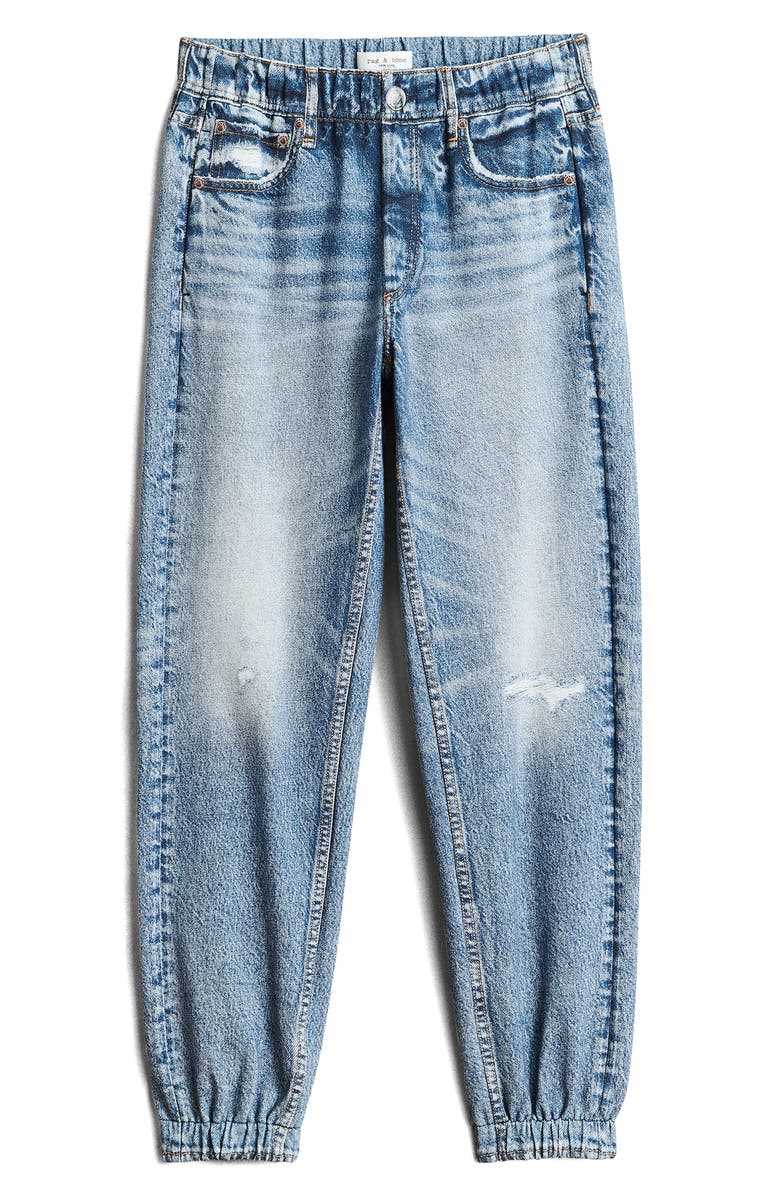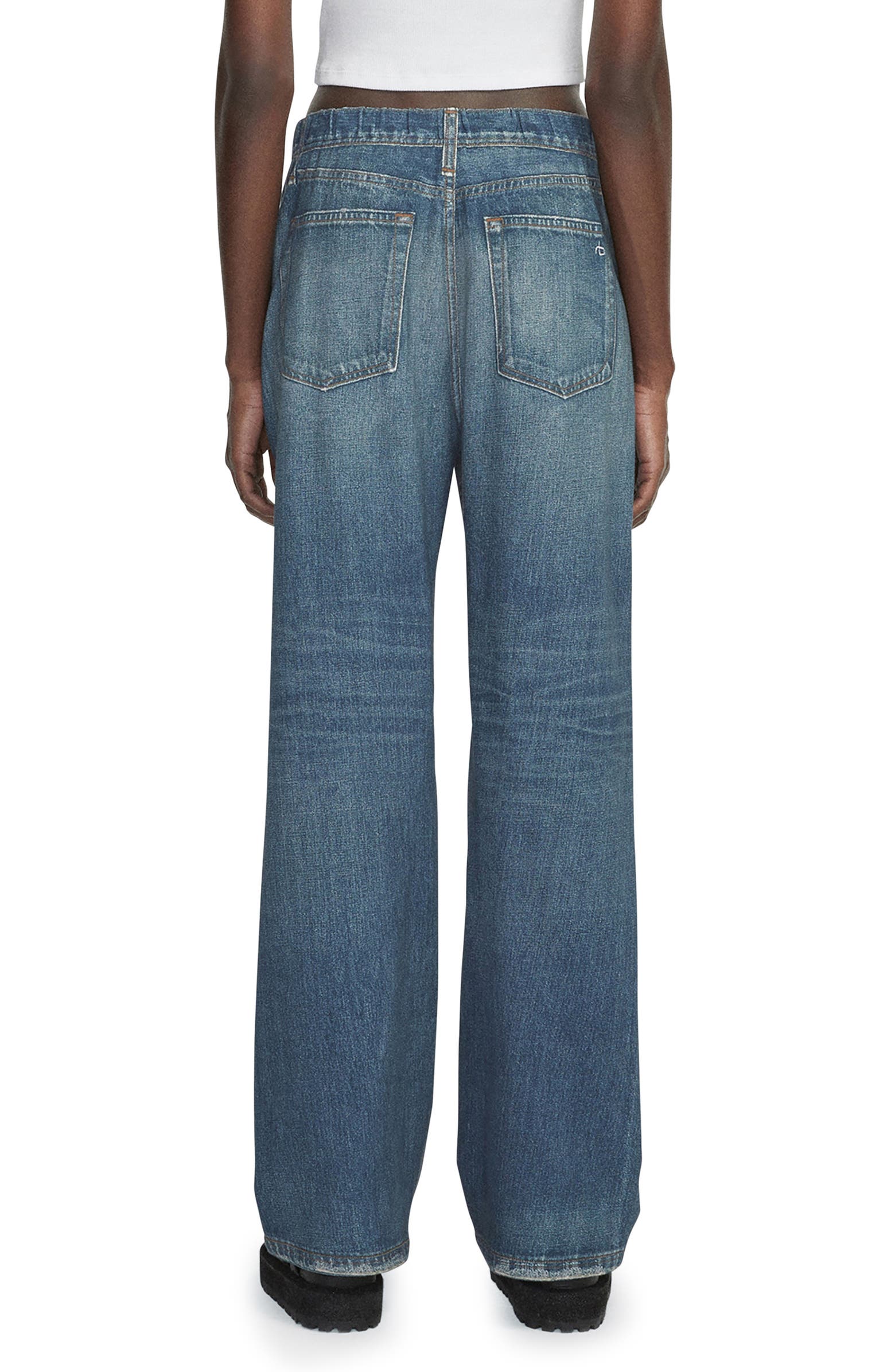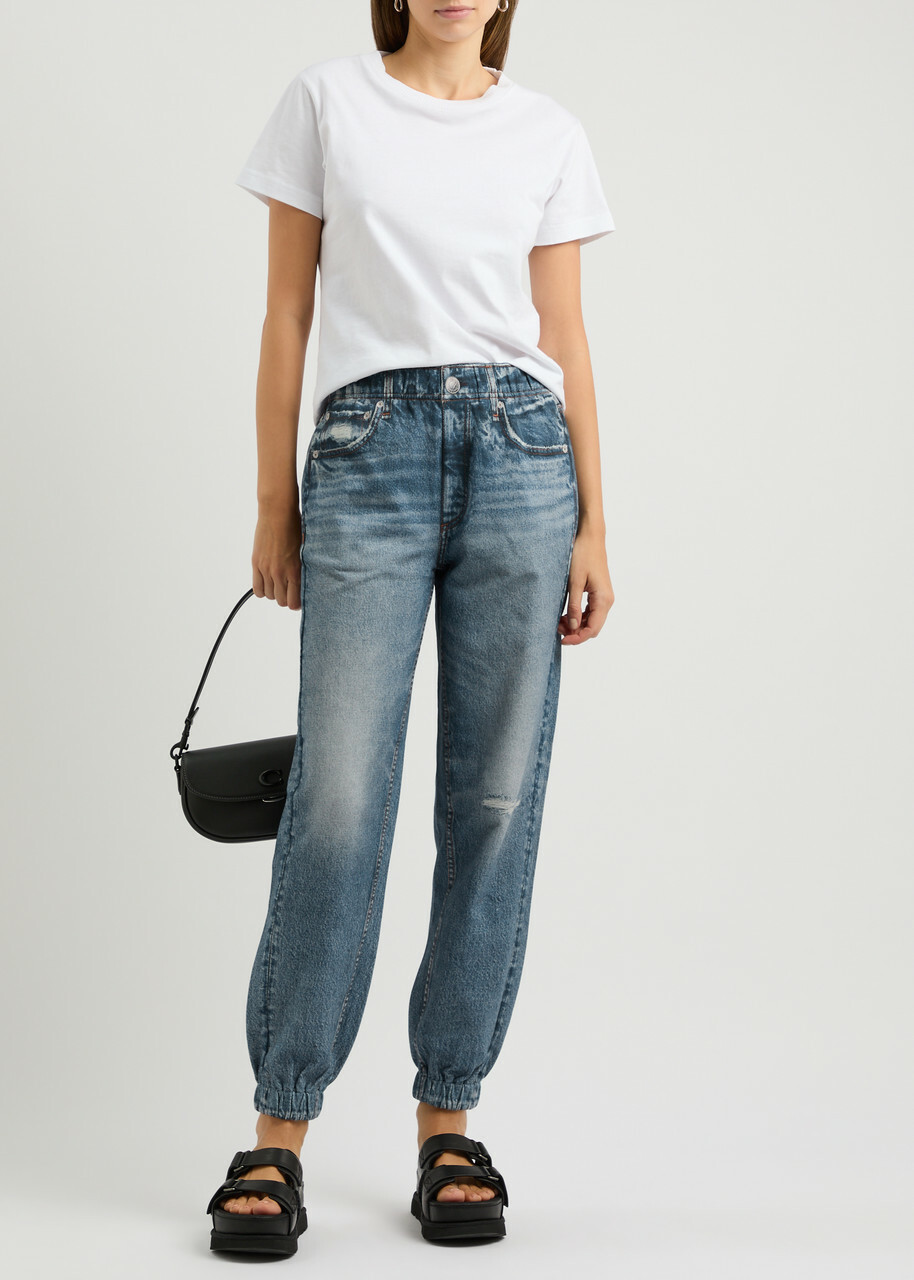
Every so often a garment shows up that feels less like a product and more like a magic trick. The Rag & Bone Miramar Sweatpant Jean is exactly that. At a glance, it reads as a classic pair of lived-in denim: whiskering at the hips, a defined fly, contrast stitching, the faint suggestion of a five-pocket silhouette. Look closer — or better, touch it — and the illusion dissolves. These are not jeans at all. They are sweatpants wearing denim's costume, and the deception is executed so beautifully that it has turned the fashion world's head.
The genius of the Miramar lies in its trompe l'oeil construction. Rag & Bone prints a photorealistic denim texture directly onto a soft, brushed cotton-blend knit, then finishes the piece with genuine denim detailing — real belt loops, a functional button closure, and pocketing that mimics the geometry of traditional jeans. The result is a pant that photographs like indigo twill and drapes like your favorite weekend loungewear. It is visual engineering as much as it is clothing, and it speaks to a brand that has spent two decades refining the space between downtown cool and everyday ease.
A Denim House That Knows the Language
Founded in 2002, Rag & Bone built its reputation on precisely this kind of quiet subversion — British tailoring sensibility married to American utilitarian grit. The label made its name on denim, and denim remains its native language. So when Rag & Bone turns its attention to reinventing the category, the industry pays attention.
GQ recently declared that the brand "just nailed its comeback jeans," a nod to how the Miramar has reasserted Rag & Bone's authority in a market saturated with novelty. This is not a gimmick from an outsider. It is a confident statement from a house that understands exactly what denim means to the people who wear it — and what it costs them in comfort to keep wearing it.
The Answer to the Comfort Reckoning
The cultural timing could not be sharper. We are living through the great comfort reckoning, an era in which the pandemic-era embrace of soft dressing has hardened into a permanent expectation. Nobody wants to sacrifice ease anymore, but nobody wants to look like they've given up either.
The Miramar Sweatpant Jean resolves that tension in a single garment. It answers the modern wardrobe's central riddle: how do you dress for a nine-hour travel day, a long-haul flight, a remote-work morning that bleeds into an evening dinner, without changing clothes? Condé Nast Traveler's reviewer called them a revelation for travel. Good Housekeeping's skeptic admitted she wore them to work. Oprah — the ultimate arbiter of whether something is genuinely worth your money — reportedly counts them among fall's essential finds. When a garment wins over the travel desk, the test kitchen, and the world's most influential tastemaker simultaneously, it has crossed from trend into staple.
Who It's For
Anyone who has ever stood in a closet, torn between looking polished and feeling human. The Miramar is for the frequent flyer, the new parent, the creative director, the weekend errand-runner — the person who wants the silhouette of a great pair of jeans without the rigidity of actual denim. It is unisex in spirit, effortless in practice, and quietly luxurious in a way that rewards the wearer rather than the observer.
There is also something satisfying about the honesty of the trick. The whiskering, the stitching, the suggestion of a worn-in five-pocket — all of it is a printed fiction, and yet the pant delivers on the promise those details make. You get the look of denim you've broken in over years, minus the years.
What makes the Rag & Bone Miramar Sweatpant Jean matter right now is that it refuses the false choice between comfort and style that has defined dressing for far too long. It is proof that a brand with real design intelligence can solve a problem the rest of the market only complains about. And it is, quite simply, the rare viral piece that deserves the attention — because the trick isn't that it looks like jeans. The trick is that once you put them on, you may never want to take them off.