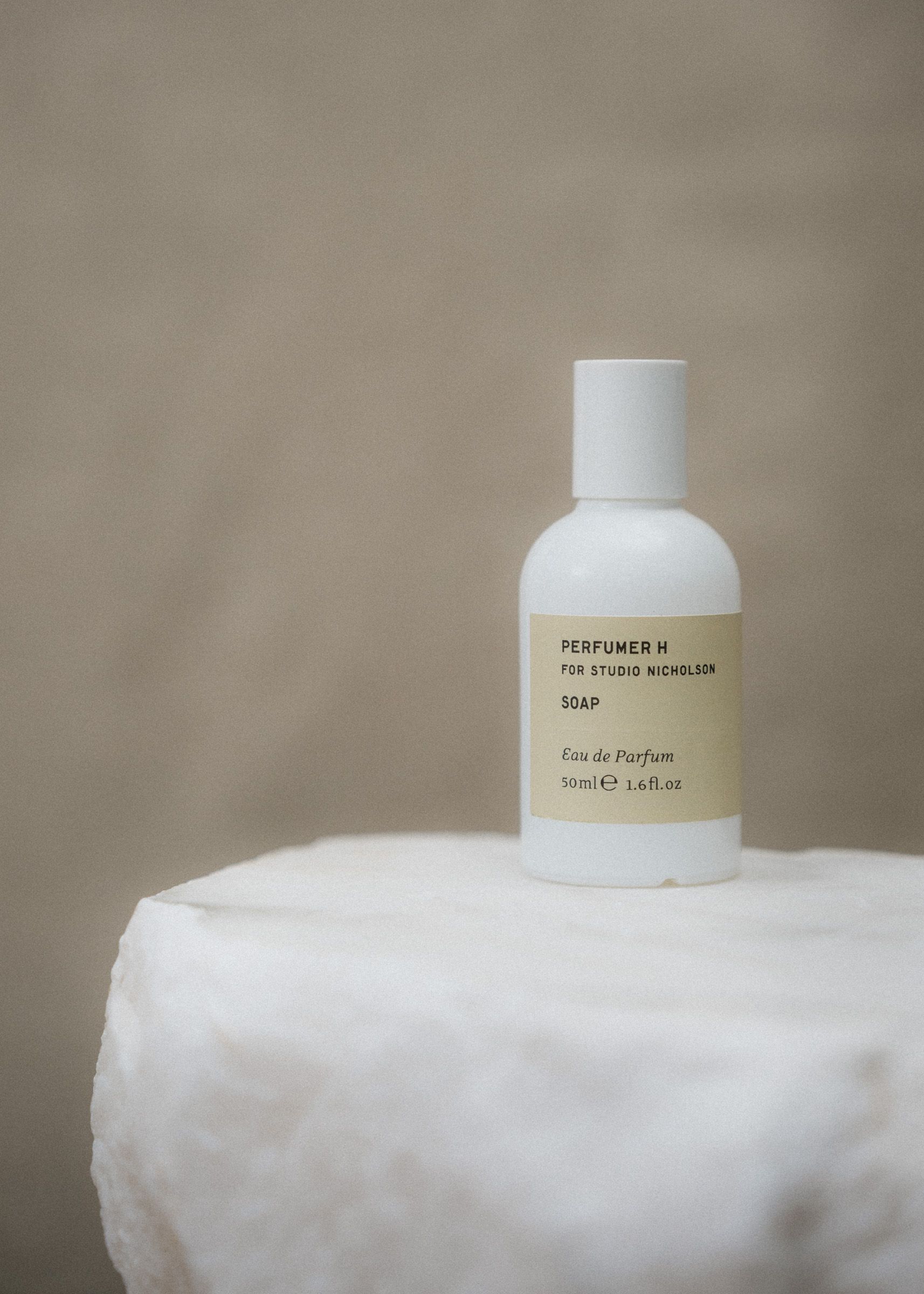
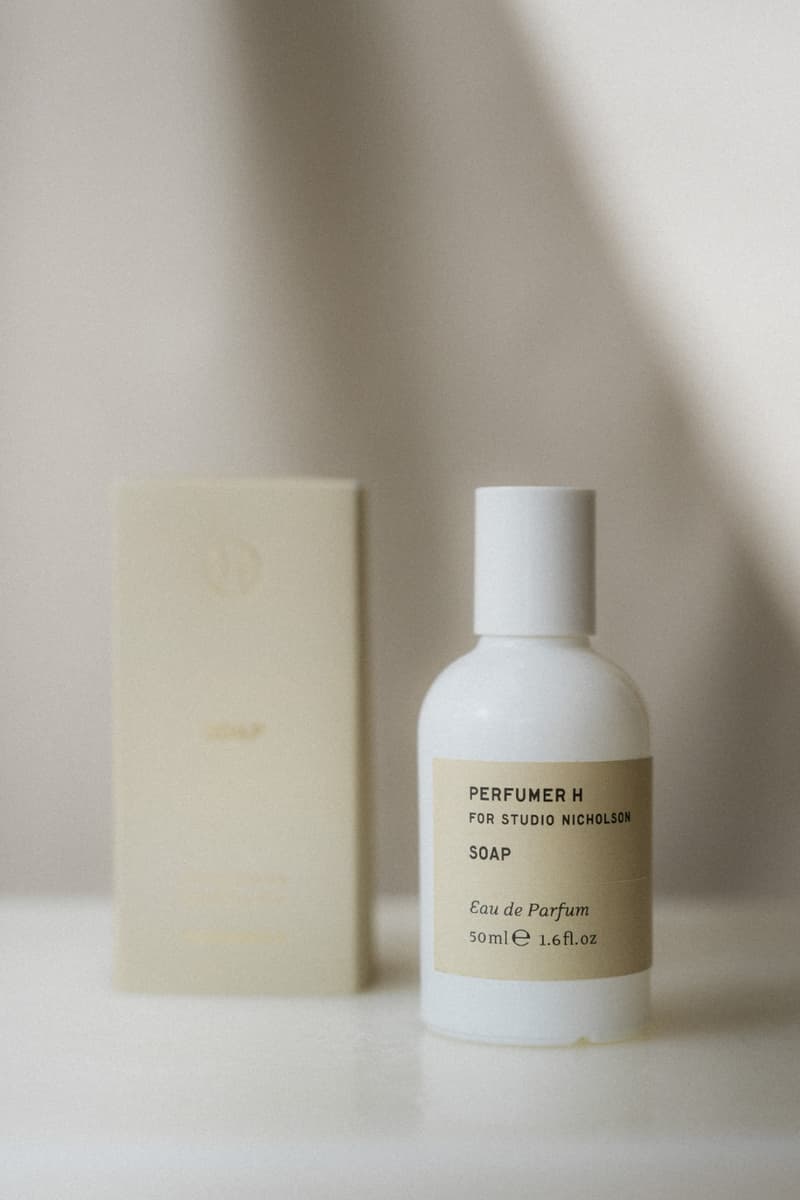
For fifteen years, Studio Nicholson has built its reputation on a singular proposition: that the most ordinary garments—the poplin shirt, the pleated trouser, the chore jacket—deserve the same rigor and consideration usually reserved for couture. Founded by designer Nick Wakeman in 2010, the London label has become a byword for a certain kind of modular, quietly architectural dressing, the sort of clothes that look effortless precisely because so much thought has gone into them. Now, for the first time, Studio Nicholson has translated that philosophy into scent. The Studio Nicholson x Perfumer H fragrance marks the brand’s inaugural foray into perfumery, a collaboration with the revered London perfumer Lyn Harris, and it arrives at a moment when the house is arguably more visible than at any point in its history.
The timing is anything but incidental. Studio Nicholson recently staged its debut at Paris Fashion Week with its Spring 2027 collection, a milestone that signaled its arrival on fashion’s biggest stage, and the brand is in the midst of a deliberate global expansion—opening its first store in China, extending its Japanese footprint to Kyoto, and bringing its “gallery-meets-residential” retail concept to Beijing. A signature scent is the kind of category extension that brands reach for when they want to become more than a label; it is an assertion of identity, a way of being present in someone’s life beyond the wardrobe. That Studio Nicholson chose to make its first fragrance in partnership with Perfumer H rather than license its name to a beauty conglomerate tells you everything about how seriously the house takes the proposition.
A Study in Restraint
What the two have made together is, fittingly, a study in restraint. Harris—whose eponymous house is known for its painterly, ingredient-led compositions—reportedly built the scent around the sensation of slipping on a freshly laundered shirt, that crisp, clean, faintly mineral smell of good cotton and pressed linen. It is a brilliant conceptual move for a brand whose entire output orbits the shirt: the garment that anchors Wakeman’s collections season after season, the piece that best expresses her belief in volume, proportion, and the quiet authority of well-cut fabric. Where most debut fragrances reach for drama or sweetness, this one reaches for clarity.
Expect something transparent and skin-close, likely threaded with the powdery freshness of iris or the dry bite of citrus and white musk, though the exact architecture is best experienced on skin rather than described. The point isn’t to announce yourself from across the room. It’s to smell like the best version of something you already are.
An Overlap of Sensibilities
Culturally, the collaboration sits at a fascinating intersection. Perfumer H has become something of a cult institution among the design-literate, its hand-blown bottles and refillable model a rebuke to the disposable logic of mainstream fragrance. Studio Nicholson, meanwhile, has spent years cultivating a similarly discerning audience—people who buy fewer, better things and who think of getting dressed as a form of design practice rather than a daily chore.
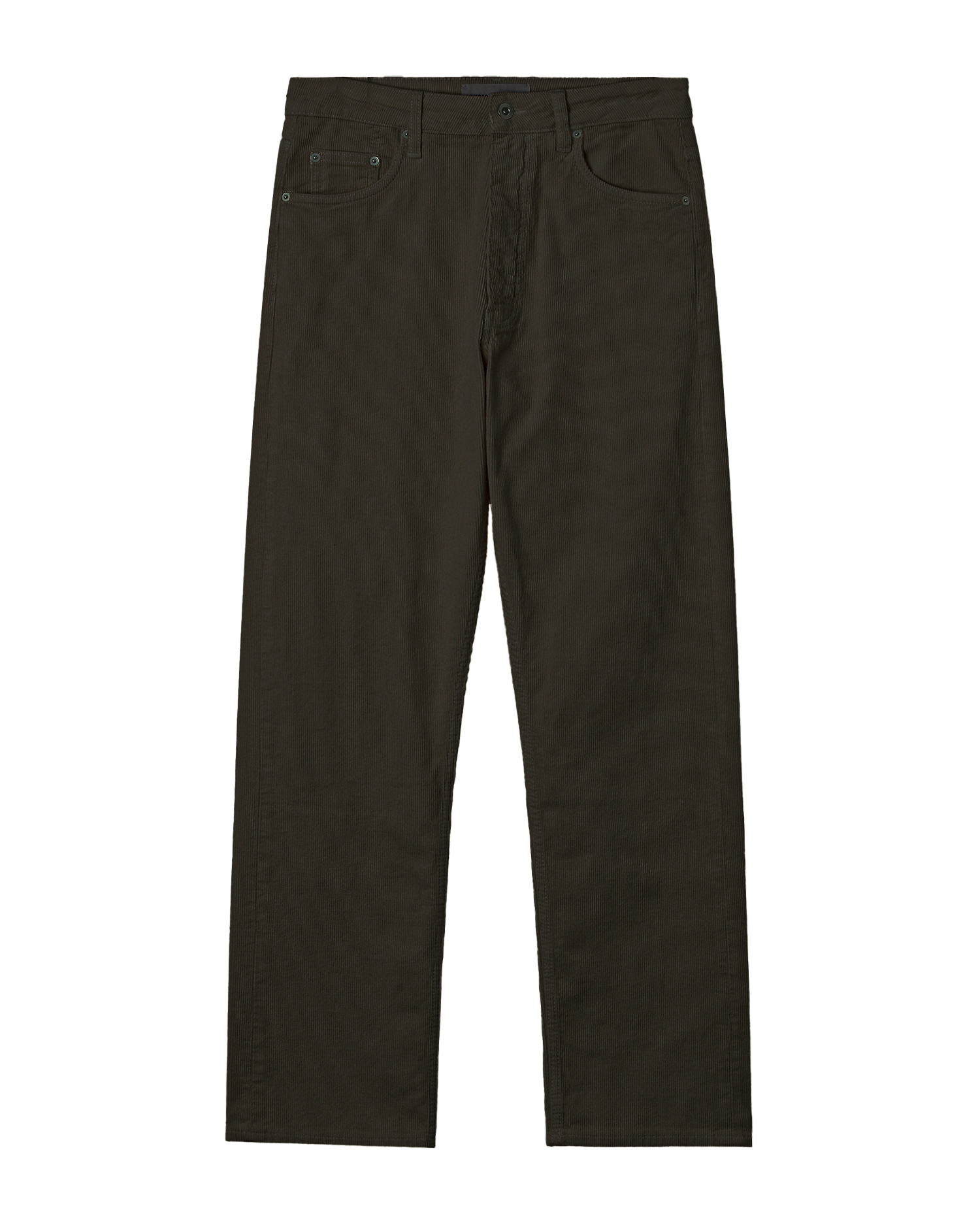
The overlap is near-total. This is a scent for the person who already owns the wide-leg trouser and the boxy overshirt, who regards the ritual of dressing as a small daily pleasure, and who would find the idea of smelling like a clean shirt not austere but deeply luxurious. Both houses share a temperament: exacting, understated, allergic to noise. Neither is chasing virality. Both are chasing something closer to permanence.
A Portable Ambassador
It matters now because fragrance has become the clearest way for a fashion house to articulate its worldview in three dimensions. A garment is worn and removed; a scent lingers, becomes personal, becomes memory. For a brand in the middle of a global push—new markets, new cities, a new audience encountering Studio Nicholson for the first time—a fragrance is a kind of ambassador, a portable distillation of the house’s values that travels where the clothes have yet to reach.
That it smells like the most fundamental piece in the Studio Nicholson canon is precisely the point. The shirt is where Wakeman’s thinking begins: the collar’s stance, the fall of the cuff, the way cotton holds a line. To render that in scent rather than cloth is a neat bit of lateral thinking—and a reminder that the most sophisticated ideas are often the ones hiding in plain sight, folded on a shelf.
The house has always argued that the ordinary, done exceptionally well, is the height of sophistication. Its first fragrance makes the same case, wordlessly, on the skin.