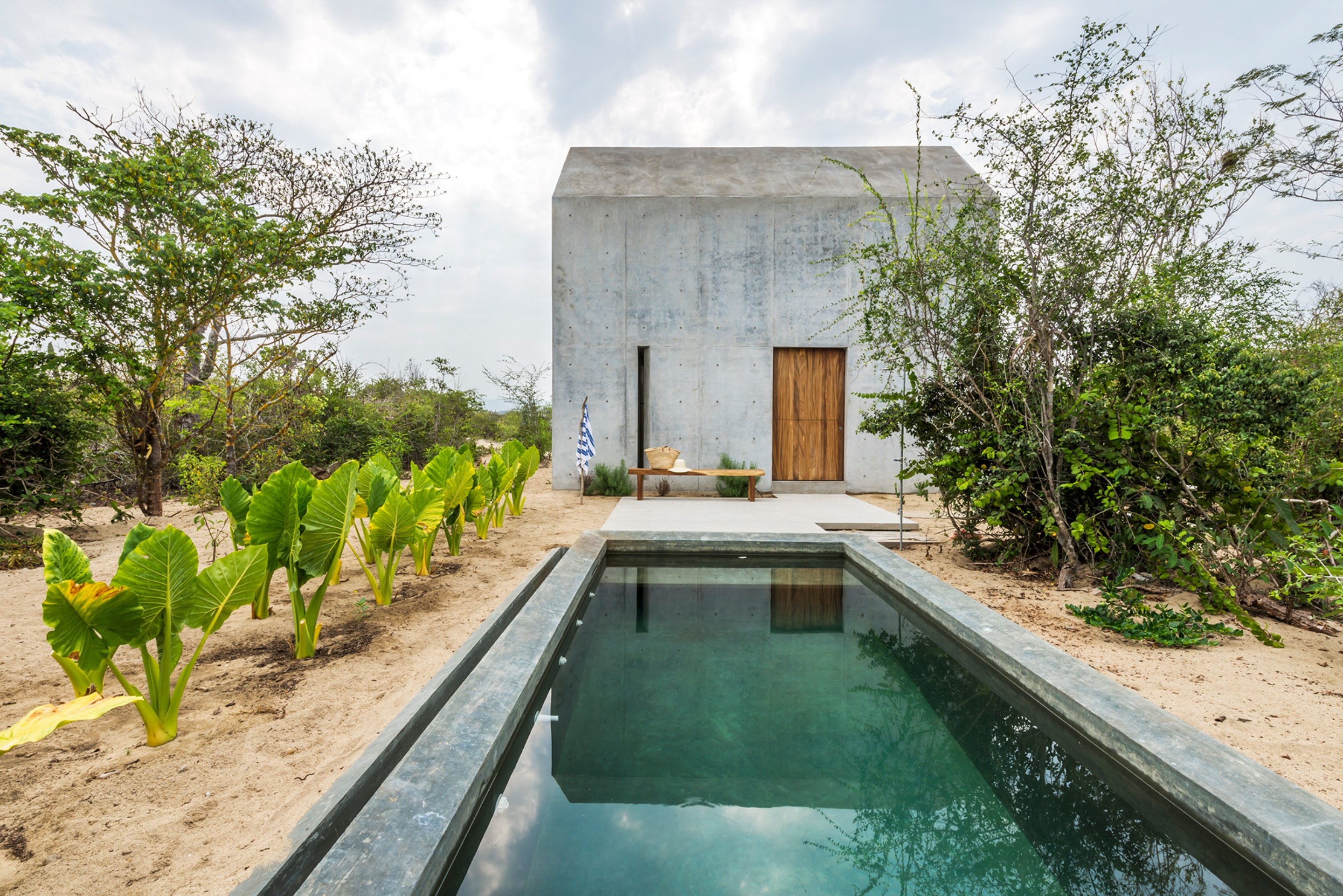
Somewhere in the mountains of central Mexico, a house is quietly refusing to perform. No infinity pool staged for the drone shot, no double-height glass wall screaming into the valley. Casa Tao by HW Studio is the rare architectural retreat that has become a fixation among architects and design editors precisely because it does so little — and does it with almost unreasonable conviction. You've likely seen it circulating on Dezeen, passed between design networks that rarely agree on anything. The appeal isn't spectacle. It's restraint.
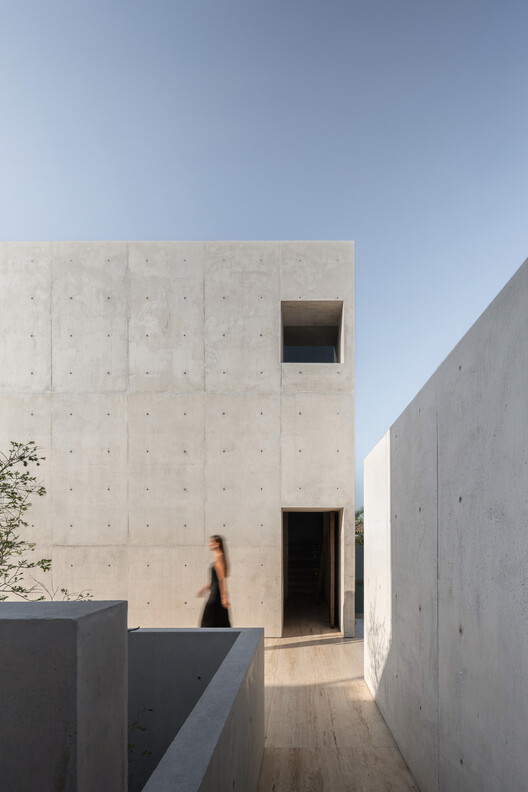
The Morelia-based firm has described the residence as an exercise in subtraction, and the language holds. This is a house built from what was taken away: walls positioned to eliminate distraction, openings sized to admit exactly the right quantity of light and view. Nothing extra survives the edit. What's left is proportion, shadow, and the slow drama of daylight dragging itself across a wall over the course of an afternoon.
One Long Gesture, Framed to the Horizon
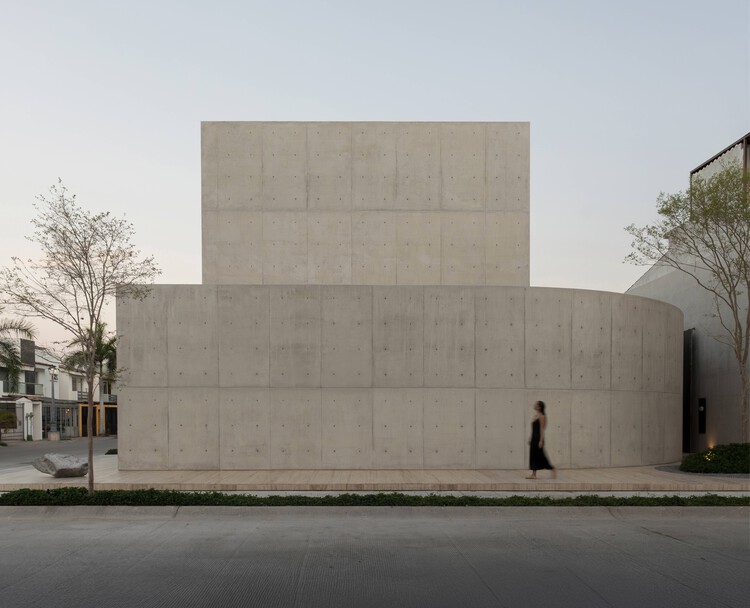
The architecture is organized around a single move — a long, low volume that frames the horizon rather than competing with it. The palette stays elemental: board-formed concrete, warm timber, locally quarried stone, and glass used sparingly, as punctuation rather than premise. There is no decorative excess, no corner of the house that exists purely to be photographed.
That restraint reads as confidence. In an era when residential architecture often mistakes square footage for generosity, Casa Tao treats the view as the primary material and everything else as framing. The building doesn't ask you to look at it. It asks you to look past it.
Tao, Taken Literally
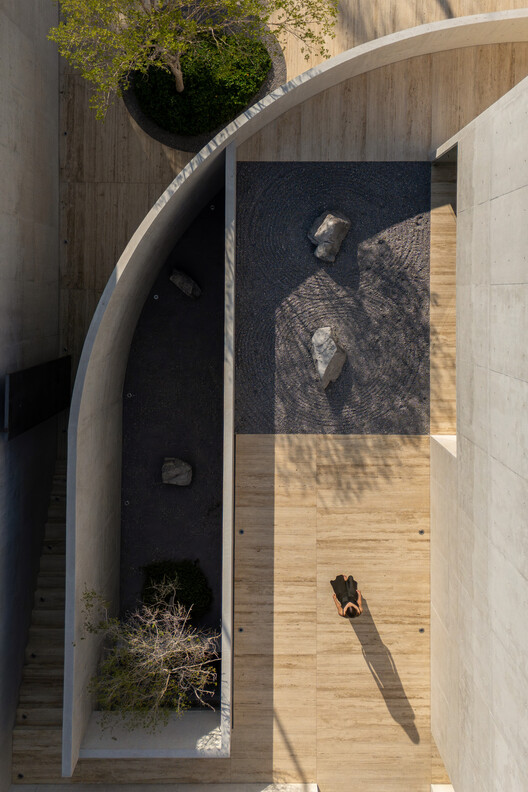
The name carries its own weight. Tao — the natural way, effortless alignment with the order of things — is not incidental branding here. The house embodies it structurally. Circulation follows the topography instead of flattening it. Rooms open onto courtyards that open onto sky. The boundary between interior and exterior is negotiated rather than declared, so inhabiting the space feels less like occupying a building and more like moving through a sequence of framed landscapes.
It's the rare piece of contemporary architecture that asks something of its occupant: attention, slowness, a willingness to be bored in the most productive sense. That's a tall order for a culture trained to fill every silence, and it may be the house's most radical offering.
Materials That Refuse to Lie
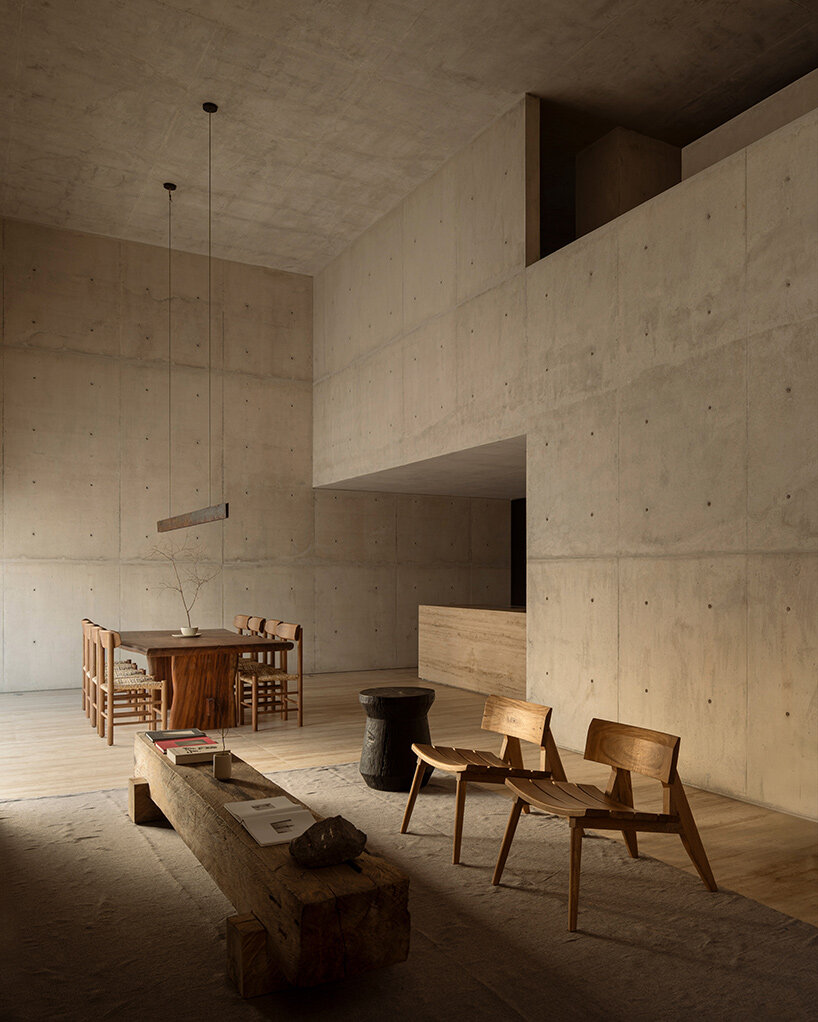
Casa Tao treats materials with unusual honesty. Concrete is left raw, its formwork grain still legible. Timber is finished to the touch but not polished into anonymity. Stone floors hold the cool of the morning and release it slowly through the afternoon. Nothing is applied, veneered, or disguised.
In an era of architecture built from renders before it's built from matter, this house insists on the physical — on weight, temperature, texture, and the specific way sound behaves in a room with thick walls and few soft surfaces. You don't scroll through it. You stand in it.
Who It's Actually For
Not, strictly speaking, for the client who commissioned it — though they clearly understood what they were asking for. Casa Tao speaks to a broader audience: the design-literate traveler, the architect looking for evidence that quiet work still gets noticed, and the growing cohort of people who suspect the contemporary home has become too loud, too connected, too eager to perform.
The house is a case study in what happens when a residence is designed around states of mind rather than programmatic checklists. No home theater. No smart-everything. Just rooms that make you slower.
Why it matters now is precisely this. Architecture's most visible output in recent years has been either spectacular or optimized — buildings as content, buildings as machines for efficiency. Casa Tao is neither. It's a building that resists the scroll, that photographs poorly compared to how it feels, and that derives its authority from the oldest tools available: site, light, material, proportion.
In a cultural moment saturated with novelty, its radicalism is its patience. HW Studio has produced not just a house but an argument — that a home can be a place where the mind quiets, and that this is a legitimate, even urgent, thing to build.