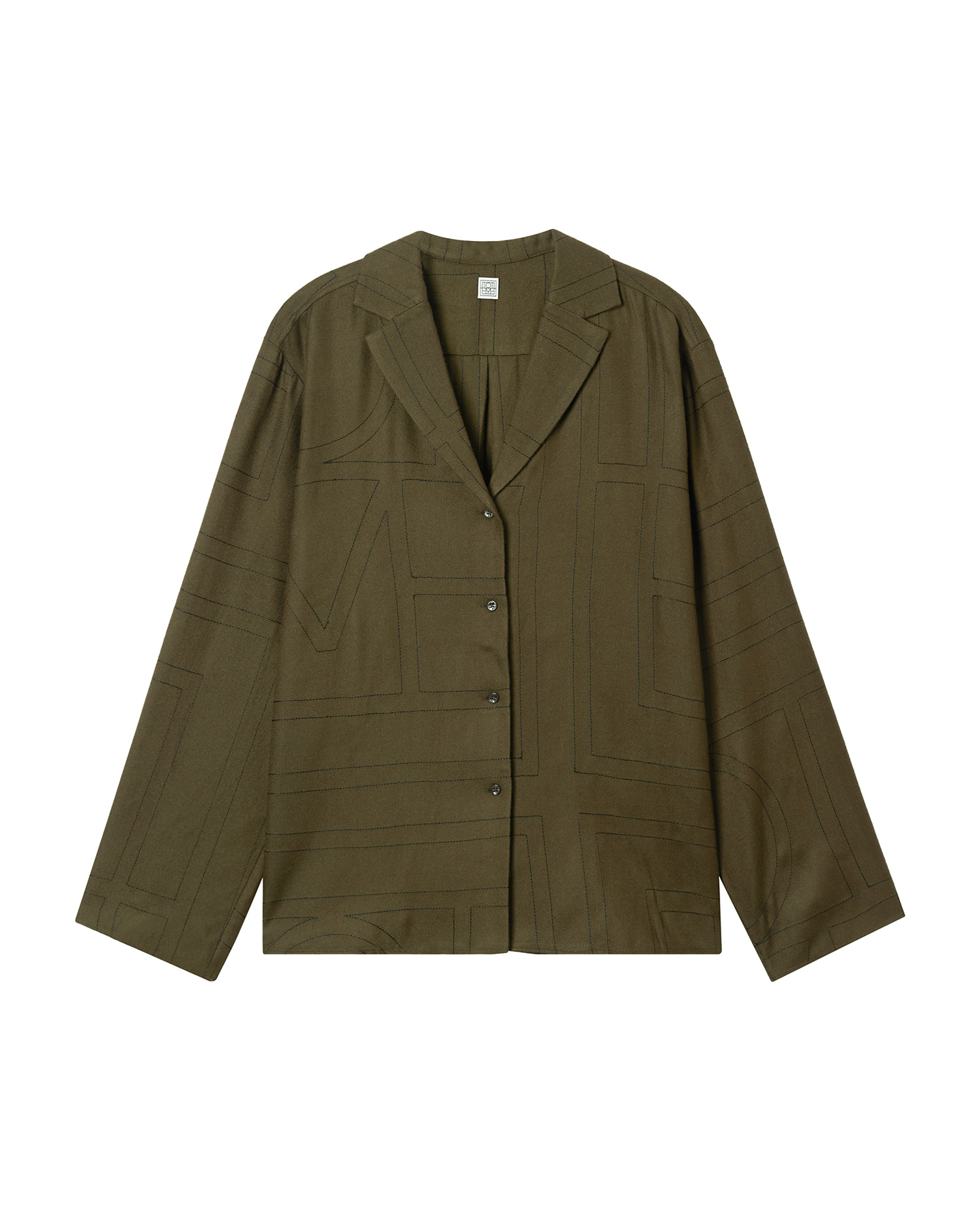
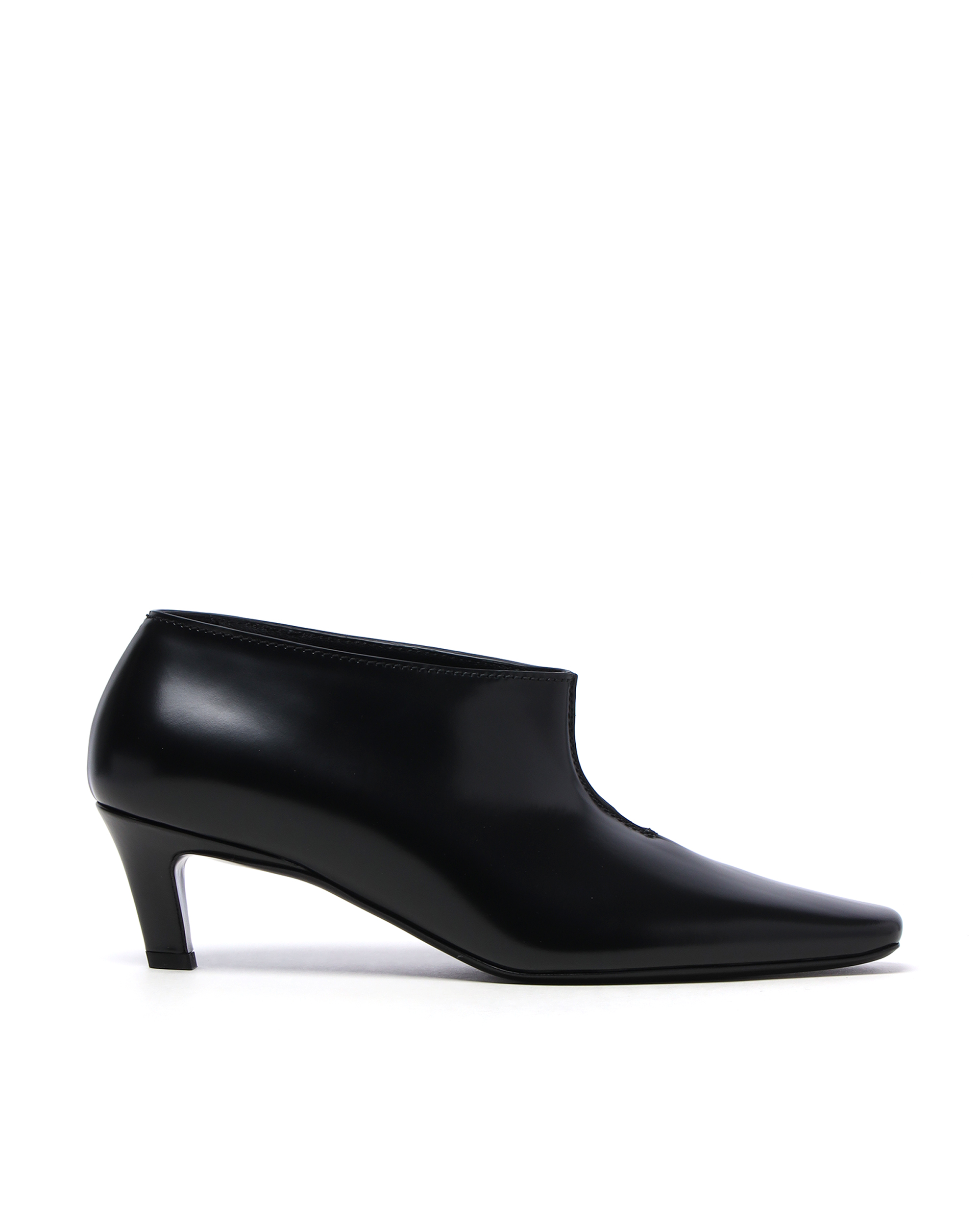
For the better part of a decade, the male fashion sphere has been held in the velvet-gloved grip of a singular aesthetic. We know it intimately: the shrunken leather jacket, the razor-thin tailored trouser, the pointed Chelsea boot, and a silhouette so tightly wound it practically hums with tension. This is the Hedi-era uniform, a language of rebellious rock-and-roll minimalism codified first at Saint Laurent and refined at Celine. It is a look that has been relentlessly imitated, a visual shorthand for a certain kind of cool. Yet, as the cultural conversation shifts from the bombastic to the cerebral, a new challenger has entered the arena, and it is not arriving with a cloud of cigarette smoke or a distorted guitar riff. Toteme, the Stockholm-based label that has spent the last decade quietly conquering the wardrobes of the world’s most discerning women, has launched menswear, and its debut is a deliberate, masterful dismantling of the Hedi-era template.
The initial reaction from the style press—headlines questioning if the "Hedi Boys" are ready for this new influx of Scandinavian sobriety—is telling. The question presupposes a conflict, a battle for the soul of the modern man’s closet. But Toteme’s approach isn’t a frontal assault; it’s a subtle re-negotiation of values. Where the Hedi uniform is about constriction and a specific, almost theatrical persona, Toteme’s menswear is an essay on ease and architectural space. The founder’s ethos of "quiet luxury" isn't about whispering wealth; it’s about whispering confidence. The garments, as previewed in the Fall 2026 collection and the initial capsule drops, eschew the second-skin tightness for a more generous, fluid line. Trousers are cut with a gentle drape, jackets sit at the shoulder with a soft, unstructured grace, and the palette—a study in grey, oatmeal, deep charcoal, and off-black—suggests a man who is comfortable in his own skin, rather than one trying to squeeze into a pre-fabricated idea of rock star rebellion.
The End of the Costume
This is the crux of the matter. The Hedi uniform was a costume for a specific fantasy—the brooding artist, the louche nocturnal creature. It demanded a certain physicality and attitude. Toteme offers an alternative: a uniform for the man who has moved past the need for costume. It’s a wardrobe built on the principles of functional modernism, where a coat is not just a statement but a shelter, and a pair of trousers is not a corset but a tool for movement. The pieces have a deliberate anonymity that is, paradoxically, their most potent form of identity. There is no logo, no loud branding, just the purity of cut and the quality of fabric. It is the aesthetic equivalent of a deep breath in a world that has been holding its breath for far too long.
Run the hand along a Toteme trouser and you feel the difference immediately. The wool has a heft, a lived-in softness that suggests it will only improve with age. The shoulder of a jacket is not padded into submission; it follows the natural line of the body, allowing the wearer to move without performing. This is clothing that whispers, not shouts—and in a landscape saturated with loud signifiers, that whisper carries remarkable distance.
Fluid Territory
The cross-pollination potential is immense. As Coveteur astutely notes, women are already ready to "borrow from the boys," a testament to the androgynous fluidity of the design language. The oversized outerwear, the utilitarian trousers, and the softly structured knitwear possess a universality that transcends the binary. This is not about feminizing menswear or masculinizing womenswear; it is about creating garments that respect the body without dictating its limitations. In this sense, Toteme’s menswear is not merely a new product category but a philosophical expansion. It takes the brand’s core tenets—a commitment to tactile excellence, a sculptural approach to volume, and a profound understanding of daily life—and applies them to a new clientele who, frankly, have been starving for this level of intellectual design.
The knitwear deserves particular attention. Where the Hedi-era sweater was cropped and clingy, Toteme’s knits envelop. They drape from the shoulders with a relaxed grandeur, the stitches chosen for their texture as much as their warmth. There is a sense that these are garments meant to be lived in, not merely photographed—a quiet rebellion against the see-now-buy-now frenzy that has defined so much of contemporary menswear.
An Evolution, Not a War
The fashion industry loves a narrative of opposition, but the arrival of Toteme on the menswear scene is less a war and more an evolution. The Hedi boy, with his slicked hair and rigid posture, may find himself intrigued by a garment that doesn't require him to perform. The new man, the Toteme man, is defined not by his silhouette but by his sensibility. He is a connoisseur of comfort, a believer in the quiet power of a well-drawn seam. As the brand opens its first Miami store and continues its global expansion, it is clear that this is not a fleeting experiment. This is a recalibration of the masculine ideal, moving it away from the aggressive and the performative, and toward something far more enduring: a stark, elegant, and deeply personal sense of self. The Hedi boys may not be ready, but the men of the future certainly are.
In the end, Toteme’s menswear isn't asking you to abandon your leather jacket or your pointed boots. It's simply offering an alternative—a wardrobe that trusts you to define yourself, rather than the other way around. And in a decade defined by rigid codes, that might just be the most radical move of all.