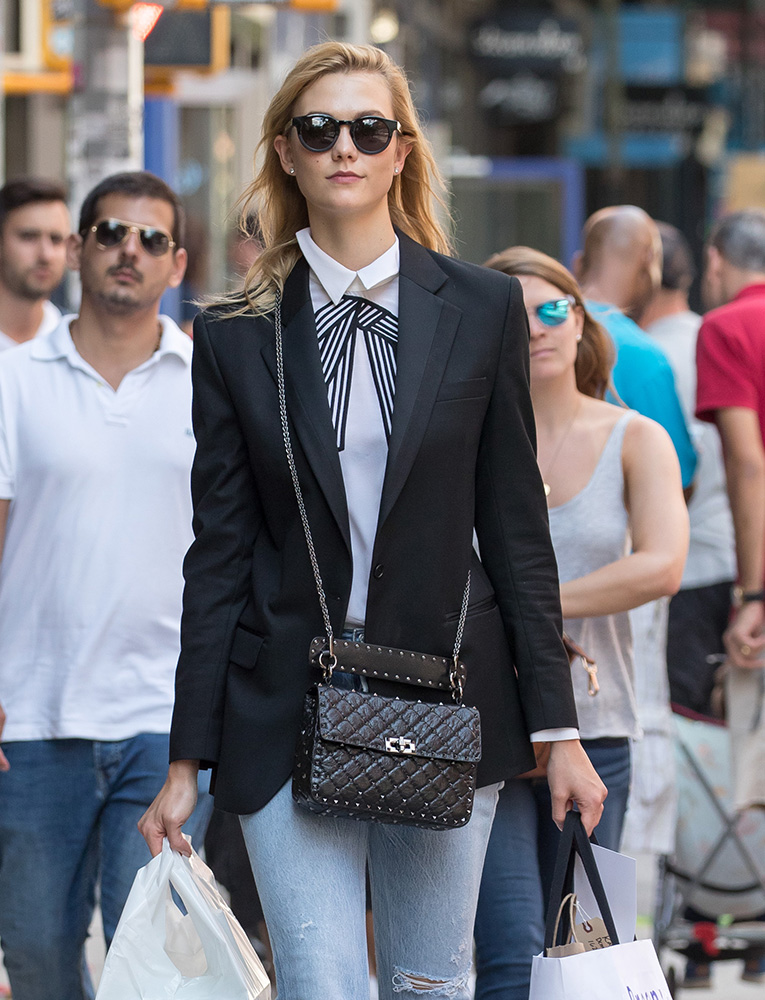
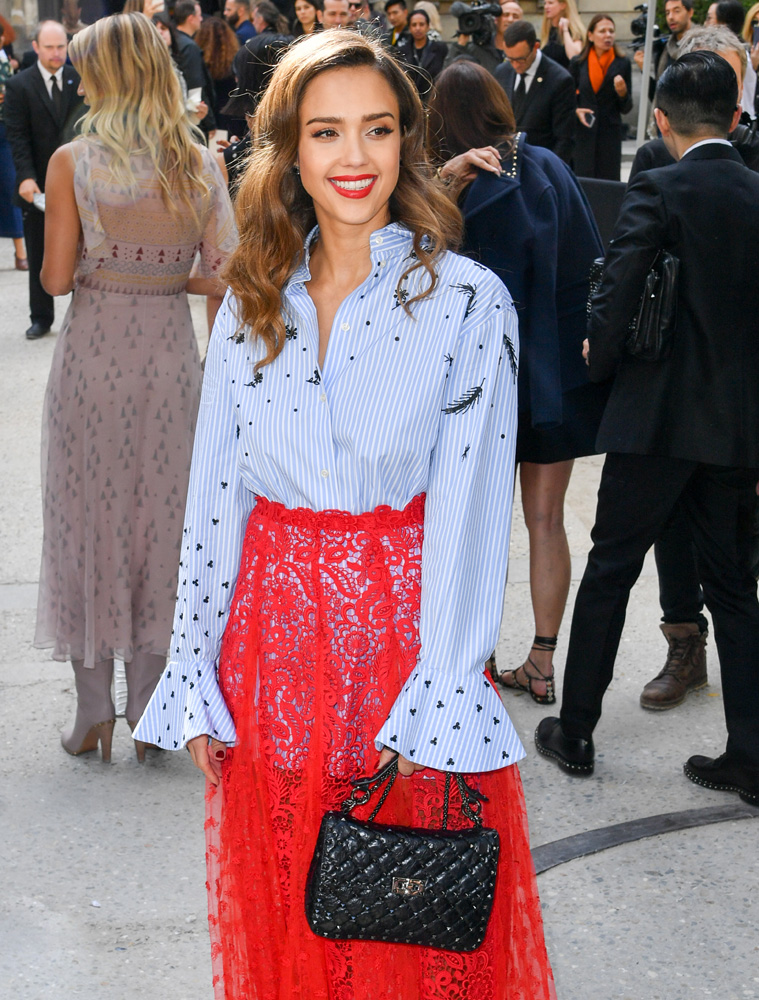
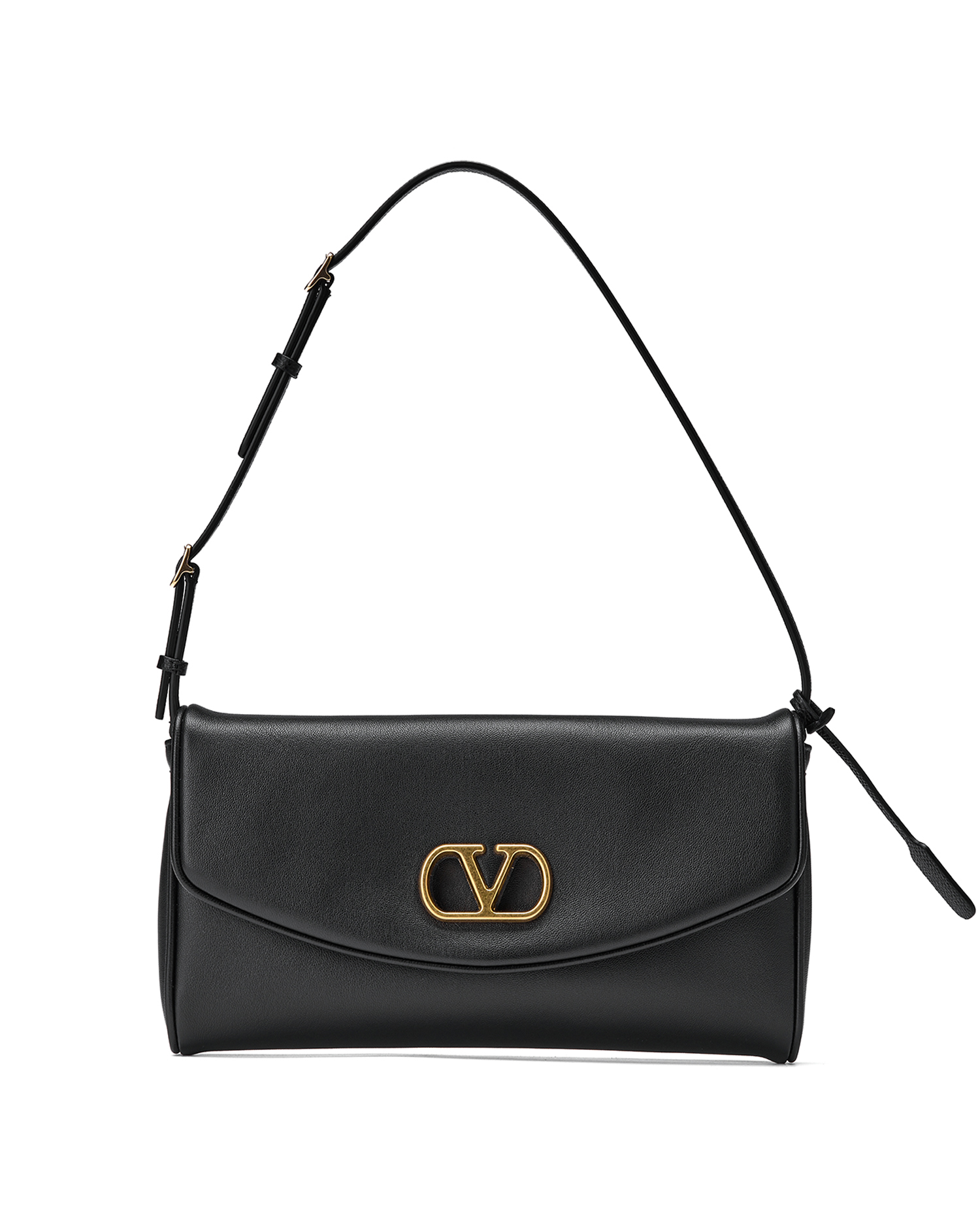
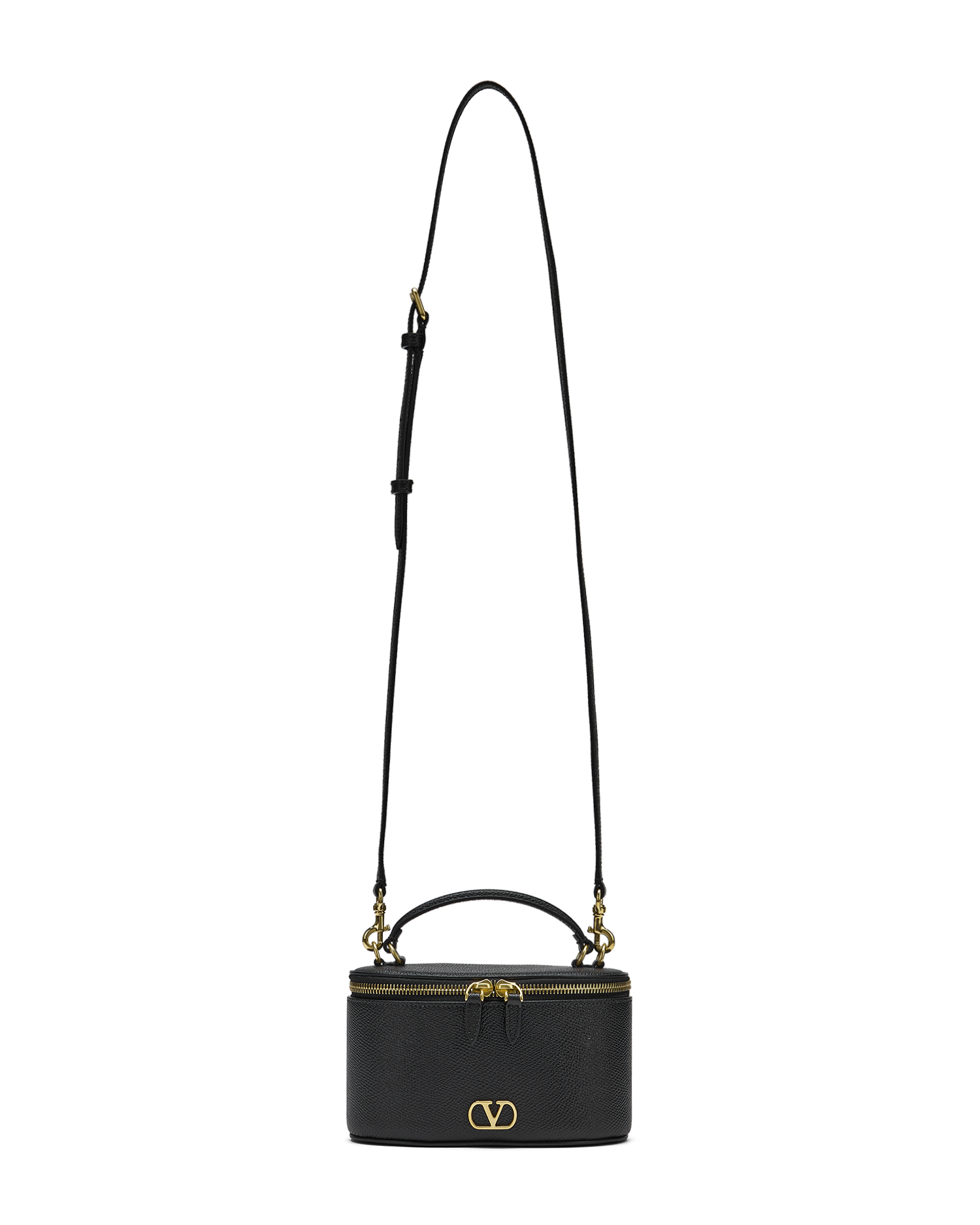
Some accessories are designed to be noticed. Others are engineered to endure. The Valentino Garavani Rockstud bag belongs, rather unusually, to both categories — a piece whose brash hardware once defined an era of maximalist glamour and which now finds itself at the center of a genuine cultural revival. In recent months, the Rockstud has re-emerged as the accessory of the moment, carried by Naomi Watts, Princess Maria-Olympia, and a constellation of other tastemakers whose front-row presence at Valentino's Spring 2027 show in Paris confirmed what the street-style circuit had already suspected: the stud is back, and it is not asking for permission.
To understand why the Rockstud matters now, it helps to recall what it represented then. When Valentino Garavani introduced the pyramid-stud embellishment in 2010, it was a deliberate departure from the house's heritage of ladylike restraint — a shot of punk-inflected attitude applied to otherwise polished leather goods. The Rockstud became a signature almost immediately, its pyramidal hardware studding the edges of totes, clutches, and the now-iconic Rockstud Spike and Rockstud Rolling silhouettes. It was the accessory that carried a woman from a daytime meeting to a midnight dinner without apology, and it accumulated a devoted following precisely because it refused to whisper.
A Signature Reborn in a House of Stories
What makes the current renaissance more than mere nostalgia is the context in which it is unfolding. Under Alessandro Michele, Valentino has become a house of narrative abundance — a place where clothes are treated as characters and shows are staged as storybooks. The Spring 2027 collection, presented in Paris, was framed around the notion of the "antibiblioteca," a library of unread books, and the front row arrived clutching volumes as though attending a literary salon. In this theatrical, deeply referential world, the Rockstud reads differently than it did in 2010. It is no longer simply a symbol of high-octane glamour; it is an artifact of the house's own history, recontextualized as part of a larger conversation about craft, memory, and the value we assign to objects.
The Craft Behind the Clout
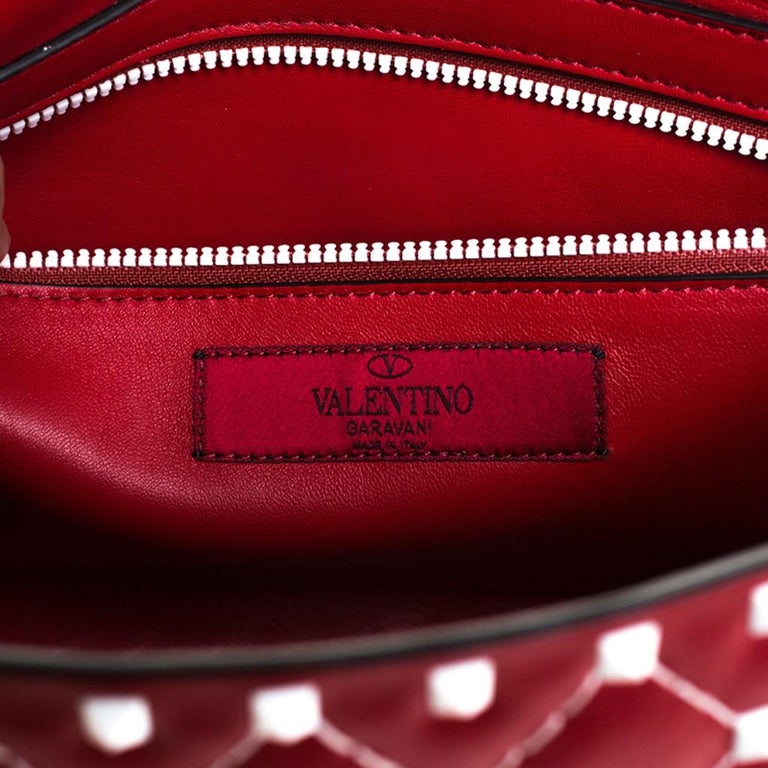
The construction itself rewards a closer look. Each Rockstud is a lacquered pyramid, individually set along the leather trim, a labor-intensive process that lends the bag its distinctive rhythm — a tension between soft, supple calfskin and hard, geometric hardware. The proportions are deliberate: structured enough to hold their shape, fluid enough to fold against the body. Available in a spectrum of sizes and finishes, from the compact Rockstud clutch to the roomy Rockstud tote, the line functions as a wardrobe rather than a single item, adaptable to the way modern women actually move through their days.
Who It's For Now
This is a bag for someone who understands that luxury is not synonymous with understatement. It suits the collector who already owns the quiet pieces and now wants the one that starts conversations. It suits the woman who dresses for herself first and the camera second. And it suits anyone drawn to the particular pleasure of an object that has been refined over more than a decade rather than debuted last season — a piece with a patina of cultural memory attached to it.
Why does it matter now? Because fashion is currently obsessed with the archive, and few archives are as rich as Valentino's own. The Rockstud is not a reissue in the cynical sense; it is a living signature that has never truly left the house's vocabulary, only waited for the culture to catch up with its confidence. In an era of quiet luxury and whispered logos, the Valentino Garavani Rockstud bag offers something increasingly rare: an accessory that is unafraid to be seen. And judging by the front row, the women who carry it are unafraid to be seen with it.