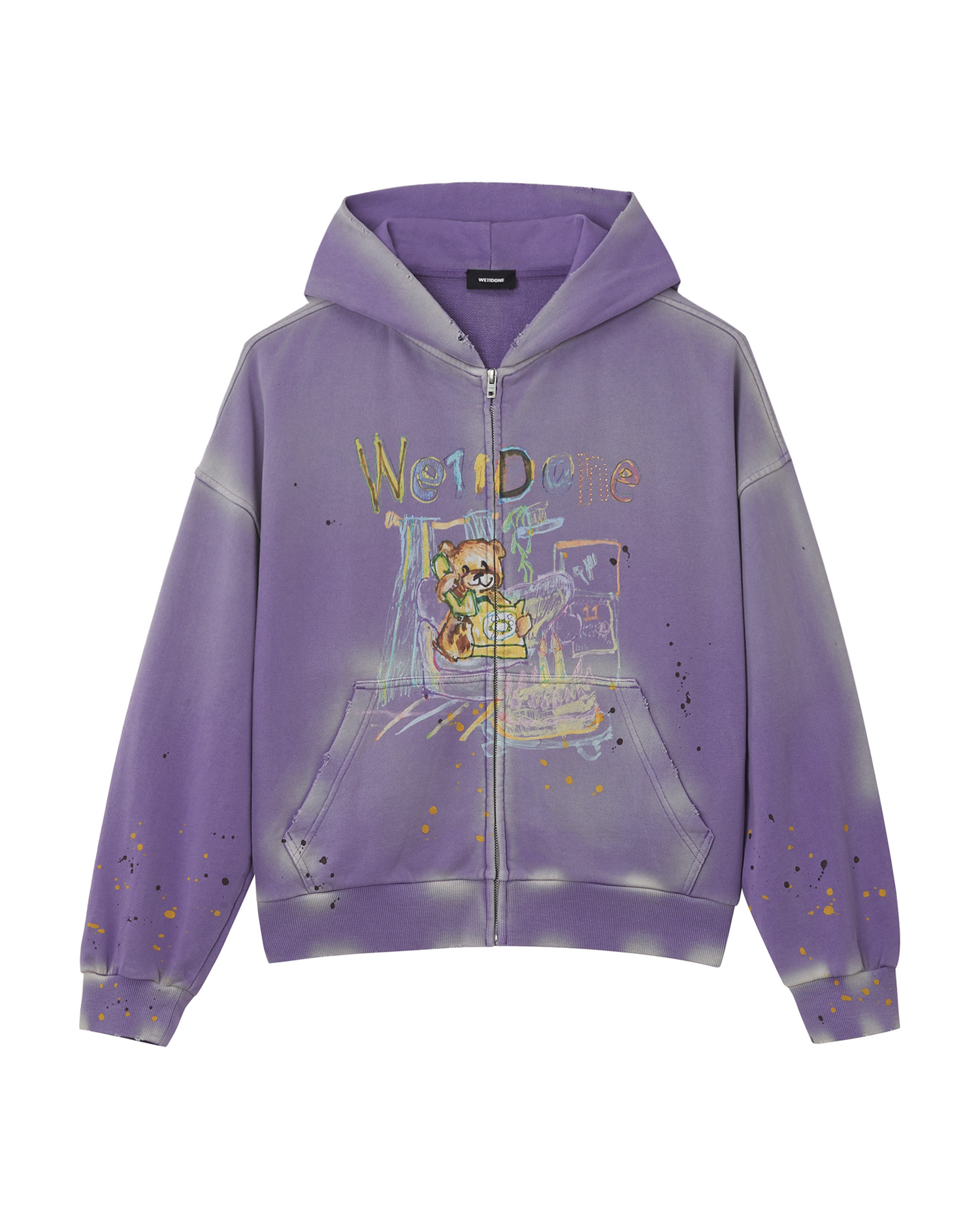
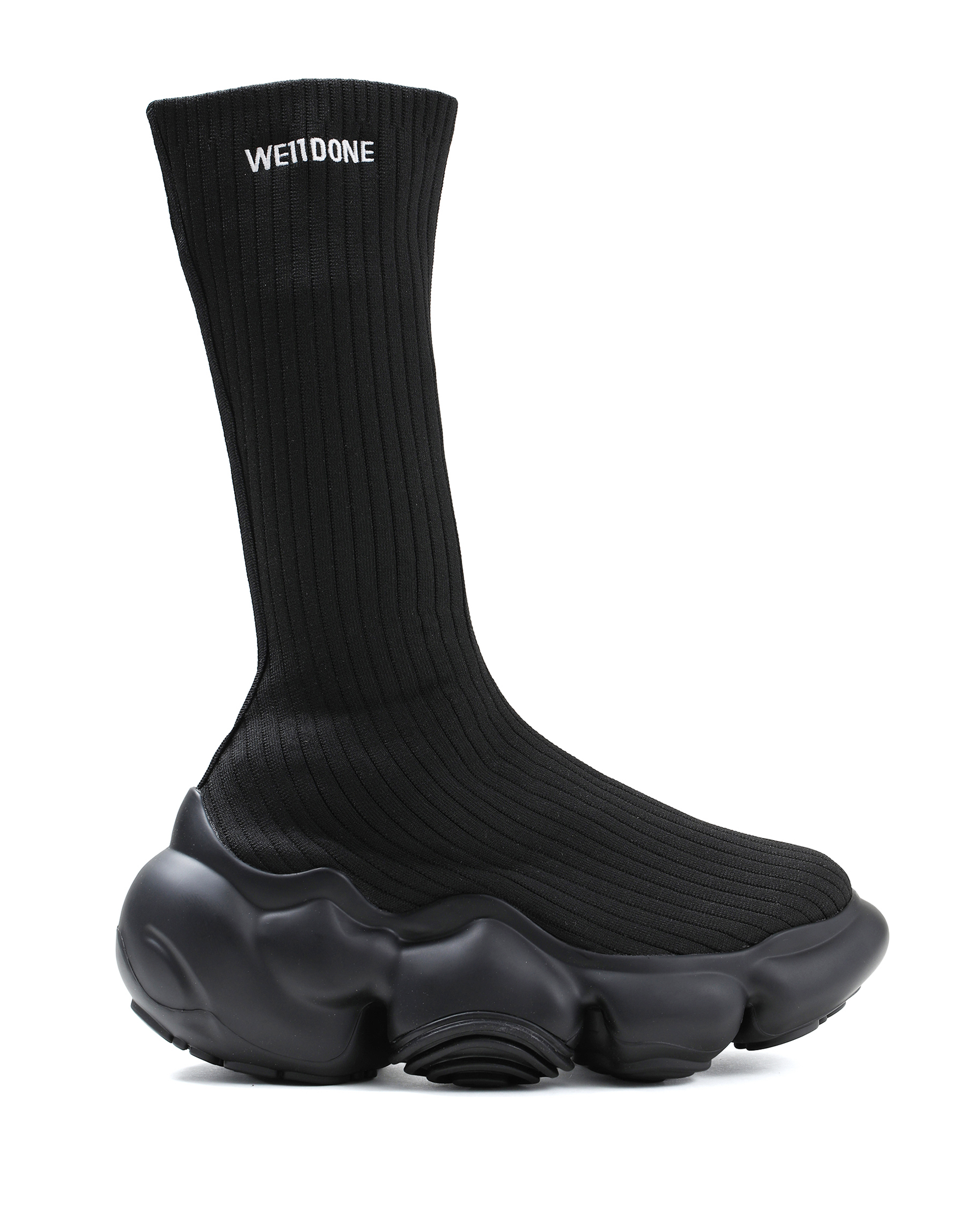
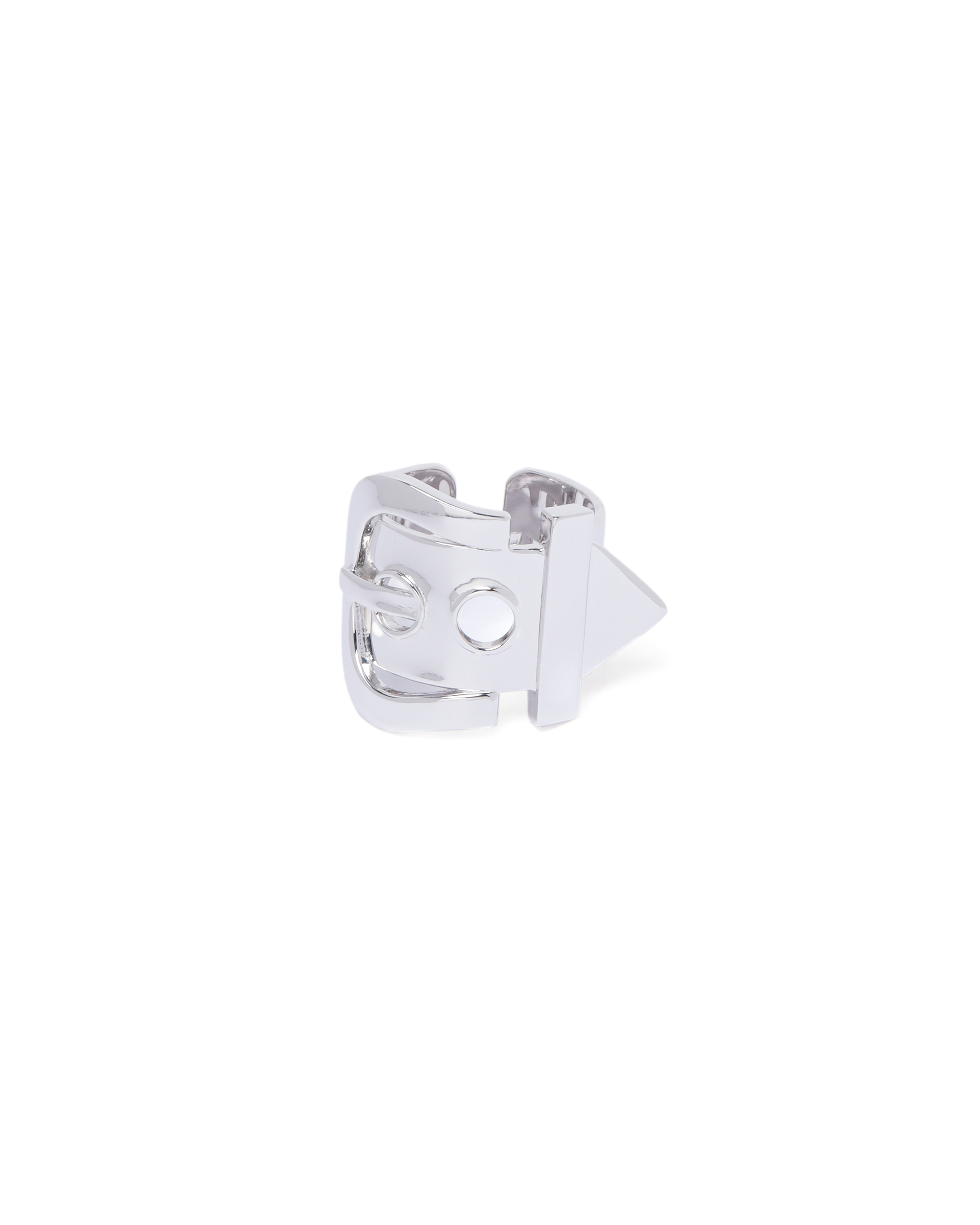
There’s a split-second moment when engineering stops being purely logical and starts feeling poetic. When a tent pole’s curve, a guyline’s pull, or a chair frame’s rigid triangle suddenly looks less like hardware and more like haute couture waiting to happen. That’s exactly the charged territory WE11DONE and Helinox have stepped into with their new capsule—a collection that takes the skeletal logic of camping furniture and translates it into draped, sculptural apparel. This isn’t a logo-splashed collab or a lazy tech-fabric grab. It’s a philosophical inquiry into how we carry structure on our bodies, and how the language of outdoor utility can be rewritten as a dialect of avant-garde luxury.
Seoul’s WE11DONE, helmed by Jessica Jung and Dami Kwon, has always operated on deliberate distortion—oversized silhouettes, deconstructed tailoring, a certain nonchalant defiance that feels inherently now. Helinox, meanwhile, is the ultralight king, its collapsible chairs prized by mountaineers and festival-goers for skeletal efficiency. Different universes, sure. But both brands share a quiet obsession with tension: the way webbing pulls taut across a frame, the way a structure can be rigid and yielding at once, the way a body can be suspended in dynamic balance. The capsule’s genius is recognizing that shared vocabulary.
Architecture in Motion
The garments read less like clothing and more like inhabitable blueprints. Dart-draped silhouettes mimic the angular geometry of Helinox’s chair frames, with seams cutting sharply across the torso as if tracing the lines of a tensile web. These aren’t soft, forgiving pieces; fabrics are chosen for their ability to hold shape, to resist and release in equal measure. Each piece feels assembled rather than sewn, engineered rather than draped—as though it arrived from a drafting table, not a sketchbook. That precision is the point. In an era where technical outerwear has quietly become the new luxury uniform—think shell jackets and trail sneakers dominating city sidewalks—WE11DONE’s intervention is both timely and subversive. It strips the camping chair of its literal function while preserving its structural soul, turning the utilitarian into something genuinely poetic.
The New Grammar of Outdoor
What makes this collaboration resonate beyond its immediate cool factor is how it speaks to fashion’s shifting relationship with the outdoors. The old divide between performance wear and runway fashion has dissolved, but the most interesting work isn’t just borrowing technical fabrics or silhouettes. It’s translating the *logic* of outdoor engineering into a new visual and tactile language. The tension of a guyline, the compression of a shock-corded pole, the triangulation of a load-bearing frame—these aren’t just functional principles but aesthetic ones. WE11DONE deploys them with the confidence of a designer who understands that true innovation often comes from looking at familiar objects with utterly fresh eyes. The result is apparel that appears almost engineered on the body, as though each piece were built from a set of coordinates rather than a pattern.
Positioning Beyond the Product
The capsule also reinforces WE11DONE’s broader positioning in the global fashion landscape, particularly as it navigates the complexities of the Chinese market and a post-pandemic retail environment. The brand’s ability to pivot between streetwear-inflected casualness and high-concept experimentation has made it a bellwether for K-fashion’s international ambitions. Collaborations like this one are not mere merchandising stunts; they are statements of creative intent, signaling that the label is unafraid to explore unexpected territories. It invites its audience to reconsider what clothing can be—not just as a covering or an expression of identity, but as a form of wearable engineering, a study in how structure and fluidity can coexist on the same body.
The Chair as Metaphor
Ultimately, the WE11DONE x Helinox capsule is a reminder that the most compelling fashion often emerges at the intersection of disparate disciplines. It’s a meditation on the body as a site of tension, on the garment as a frame, on the chair as a metaphor for how we position ourselves in the world. The pieces may not be practical for a trek up a mountain, but they offer something arguably more valuable: the chance to inhabit a new kind of physicality, one where the boundaries between object and wearer, utility and art, are exquisitely, deliberately blurred. That’s not just design. That’s a new way of standing in space.