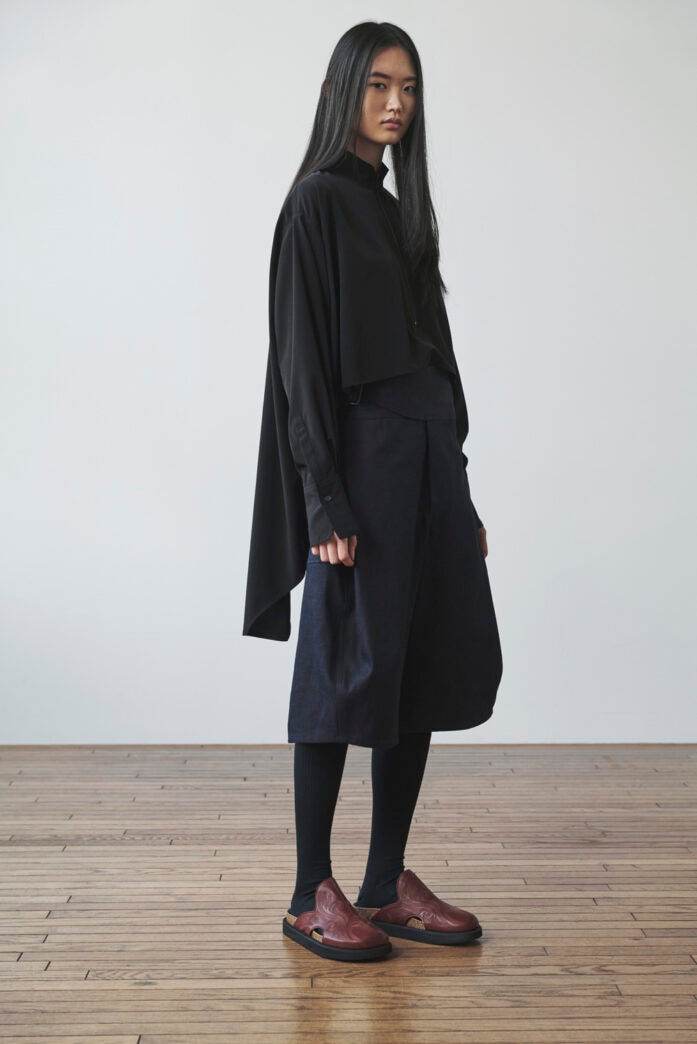
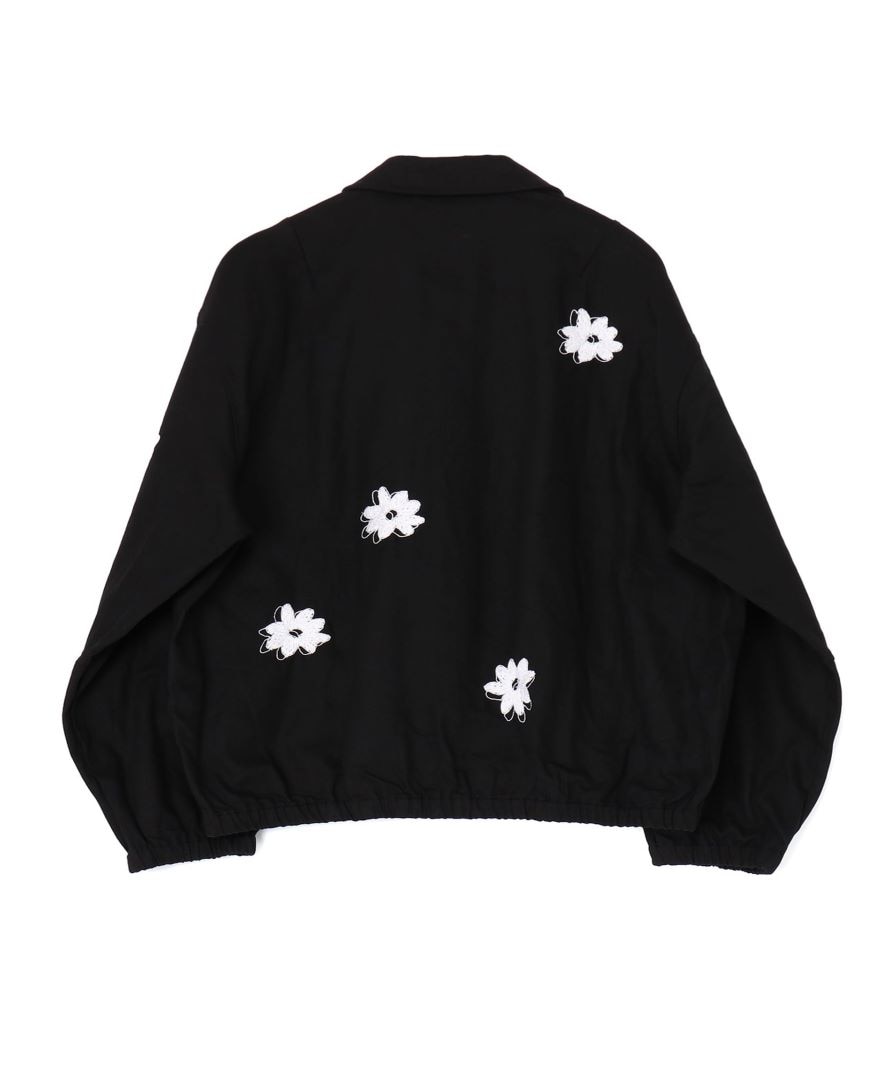
The Y's x Fake As Flowers Kantha Quilt arrives at a moment when the fashion world is asking hard questions about provenance, permanence, and the meaning of craft. Yohji Yamamoto's diffusion line has never been content to rest on its founder's reputation, and this collaboration—recently confirmed by Hypebeast—demonstrates precisely why. By placing the hand-stitched legacy of South Asian Kantha embroidery into the architectural rigor of Y's tailoring, the project creates something that resists easy categorization: not quite heritage craft, not quite avant-garde fashion, but a genuine dialogue between two textile traditions that have never before shared a seam.
Kantha is among the oldest forms of textile recycling in the world. Practiced for centuries across Bengal and the wider Indian subcontinent, it began as a domestic art in which women layered worn saris and dhotis, then stitched them together with the running stitch—the kantha—to create quilts and wraps for their families. The stitching was never merely functional. It carried narrative, memory, and the quiet accumulation of time. A single Kantha quilt could take months to complete, its surface rippling with thousands of tiny stitches that gave the fabric a distinctive texture: soft, lived-in, alive. That sensibility is precisely what Fake As Flowers, the label known for its reverence for antique and hand-worked textiles, brings to the table.
The Kantha Stitch: A History Written in Thread
Kantha is among the oldest forms of textile recycling in the world. Practiced for centuries across Bengal and the wider Indian subcontinent, it began as a domestic art in which women layered worn saris and dhotis, then stitched them together with the running stitch—the kantha—to create quilts and wraps for their families. The stitching was never merely functional. It carried narrative, memory, and the quiet accumulation of time.
A single Kantha quilt could take months to complete, its surface rippling with thousands of tiny stitches that gave the fabric a distinctive texture: soft, lived-in, alive. That sensibility is precisely what Fake As Flowers, the label known for its reverence for antique and hand-worked textiles, brings to the table.
Where Rigor Meets Tenderness
What makes the Y's x Fake As Flowers Kantha Quilt compelling is how Yamamoto's design language absorbs rather than overrides that history. The Y's ethos has always been about drape, asymmetry, and the poetry of black—garments that feel like architecture for the body. Here, that rigor meets the organic irregularity of hand-stitched quilting.
The result is a piece that reads as both tailored and tender: structured enough to satisfy a Yohji devotee, textured enough to feel like an heirloom pulled from a trunk. The quilt's surface carries the evidence of human hands—slight variations in stitch tension, the faint ghosting of repurposed fabric—qualities that machine production cannot replicate and that the luxury market is increasingly hungry for.
A Quiet Revolt Against Disposability
This collaboration lands in a cultural moment defined by a quiet revolt against disposability. The fashion conversation has shifted decisively toward repair, reuse, and the visibility of labor. Recent headlines have tracked Y's broader movement into unexpected territory—its FW26 capsule with New Era extending Yamamoto's design language into streetwear, and commentary asking whether the house has drifted toward the body-hugging aesthetic of SKIMS.
Against that backdrop, the Kantha Quilt reads as a corrective: a statement that Y's can move with the culture without abandoning its commitment to cloth as a carrier of meaning. Fake As Flowers, for its part, has built its reputation on exactly this premise—that old textiles deserve new life, and that the hands behind them deserve recognition.
For the Collector, Not the Casual Shopper
The piece is not for the casual shopper. It is for the collector who understands that a garment can be a document; for the Y's loyalist who wants Yamamoto's philosophy translated into something warmer and more tactile than a wool gabardine coat; for anyone who has watched the resale market for vintage Kantha quilts tighten and wondered when a fashion house would treat the craft with genuine respect rather than as a print to be reproduced. The answer, apparently, is now.
In an industry that often treats collaboration as a marketing exercise, the Y's x Fake As Flowers Kantha Quilt stands apart. It asks the wearer to consider where a fabric has been, whose hands shaped it, and what it means to wrap oneself in time. That is a rare proposition in contemporary fashion—and a quietly radical one.