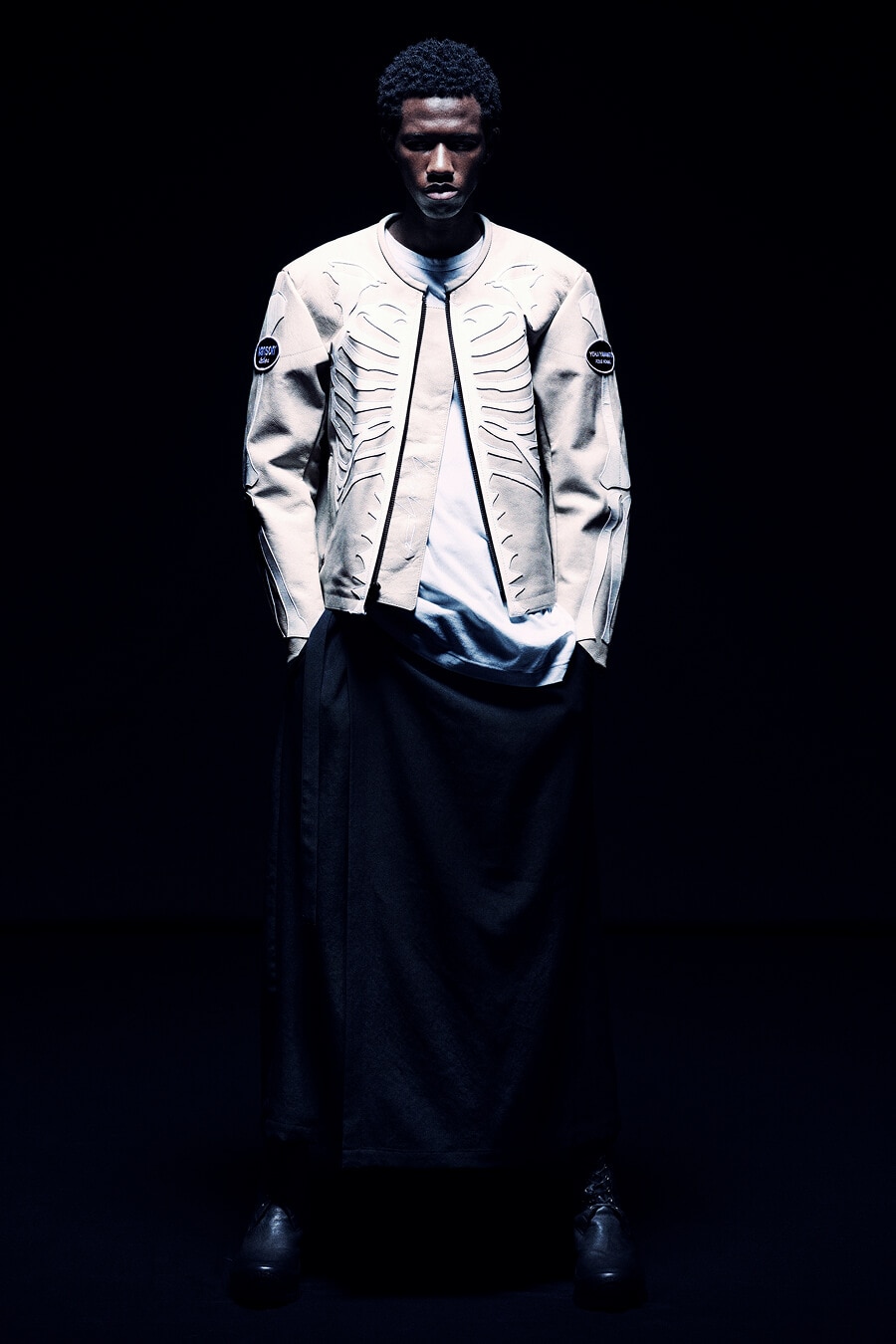
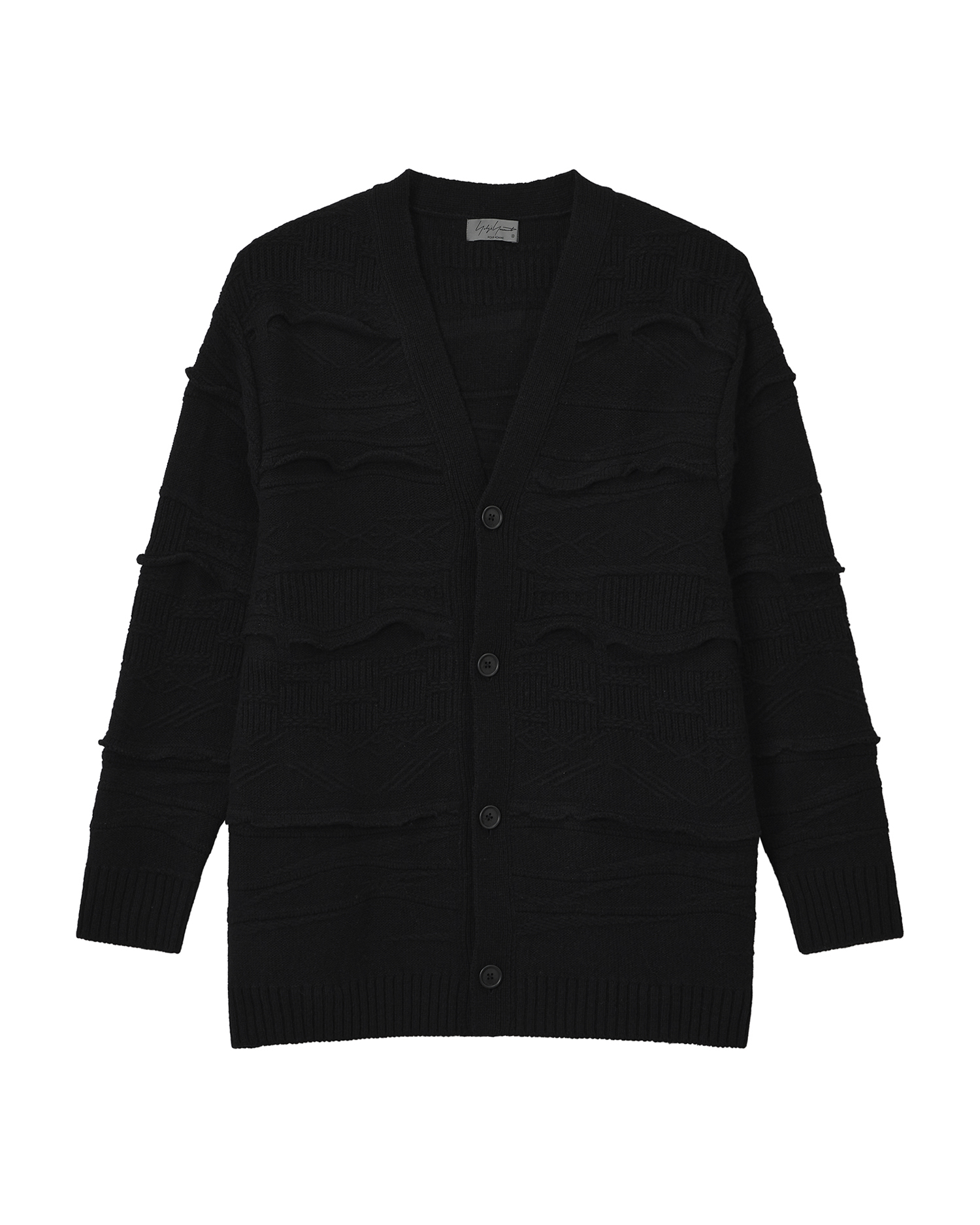
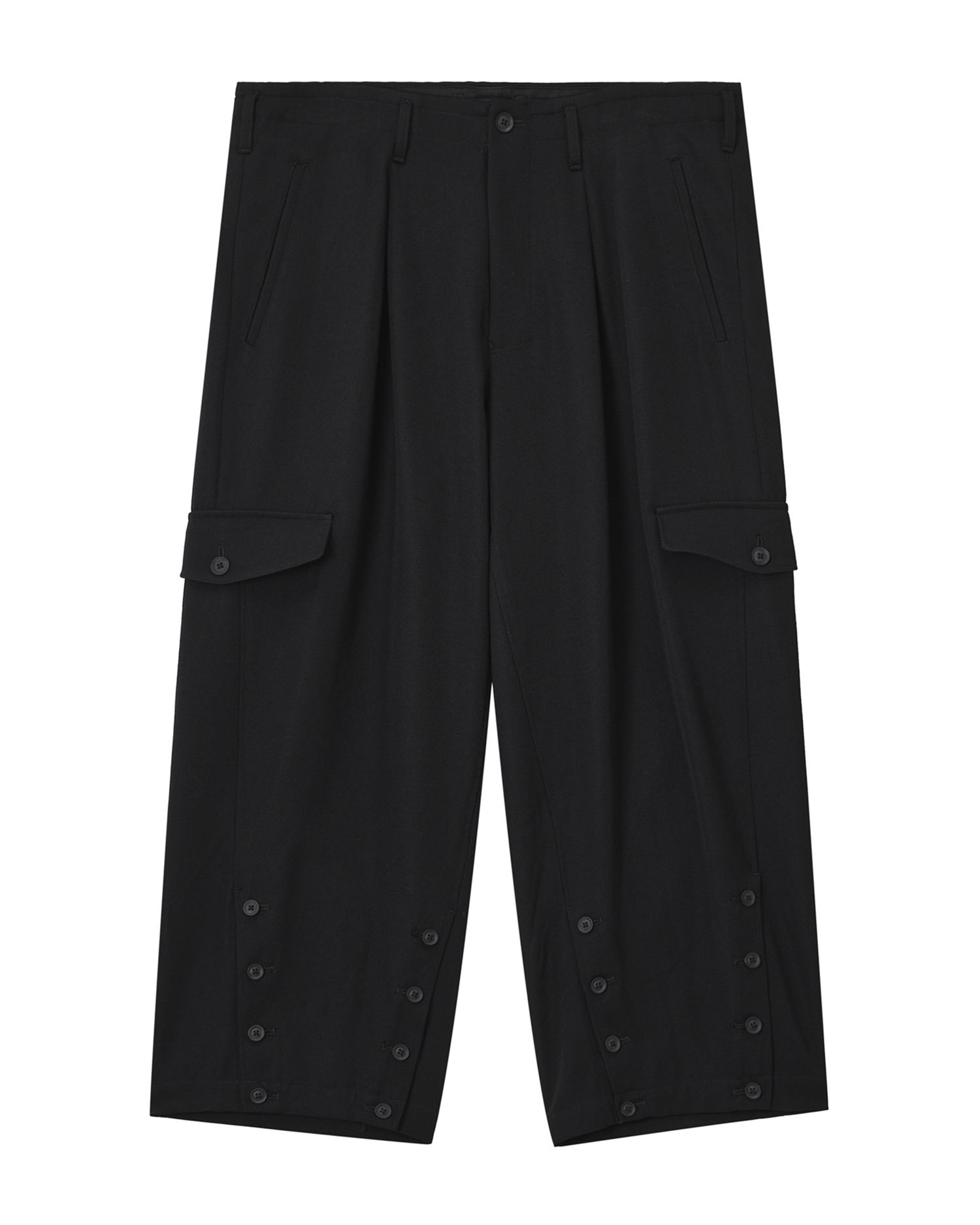
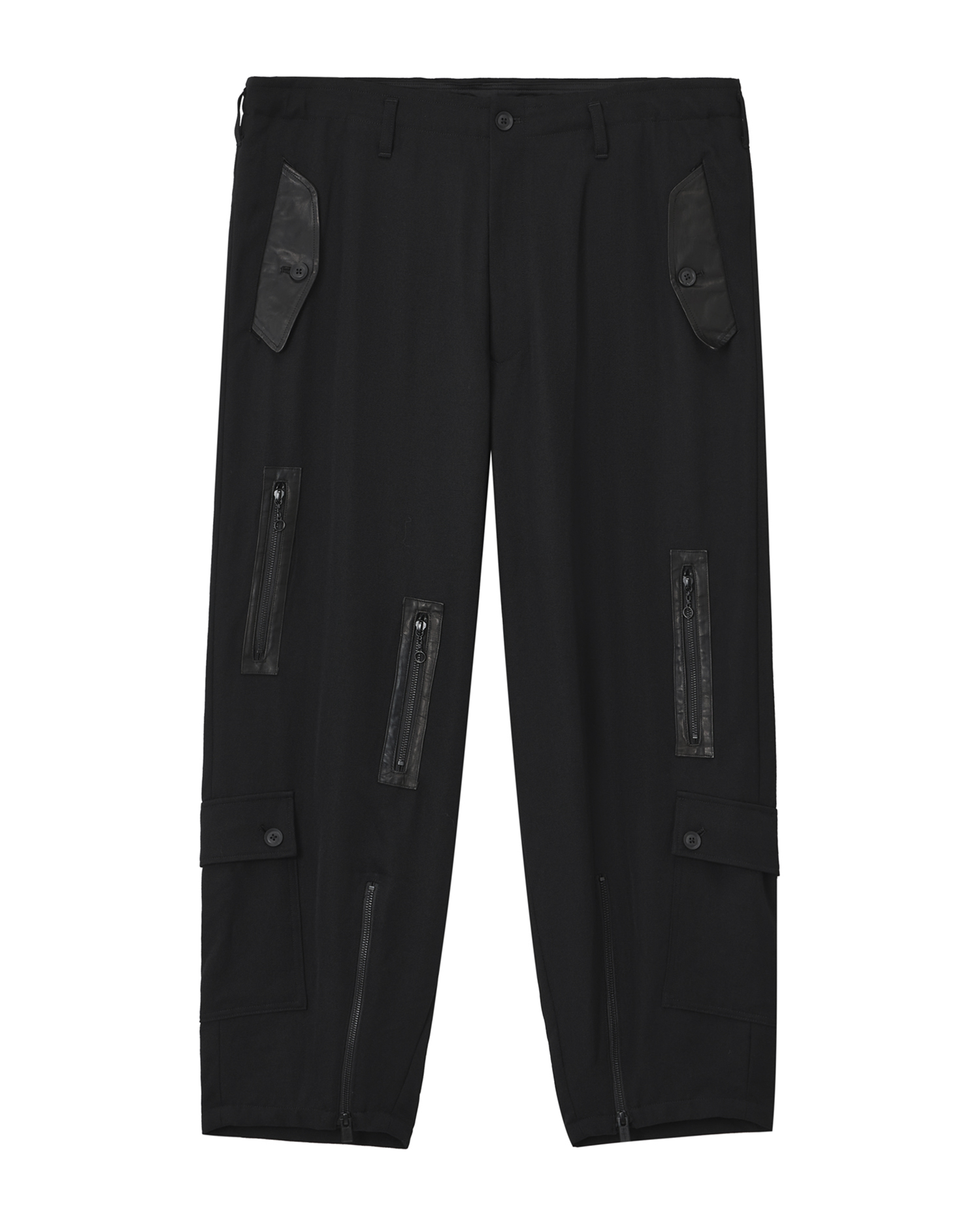
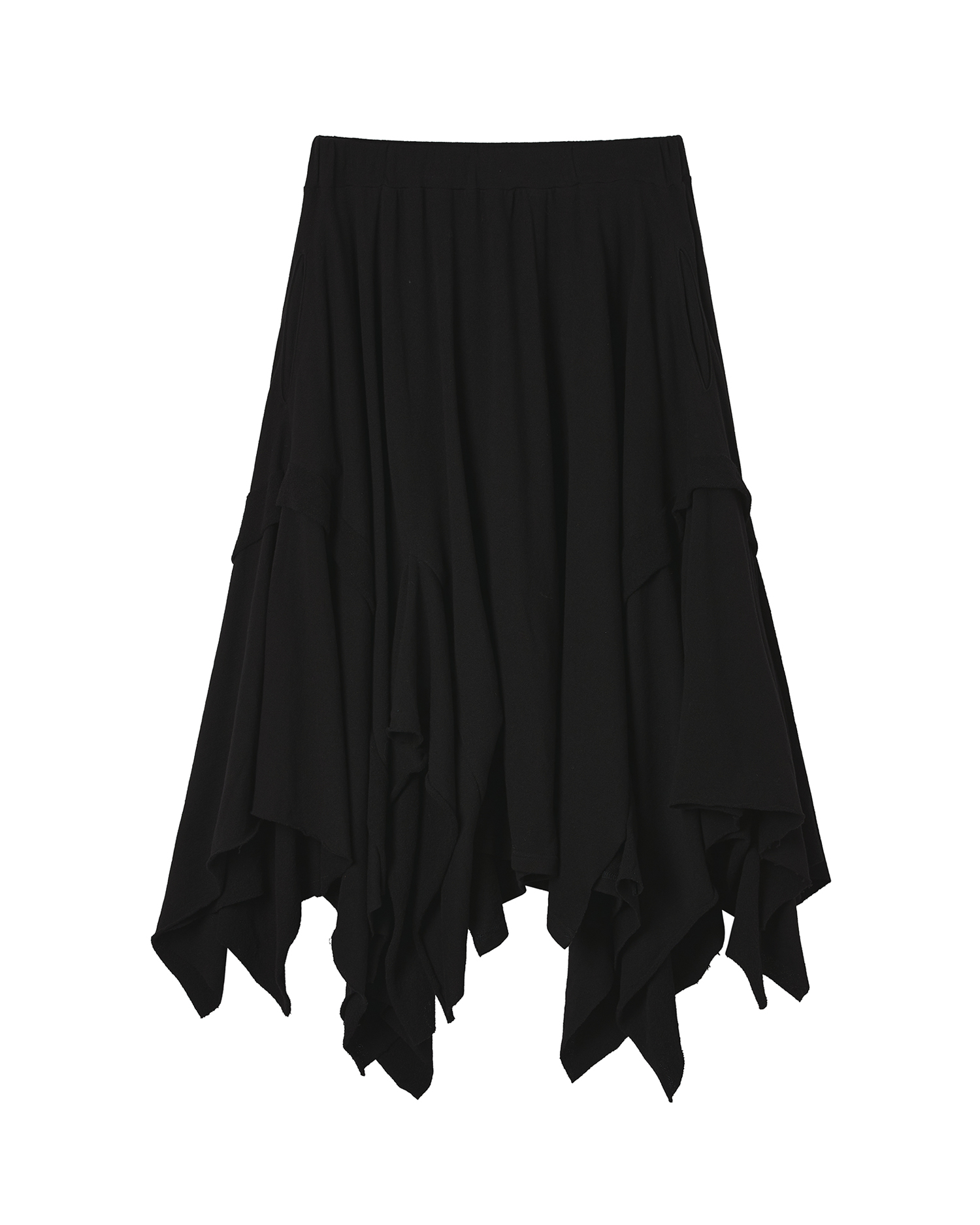
There's a particular kind of garment that looks magnificent on a hanger and betrays you the moment you sit down. Yohji Yamamoto has spent four decades refusing to make it. His clothes look monumental in stillness and behave like living things in motion — a productive contradiction the house has never bothered to resolve. The YOHJI YAMAMOTO HOMME Cut Motion + Motion Sewing Suit, the centerpiece of the COSTUME D'HOMME "cut motion + motion sewing" collection, takes that contradiction and makes it the entire thesis. This is not a suit designed to be admired in a lookbook's frozen grammar. It is a suit engineered around a single, radical premise: that a garment's true form is revealed only when the body inside it moves.
The Cut That Suggests Instead of Commands
The design logic begins with the cut. Conventional tailoring treats the suit as rigid architecture — shoulder pads that hold a silhouette, waist suppression that pins the torso into place. The Cut Motion approach releases those constraints and rebuilds them as suggestions rather than commands. Panels are drafted to accommodate the body's full range of motion, with seams positioned to follow the lines of movement rather than the lines of a drafting table. The result is a suit that reads impeccably sharp at rest but never registers as armor.
Motion Sewing: Stitching That Anticipates the Next Gesture
What distinguishes this piece is the Motion Sewing technique embedded in its construction. Rather than pressing seams flat into submission, the garment's stitching is calibrated to flex, pivot, and flow with the wearer — a kind of tailoring that anticipates the body's next gesture. The fabric itself is chosen for its ability to drape and travel: fluid, often matte, with the weight to hold a line but the suppleness to abandon it gracefully. In Yamamoto's hands, a suit becomes less a uniform of authority than an instrument of ease.
The Paradox, Rendered Wearable
This is deeply consistent with the paradox at the heart of the house — the subject of AnOther Magazine's recent examination of Yamamoto's "perpetual revolution." The designer has spent his career refusing to resolve his contradictions: severity and softness, tradition and anti-establishment, the monumental and the ephemeral. The Cut Motion + Motion Sewing Suit is that paradox rendered wearable. It honors the suit's ceremonial weight while quietly dismantling its stiffness. It is formalwear for people who cannot sit still — and who shouldn't have to.
Inverting the Contract
There is cultural context here, too. The suit has long functioned as a signifier of fixed power, a garment that asks the body to conform to it. Yamamoto inverts that contract: his tailoring asks the garment to conform to the body. It's a small philosophical shift with outsized implications, arriving at a moment when the broader culture is renegotiating what formal dressing even means. The renewed attention on Yamamoto — from GQ's reconsideration of Carolyn Bessette-Kennedy as his great interpreter to L'OFFICIEL HOMME's career survey — reflects a growing recognition that his ideas about movement, ease, and anti-rigidity were never merely aesthetic preferences but a coherent philosophy of how clothes should serve the person wearing them.
Who is this suit for? Not the executive who wants to disappear into a boardroom's conventions, nor the collector who treats clothing as sculpture. It is for the person who understands that presence is a function of motion — who walks into a room and lets the suit do its work in real time. It rewards the wearer who gestures, turns, and moves, and it flatters those who treat dressing as a living practice rather than a static display.
The YOHJI YAMAMOTO HOMME Cut Motion + Motion Sewing Suit matters now because it reframes an entire category. Suits have spent a decade in anxious reinvention, chasing relevance through casualization or nostalgia. Yamamoto offers neither. He offers engineering — tailoring rethought from the body outward, with the seam as a hinge and the cut as a gesture of trust. It is a suit that doesn't ask you to hold still. It asks you to move, and then it moves with you.